
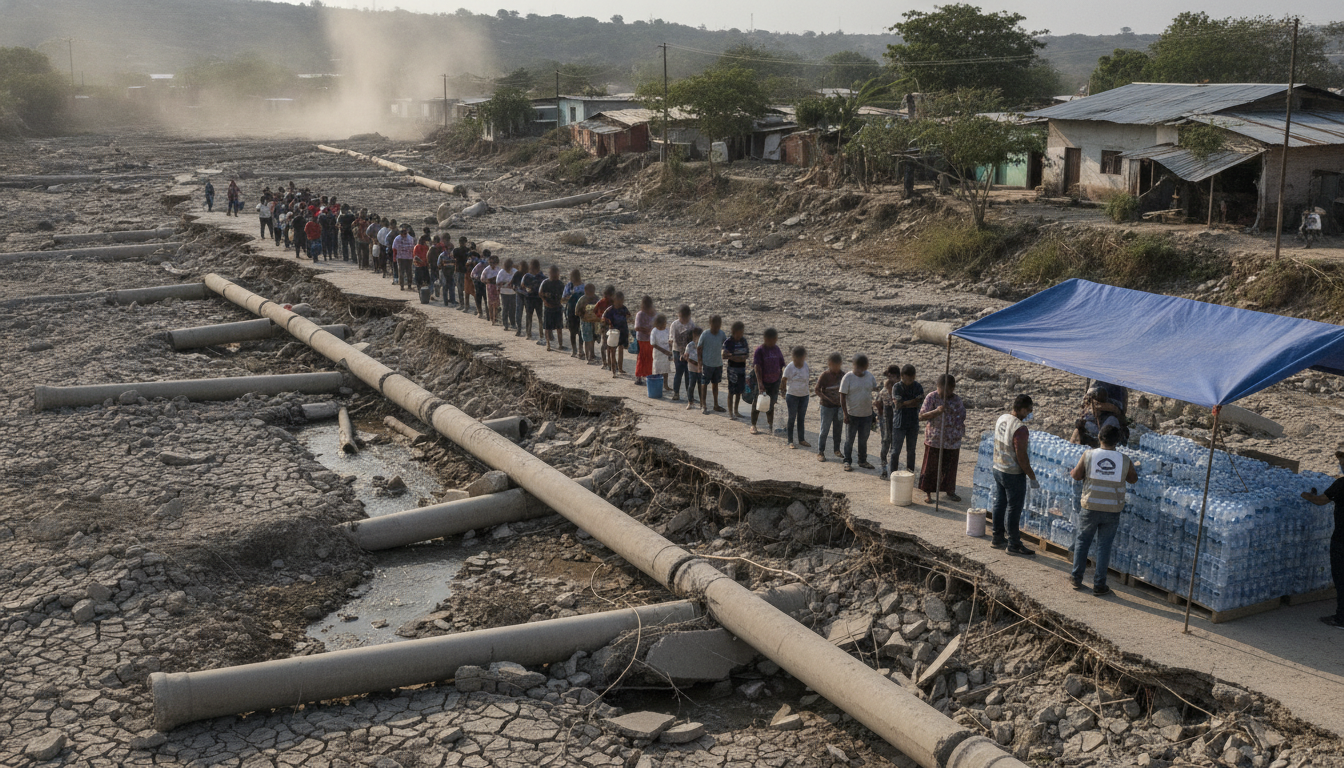
Venezuela earthquake devastates water and sanitation, raising fears of cholera and typhoid outbreaks
Venezuela earthquake has shattered scarce water and sewage systems in affected states, prompting aid groups to warn of immediate cholera and typhoid risks and mobilize supplies.
Immediate public health threat in La Guaira
As search-and-rescue operations wind down, attention has shifted to an escalating public health emergency following the Venezuela earthquake. Local and international responders say the tremors left entire sections of water distribution networks and sewage infrastructure unusable, heightening the chance of waterborne disease.
Aid officials in Caracas reported that in parts of La Guaira state bottled water has become the only reliable source for drinking, cooking and hygiene. Representatives from the International Federation of Red Cross and Red Crescent Societies stressed that limited access to toilets and disrupted waste systems are compounding the danger.
Water systems collapse after tremors
The earthquakes destroyed key pipes, pumping stations and reservoirs that communities relied on, leaving many households without running water. In regions that already depended on intermittent tanker deliveries before the quake, the loss of infrastructure means prolonged dependence on emergency supplies.
Humanitarian groups note that Venezuela entered the disaster with severe resource shortfalls, including years of declining water availability and strained hospital services. UN and civil society estimates from recent years indicate millions were already confronting critical shortages of food, water and health care, a situation the quake has dramatically worsened.
Sanitation breakdown and disease risk
Sewage lines and sanitation facilities were widely damaged, creating conditions that can accelerate the spread of infections. Aid and medical experts warned that displaced populations living in makeshift camps or crowded shelters are particularly vulnerable to outbreaks of cholera, typhoid and other waterborne illnesses.
Medical coordinators with international aid organizations pointed to past earthquake responses where inadequate waste disposal and lack of hygiene supplies led to secondary health crises. They emphasized that without rapid establishment of safe latrines, waste containment and consistent clean-water access, contagious diseases can take hold quickly in affected communities.
Aid response mobilizes water, medicines and protective gear
International and local relief agencies have begun routing emergency consignments of bottled water, water purification tablets and hygiene kits to hard-hit areas. Emergency medical teams are preparing to distribute antibiotics and personal protective equipment to reduce the risk of infection and protect health workers.
Direct Relief and other NGOs described plans to send combined water-treatment and medical supply kits, while the Spanish Red Cross announced intentions to open a clinic in La Guaira to monitor outbreaks and provide mental health care. Aid coordinators signaled that establishing continuous medical and sanitation services will be a priority for the coming weeks and months.
Health services and long-term care under strain
Hospitals and clinics, already operating under severe constraints, are now coping with damaged facilities and disrupted supply lines. Power outages and blocked roads have cut access to medications for people with chronic conditions, increasing the likelihood of preventable complications and deaths beyond the immediate toll of the quake.
Officials have reported that the official death count exceeds 1,900 and continues to rise, though authorities acknowledge the total remains difficult to determine with many areas still inaccessible. Aid agencies warn that the indirect mortality from disease, lack of medication and interrupted care could grow unless water and sanitation systems are restored and health services scaled up.
Coordination and prevention efforts underway
Relief leaders are calling for a coordinated response that pairs search-and-rescue and shelter operations with urgent public health interventions. Establishing safe locations for washing, food preparation and waste disposal is being treated as essential to preventing further casualties.
Teams on the ground are prioritizing surveillance for early signs of outbreaks and training shelter staff to manage sanitation risks. Donors and international partners face the immediate challenge of delivering sustained supplies and technical support to rebuild basic services while addressing survivors’ immediate medical and psychological needs.
The task ahead for responders is substantial: restore reliable clean water and safe sanitation, detect and treat infections early, and rebuild fragile health infrastructure so communities can recover without facing a secondary wave of preventable illness.
