
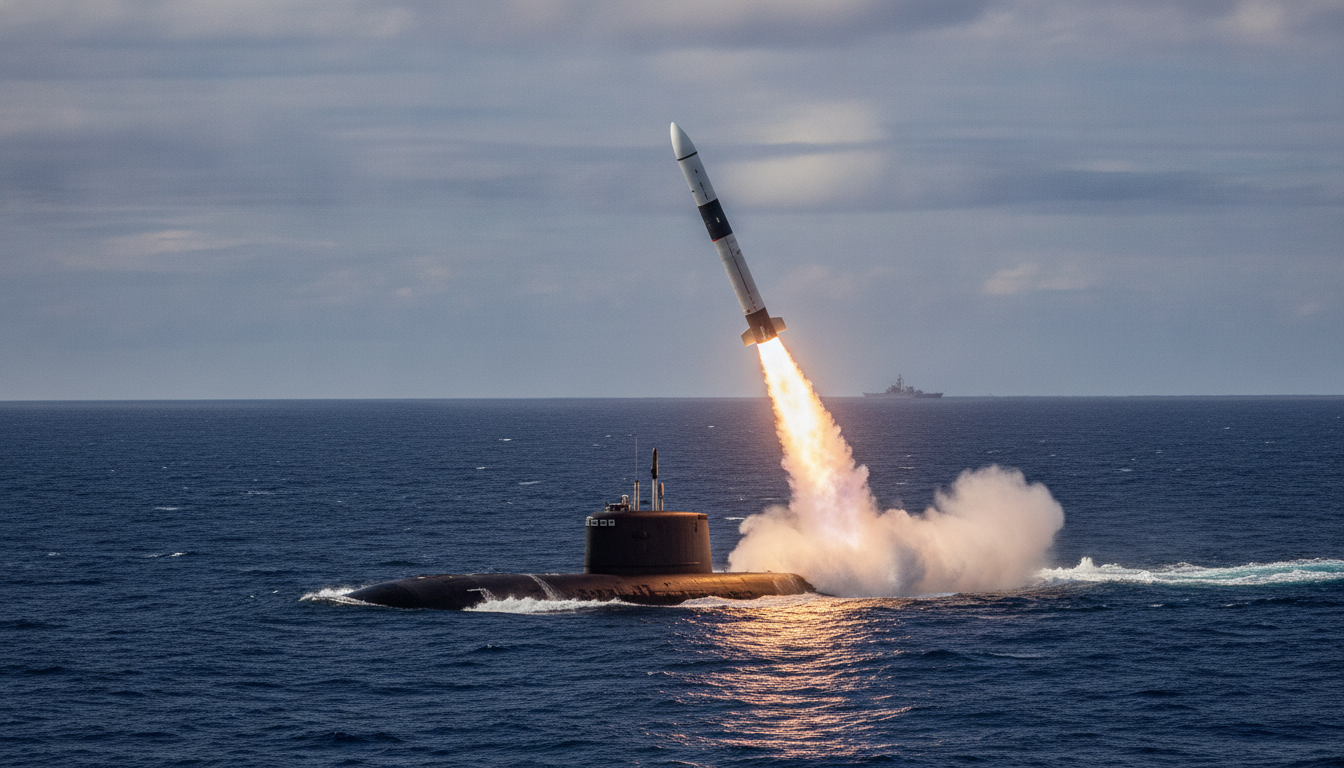
China submarine missile test in South Pacific on July 6, 2026 draws regional criticism
China submarine missile test in the South Pacific on July 6, 2026 prompts warnings from Japan, Australia and New Zealand over regional security and transparency.
China confirms sea-based ballistic missile test
China announced on July 6, 2026 that a long-range ballistic missile was test-fired from a nuclear-powered submarine and landed in designated waters in the Pacific Ocean. State media reported the launch occurred at 12:01pm local time (04:01 GMT) and described the activity as part of routine annual training for the Chinese navy.
Beijing said the test was not targeted at any specific country and framed it as a normal step in the development and readiness of its sea-based deterrent. The announcement cited safety measures and prior notifications to maritime authorities, while offering limited operational detail.
Timing and location of the launch
The missile was launched from a submarine operating in the South Pacific and was reported to have landed within the boundaries China described as designated waters. Officials did not publicly identify the exact coordinates of the impact area or provide imagery to corroborate the location.
Chinese authorities said they had informed relevant parties ahead of the exercise, but the timing — early July 2026 — drew immediate attention from neighbouring states that monitor any increase in naval and missile activity in the Pacific. The combination of a submarine platform and ballistic payload elevated concern because of the strategic implications of sea-launched capability.
Responses from Pacific neighbours
Australia, Japan and New Zealand issued statements expressing concern about the launch and its potential to destabilise regional security. Australian Foreign Minister Penny Wong confirmed Canberra had received notice of the planned sea-based missile test and described the exercise as worrying given the broader context of China’s military expansion.
Japan said it had been notified and urged China to reconsider such tests, highlighting that Chinese authorities had informed Japan’s coastguard about possible falling debris that could enter Japan’s exclusive economic zone. New Zealand’s foreign ministry described the development as unwelcome and stressed that Pacific nations had no interest in becoming a testing ground for foreign missile capability.
Government notifications and maritime safety measures
Officials in the affected countries emphasised that they were notified of the launch, though they differed on the adequacy and timeliness of the information provided. Japan warned of potential space debris associated with the test and activated its coastguard alerting procedures for ship and air safety in its exclusive economic zone.
Australia and New Zealand noted they received advance notice but called for greater transparency on intent and scope to reduce the risk of miscalculation. Maritime agencies in the region monitored shipping routes and advised vessels to avoid the reported impact area while assessments of any debris or environmental effects were underway.
Regional security and diplomatic ramifications
Analysts and government statements pointed to the broader implications of the test for regional security dynamics, particularly amid an era of rapid military modernisation in East Asia. A submarine-launched ballistic missile trial symbolizes a maturing sea-based deterrent that could complicate force postures and crisis calculations among Pacific states.
Diplomatically, the launch is likely to intensify calls for clearer communication channels and confidence-building measures between major military powers and Pacific island nations. Neighbouring governments may seek multilateral discussions to address notification protocols and minimise the risk that exercises will be perceived as provocations.
Calls for transparency and restraint
Pacific states and their partners urged China to increase transparency around its military activities in the region and to consider the concerns of smaller states whose maritime environments could be affected. Officials emphasised that routine military training should not come at the expense of regional stability or the security interests of neighbouring countries.
The incident renews focus on existing mechanisms for maritime notification and the need to strengthen cooperative arrangements that can prevent escalation. Observers recommended clearer timelines for notifications, independent verification where feasible, and engagement through bilateral and multilateral forums to address shared security risks.
The July 6, 2026 submarine-launched missile test by China has highlighted tensions between national defence developments and regional expectations for openness and predictability. Governments in the Pacific and their partners will now weigh diplomatic options and procedural changes to ensure safety at sea while managing the strategic challenges posed by evolving military capabilities.
