
Coordinated attacks in Mali hit five towns as army and Russia‑backed forces repel assaults
Renewed coordinated attacks in Mali struck five towns, targeting army and Russia‑backed positions; authorities say dozens of militants were killed amid clashes.
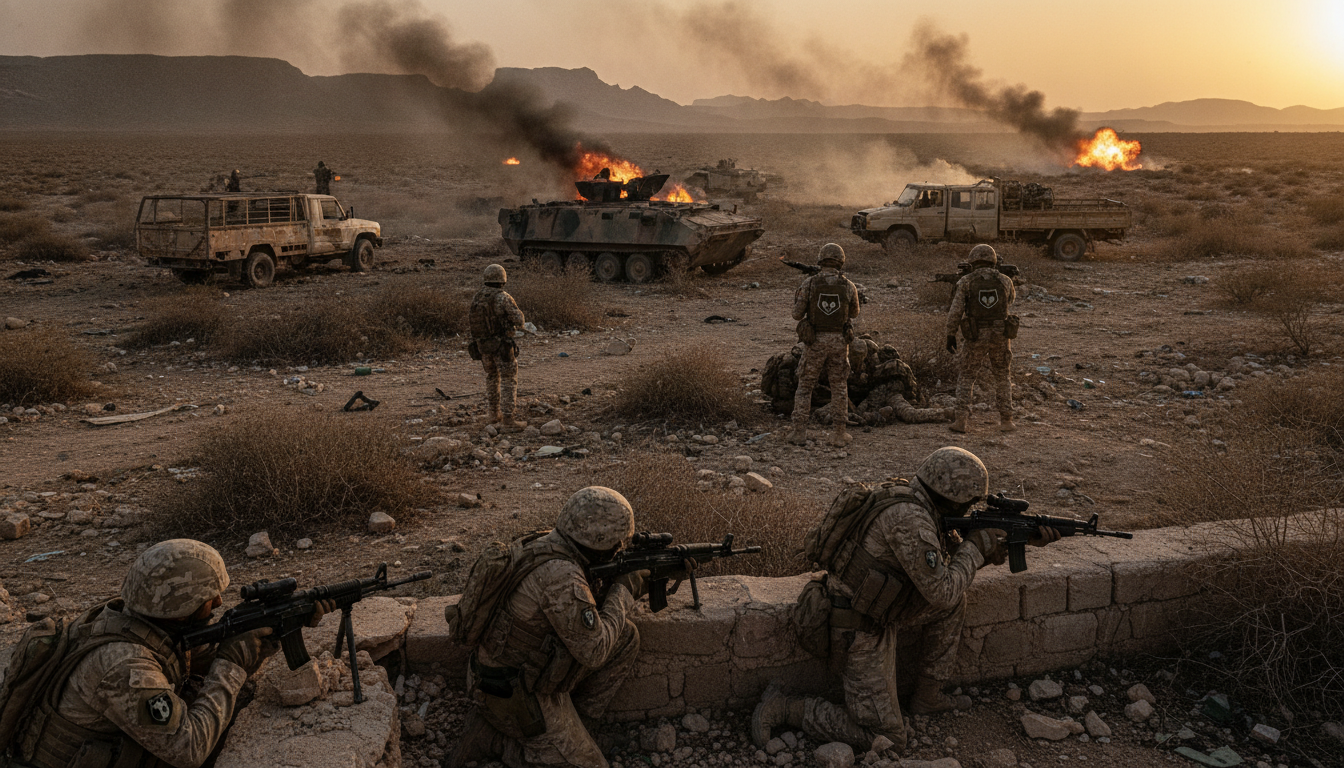
The Malian army said renewed coordinated attacks in Mali on Saturday targeted military positions in at least five towns, including bases used by national forces and Russia‑backed units. Initial reports named Aguelhok, Anefis and Gao in the north, Sevare in central Mali and Kenieroba in the south as locations of the assaults. The army described the situation as “totally under control” after counter‑operations, while videos circulating on social media showed paramilitary activity that could not be independently verified.
Attacks strike five towns across Mali
In its first statement, the Malian military confirmed assaults on positions in Aguelhok, Anefis, Gao, Sevare and Kenieroba. The army later reported heavy fighting in Sevare, saying around 20 “terrorists” were killed there and six in Gao, while one pro‑government fighter was killed and four others wounded in Gao. Local sources also reported an attack on a large prison complex in Kenieroba where members of the political opposition are held.
Army reports casualties and repelled assaults
Malian authorities said counter‑attacks, supported by air and ground assets, forced the assailants to withdraw from several fronts. The army announced it had repelled separate strikes in Konna and Somadougou with assistance from the Russia‑aligned Africa Corps paramilitary formation. Officials framed the casualties in militant ranks as significant, but independent verification of the exact toll and battlefield control was not available at the time.
Rebel coalitions claim responsibility
Two armed groups publicly claimed involvement in the Saturday operations. The Azawad Liberation Front (FLA), a Tuareg‑led separatist coalition formed in 2024, said it fought in the raids, while the al‑Qaeda affiliate Jama’at Nusrat al‑Islam wal‑Muslimin (JNIM) also issued a statement claiming capture of multiple positions. Both groups have cooperated and competed at different times, and their overlapping claims underline the fluid alliances that shape Mali’s conflict landscape.
Russia‑backed Africa Corps seen in footage of counter‑strikes
Footage posted to channels associated with Africa Corps appeared to show a drone strike on a rebel position in Anefis and a Russian service member at a base in Aguelhok. Mali’s government has relied on Russia‑linked paramilitary support since inviting Wagner Group personnel in 2021 and later transitioning to other formations under the Africa Corps banner. Observers caution that material posted by parties to the conflict often cannot be independently authenticated and may reflect operational messaging as much as battlefield reality.
Tuareg separatists and JNIM: goals and cooperation
JNIM, established in 2017 as a coalition of al‑Qaeda aligned groups across the Sahel, is led by Iyad Ag Ghali and seeks territorial control while opposing Western influence. The FLA emerged from a 2024 consolidation of northern Tuareg factions seeking autonomy or independence for Azawad and is led by Alghabass Ag Intalla. Despite ideological differences, both entities have at times coordinated operations against common adversaries, complicating efforts to isolate and defeat individual groups.
Recent high‑profile attacks and the security vacuum
The weekend strikes come more than two months after a major coordinated assault that hit Bamako and other sites and resulted in the killing of Defence Minister Sadio Camara in late April. That attack underscored the ability of militants to strike deep into government strongholds and has amplified concerns about gaps in national security. Analysts say such high‑profile actions are intended to erode confidence in state control and to demonstrate operational reach to both domestic and foreign audiences.
Political turbulence and foreign partnerships have reshaped the battlefield
Mali’s security environment has been shaped by repeated crises since 2012, including Tuareg rebellions, the rise of jihadist networks, and successive military coups in 2020 and 2021. The ruling military leadership severed ties with former partners, including France, and invited Russian mercenary support in late 2021; those forces later reconstituted under the Africa Corps label. Experts note that the state’s control is increasingly limited to fortified corridors and enclaves, even where partner forces are present.
Analysts and regional diplomats warn that continued coordination between disparate armed groups could prolong instability and complicate diplomatic efforts. The Malian government’s strategy of relying on external paramilitary support has delivered tactical gains in certain areas but has not decisively restored comprehensive security across the country, according to observers.
The renewed coordinated attacks in Mali highlight the persistence of complex, multi‑actor violence and the challenges facing any single actor seeking to impose stability, leaving residents in affected regions vulnerable as fighting and political uncertainty continue.
