
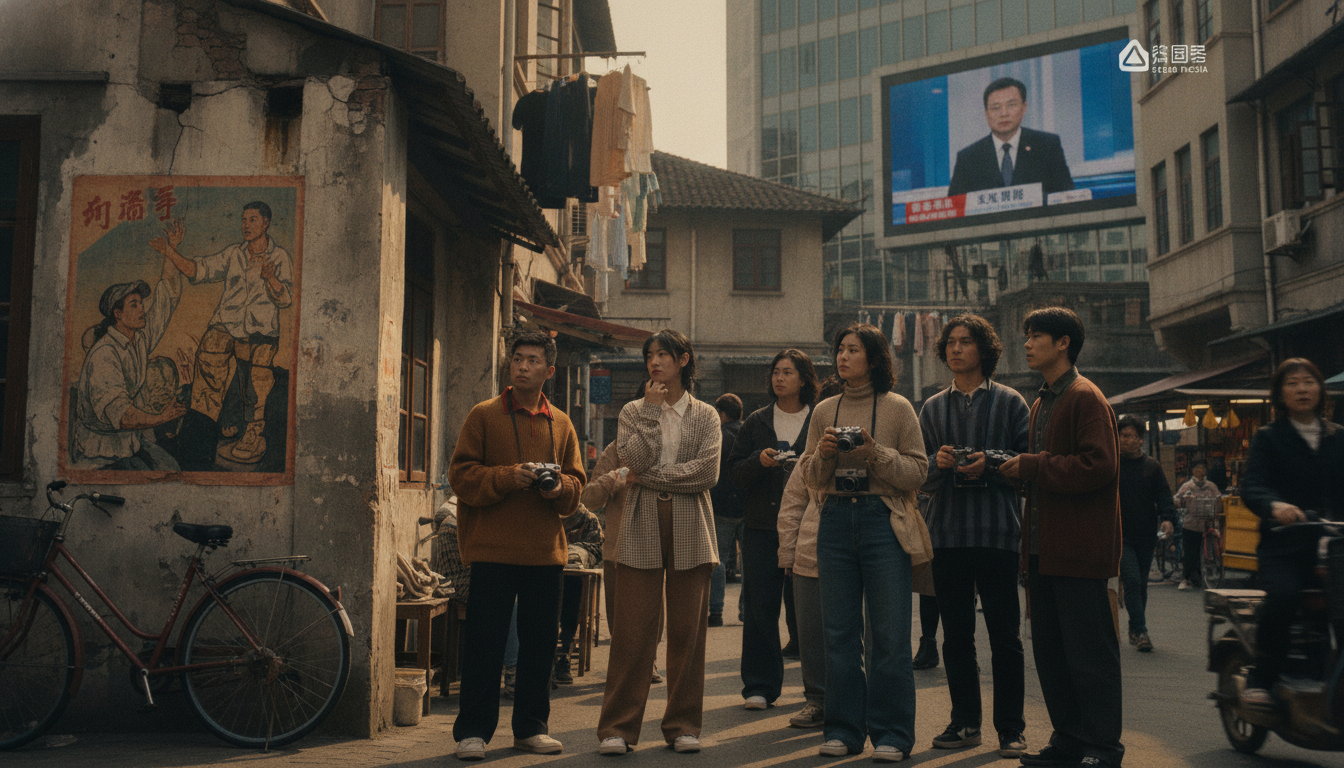
Chinese Dreamcore: Gen Z Revives Early-2000s China in Viral Nostalgia Wave
Chinese Dreamcore nostalgia is sweeping social media as Gen Z recreates early-2000s China—sharing images, music and memories to cope with economic uncertainty and rapid change.
Social platforms amplify Chinese Dreamcore
The aesthetic labeled Chinese Dreamcore has surged on apps such as Xiaohongshu and other social platforms where users post retro photographs, animations and playlists. Young creators are reposting grainy images of internet cafés, blue-glass towers and home interiors from the early 2000s, using hashtags and short videos to reach wide audiences. This online circulation has turned private nostalgia into a visible cultural moment that attracts likes, comments and further creative responses.
Recurring visual motifs and sensory memory
Posts described as Chinese Dreamcore commonly feature specific visual cues: low-resolution video, blue-tinted urban facades, childhood playgrounds and household objects like old water dispensers. Contributors often pair visuals with familiar soundtracks—early internet login tones or songs from national events—to recreate an immersive sensory past. Those repeated motifs act as shorthand, allowing viewers to instantly recognize and connect with shared memories of a rapidly changing China.
Creators frame Dreamcore as emotional coping
Artists and bloggers behind the movement say Chinese Dreamcore functions as an emotional outlet for a generation facing a competitive job market and uncertain prospects. Creators such as illustrators, animators and photographers build scenes that mix real architecture with fantastical elements, offering wish-fulfillment vignettes of simpler days. Scholars studying media describe the trend as a form of consolation: returning in imagination to a childhood perceived as more promising or secure.
From niche art to commercial adoption
What began as hashtag-driven content has moved into mainstream visibility, appearing in video games, printed books, advertising and product design. Designers have applied Dreamcore motifs to dinnerware in restaurants, packaging and promotional campaigns, while photographers travel across cities to document quirky early-2000s structures before they disappear. The aesthetic’s migration into commerce highlights its broad emotional resonance as well as its value to brands seeking to tap Gen Z sentiment.
Scholars and artists explain cultural context
Researchers and visual artists link Chinese Dreamcore to the unique historical moment experienced by China’s Generation Z, who grew up during rapid technological growth and urban redevelopment. Academics note the genre’s resemblance to other global nostalgia revivals, such as 1980s-style revivals in the West, but emphasize its local contours—partly shaped by China’s distinctive urban forms and internet culture. Practitioners argue the movement helps participants articulate displacement felt amid demolition, modernisation and shifting social expectations.
Official commentary and ideological concerns
State-affiliated outlets and provincial journals have acknowledged Chinese Dreamcore while warning against idealising the past to the point of social withdrawal or ideological risk. Commentaries published earlier this year cautioned that excessive immersion in nostalgic fantasies might impede youth development of a constructive worldview. Authorities and scholars both call for balanced engagement, recognising the psychological role of nostalgia while flagging potential social effects if it becomes an escape from current challenges.
Many young people, meanwhile, stress the movement’s more modest aim: to find moments of comfort and to connect with others who share similar memories. For creators whose childhood homes were demolished or transformed, Dreamcore imagery can preserve fragments of personal history that official archives or market forces might otherwise erase.
Examples of artistic practice and documentation
Individual projects illustrate how Dreamcore blends documentation with imagination. Photographers have catalogued hundreds of cities to capture distinctive 2000s-era buildings—revolving restaurants, geometric facades and domed rooftops—before redevelopment removes them. Illustrators and animators reconstruct domestic interiors and public spaces, sometimes inserting surreal details that reflect hazy recall rather than literal accuracy. These works operate both as cultural record and as an aesthetic language that conveys the emotional texture of memory.
The movement’s future may depend on whether it spawns sustained artistic and critical work beyond viral tags, or whether it remains a cyclical online trend. Observers say the capacity of Chinese Dreamcore to inspire lasting projects will determine whether it becomes an enduring cultural strand or a passing moment in social media history.
Chinese Dreamcore has opened a public conversation about memory, modernisation and youth experience in contemporary China, balancing playful creativity with deeper questions about loss and belonging in a rapidly changing society.
