
Syria intervention in Lebanon floated by US draws sharp rebuke from Damascus
U.S. suggestions that Syria intervene in Lebanon to confront Hezbollah have reignited fears across the Levant and been firmly rejected by Damascus. (154 characters)
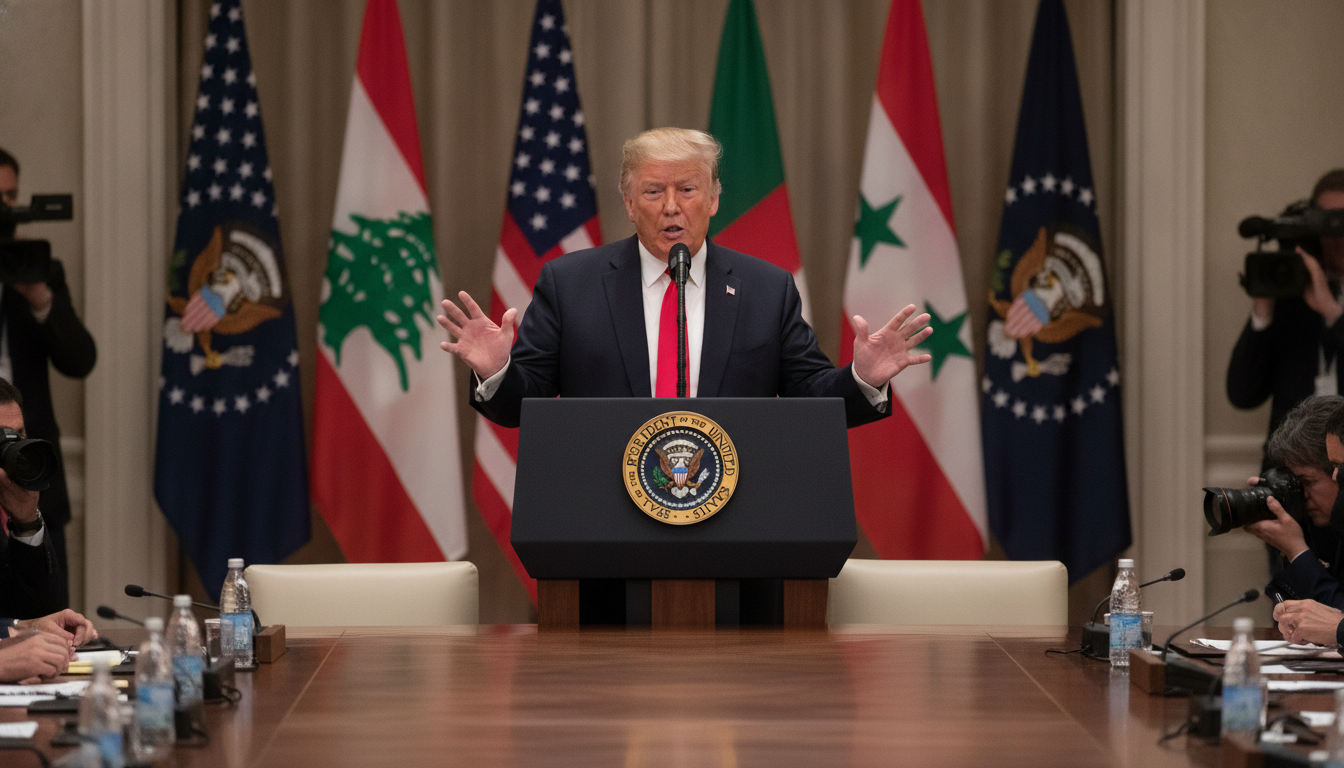
The United States’ public suggestion that a Syrian intervention in Lebanon could help disarm Hezbollah has been met with a categorical refusal from Damascus and renewed alarm in Beirut. President Ahmed al‑Sharaa, who leads Syria’s post‑Assad government that took power in December 2024, told a Dubai‑based television network this week that his administration has no intention of repeating Syria’s old military role in Lebanon. The proposal — repeatedly raised by former U.S. President Donald Trump in recent weeks — has reopened regional fault lines tied to memories of Syrian occupation and the shifting alliances that followed Assad’s ouster.
U.S. proposal and Syrian rejection
President al‑Sharaa publicly dismissed the idea of Syrian forces reentering Lebanon, saying a role for Syria “does not mean war” and is not a return to the “old image of Syrian tutelage.” His remarks came after Mr. Trump suggested Syria could carry out a “surgical” operation against Hezbollah if Israel could not do so without extensive civilian casualties. Damascus has instead presented itself as focused on stabilising its own territory rather than extending military operations across the border.
Power shift in Damascus after Assad’s ouster
The political landscape that produced al‑Sharaa’s government changed sharply when President Bashar al‑Assad was removed in December 2024. That transition ended decades of Syrian alignment with Tehran and with Hezbollah, severing the overland corridor that had been used to supply the Lebanese militia during the Syrian civil war. Analysts note the symmetry: groups that once fought Assad are now in control in Damascus, altering long‑standing patronage networks in the region.
Crackdown on Hezbollah‑linked activity inside Syria
Since assuming power, the Syrian Ministry of Interior has publicly announced arrests and counter‑smuggling operations targeting individuals and networks it says are connected to Hezbollah. Damascus has accused Hezbollah‑linked elements of plotting attacks on Syrian soil, allegations the group denies. These actions underscore a new posture in which Syria asserts sovereignty and distance from Iran’s Lebanese proxy rather than collaboration.
Washington’s outreach and strategic calculations
The idea of a Syrian role in Lebanon appears to reflect both frustration in U.S. policy circles over the Israel‑Hezbollah fighting and close diplomatic ties Washington has cultivated with the al‑Sharaa administration. The United States has provided political backing and at times eased sanctions for Damascus as the new government sought international recognition and reconstruction assistance. Some observers argue that Washington views Syria and Lebanon as linked problems on the Levant file and has therefore been exploring non‑Israeli partners to check Hezbollah’s capabilities.
Lebanon’s historical wounds and public unease
For many in Lebanon, talk of Syrian intervention recalled a painful past: Syrian forces entered Lebanon in 1976 and remained until a withdrawal in 2005, a 29‑year presence that left deep political and societal scars. The prospect of renewed Syrian activity rekindles fears of domination, human rights abuses, and the undermining of Lebanese sovereignty. Political leaders in Beirut have voiced apprehension that any outside military involvement could inflame sectarian tensions and destabilise the fragile domestic order.
Regional consequences and security risks
Regional analysts warn that a cross‑border Syrian operation would carry high risks, including the possibility of mutual escalation and wider regional involvement. Syria’s alignment with Turkey in the new regional geometry — and Ankara’s own fraught relations with Israel — complicates how a Syrian move would be perceived by other capitals. Experts also caution that Hezbollah could retaliate by fomenting unrest inside Syria, creating a two‑front security challenge for Damascus at a time when it is still consolidating state authority.
Syria’s leaders say their priority is reconstruction and domestic stability, not renewed foreign campaigns, while Washington continues to push for solutions to the Hezbollah threat that avoid broad civilian harm. The public exchange highlights how quickly regional calculations can shift when political leadership changes and how fraught any proposed intervention in Lebanon remains for neighbours and international actors alike.
The debate over whether Syria could or should play a role in Lebanon underscores the enduring volatility of Levantine politics and the difficulty of finding an externally led solution that does not risk wider destabilisation.
