
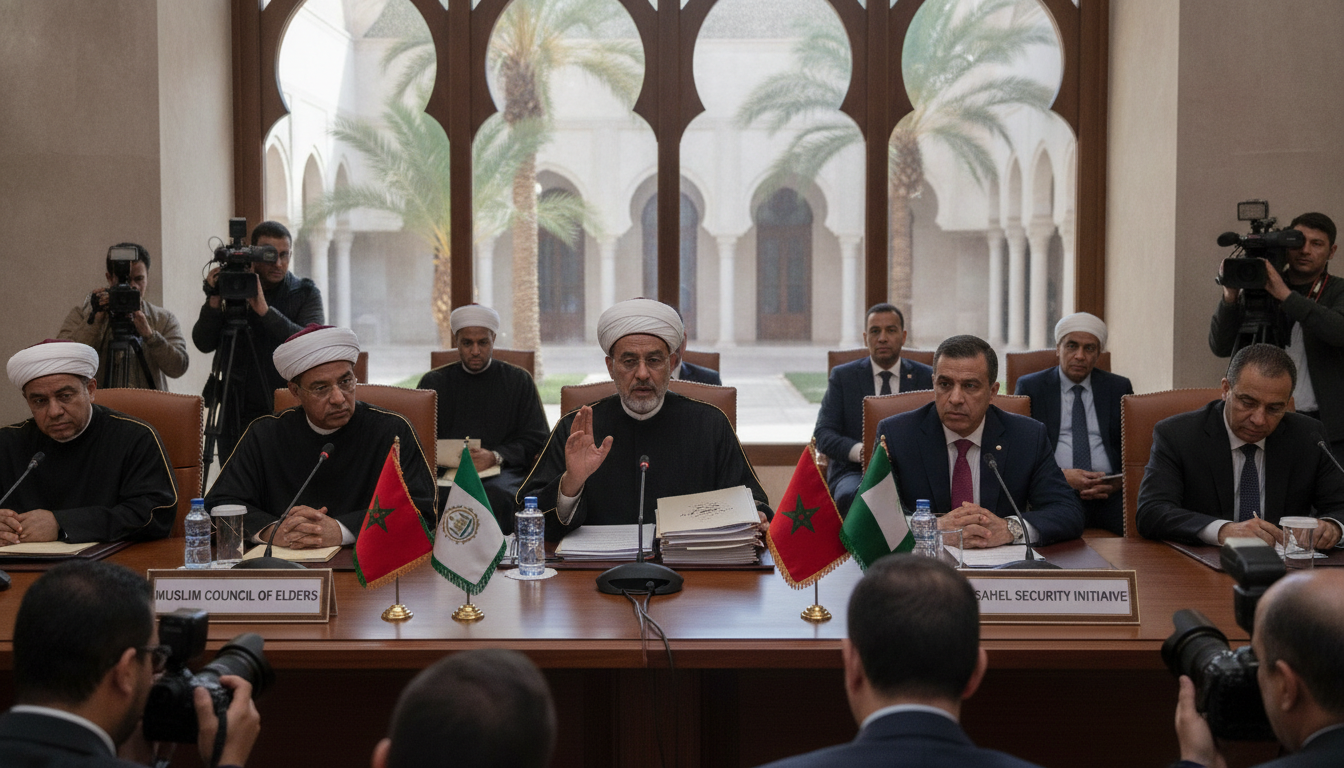
Council of Muslim Wise Men Condemns Foiled Terror Plots in Morocco
Council of Muslim Wise Men denounces foiled terror plots in Morocco, urges regional cooperation to dismantle ISIS Sahel networks and protect security.
The Council of Muslim Wise Men issued a firm condemnation on July 7, 2026, of the foiled terror plots in Morocco that authorities say were planned to target public order and safety.
The council said the schemes involved logistical coordination and operational support from an ISIS-affiliated cell operating in the Sahel region.
In its statement, the body warned that such attacks threaten community stability and violate the core teachings of Islam.
Council Statement and Official Condemnation
The council described the thwarted plans as criminal acts that run counter to religious and humanitarian values.
It called the attempts a malicious effort to spread chaos, instill fear, and terrorize peaceful populations.
The statement reiterated the council’s longstanding position rejecting all forms of extremism, violent rhetoric, and sectarian hatred.
By denouncing the plots, the council sought to draw a clear line between militant actions and the moral tenets of Islam.
Alleged ISIS Sahel Link and Operational Details
According to the council’s communiqué, the plots benefited from coordination and operational backing by an ISIS branch active in the Sahel.
That link, the council said, underscores the transnational nature of the threat and the ability of militant networks to exploit regional instability.
The statement did not provide operational specifics or identify suspects, but it highlighted the danger posed by cross-border logistical and operational support.
Security analysts say such networks typically rely on illicit finance, smuggling routes, and sympathetic actors to plan and sustain attacks.
Religious and Ethical Rejection of Terrorism
The council framed its condemnation in moral and theological terms, stressing that violent extremism contradicts Islamic teachings.
Its leaders emphasized the duty of religious authorities to counter narratives that legitimate violence or target innocents.
By invoking faith-based arguments, the council aimed to undercut the ideological appeal of militant groups and reaffirm religious norms that protect life and property.
The statement also called on community leaders to intensify efforts to counter radicalization at local and grassroots levels.
Calls for Strengthened Regional and International Cooperation
The Council of Muslim Wise Men urged governments and international organizations to double down on cooperation to confront terrorism.
It recommended enhanced intelligence sharing, synchronized law enforcement actions, and measures to disrupt financing and operational logistics.
The council stressed that multinational coordination is essential to “dry up” the resources and networks that sustain extremist groups.
It also underlined the importance of capacity-building in vulnerable states and regional frameworks to address cross-border threats.
Solidarity with Morocco and Support for Protective Measures
In its declaration, the council expressed full solidarity with the Kingdom of Morocco and pledged support for the country’s security measures.
The council backed steps taken to protect citizens, maintain public order, and preserve national achievements.
Leaders called for a balanced response that upholds the rule of law while safeguarding civil liberties and community cohesion.
They also urged public authorities to communicate transparently with citizens to maintain public confidence and resilience.
Security Implications and Policy Recommendations
Experts say the alleged Sahel connection highlights the need for integrated strategies that combine security, development, and counter-radicalisation.
Disrupting militant networks requires not only arrests and intelligence sweeps but also financial investigations, border controls, and community outreach.
The council recommended targeted actions to choke off funding channels and to monitor supply lines used by transnational groups.
It also encouraged regional dialogues to strengthen legal frameworks and harmonize counterterrorism responses across neighboring states.
The statement from the Council of Muslim Wise Men adds a faith-based voice to calls for coordinated action against violent extremism, reinforcing political and security measures aimed at preventing attacks.
By condemning the foiled terror plots in Morocco and urging international cooperation, the council sought to send a unified message against violence and in favor of communal safety.
