
Palestinian parliamentary elections set for Nov. 28, 2026 as Abbas seeks reform credentials
Palestinian parliamentary elections set for Nov. 28, 2026 by Mahmoud Abbas, amid reform pledges, new laws excluding rivals and widespread doubts over execution.
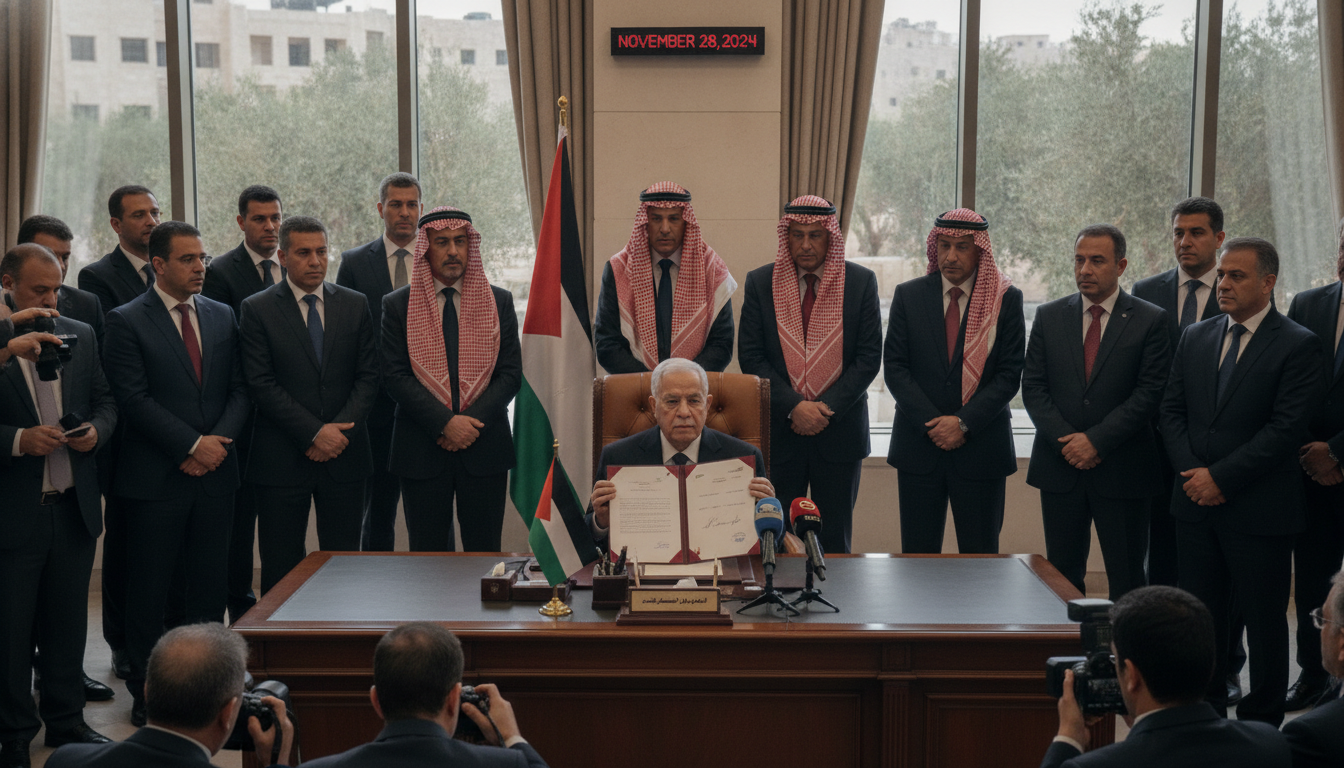
Mahmoud Abbas on Thursday issued a decree scheduling Palestinian parliamentary elections for November 28, 2026, a move the Palestinian Authority framed as a step toward political renewal. The announcement names voting across the West Bank, Gaza and East Jerusalem but stops short of calling a presidential ballot, leaving the future of long‑time president Mahmoud Abbas uncertain.
Abbas announces Nov. 28, 2026 parliamentary elections
The decree tasks electoral authorities with preparing ballots for Nov. 28, 2026 and invites residents in all parts of the occupied Palestinian territories to participate. For the Palestinian Authority, which administers limited self‑rule in parts of the West Bank, the vote is presented as a response to persistent criticism about governance and corruption.
Analysts say the timing appears aimed at satisfying demands from international partners — including the United States, European states and Arab governments — that have linked political and administrative reform to financial and diplomatic support. Still, the announcement revived memories of past election promises that were delayed or cancelled.
Decree excludes presidential vote and raises questions
Crucially, the elections decree does not include a presidential contest, a detail that preserves Mahmoud Abbas’s position while opening political questions about succession and legitimacy. Abbas, who was elected in early 2005, has led the Palestinian Authority for more than two decades and has consolidated control within Fatah and the institutions of the Authority.
That omission has generated skepticism among Palestinians and observers who note that a parliamentary vote alone could alter the balance of power in the legislature without resolving the leadership vacuum at the top. Critics warn that the measure could be used to project an image of reform without delivering a full political reset.
New elections law bars Hamas and Islamic Jihad from contesting
A new elections law issued last month tightens candidate eligibility by requiring adherence to the political program of the Palestine Liberation Organization, including its 1993 recognition of Israel. The change effectively excludes Hamas and Islamic Jihad — which reject that stance — from participating, narrowing the field of contenders.
Supporters of the law say it aims to prevent the fragmentation that followed the 2006 legislative victory by Hamas, which led to international isolation and the eventual split between West Bank and Gaza governance. Opponents argue the restriction undermines inclusivity and risks repeating the political deadlock that followed earlier rounds of voting.
Security surge and settler violence complicate West Bank voting
The West Bank has seen a sharp rise in violence since the onset of the Gaza war, with increased clashes and a growth in settler outposts that Palestinian officials say threaten voters’ safety. Extremist settler attacks on Palestinian communities have surged in recent months, heightening concerns about security during an electoral campaign.
Election organizers will need to navigate checkpoints, potential mass arrests of activists or candidates, and unpredictable security operations that could limit voter movement. Palestinian officials have warned that Israeli measures — including restrictions on movement and coordination difficulties — could obstruct the electoral timetable if not addressed.
Logistical hurdles in Gaza and role of Central Elections Commission
Organizing voting in Gaza presents a separate set of challenges because of extensive wartime destruction and the enclave’s governance under Hamas since 2007. The Central Elections Commission has reportedly examined contingency plans to hold polling in Gaza amid the damaged infrastructure and humanitarian crisis.
Practical obstacles include delivering ballots and supplies across checkpoints, ensuring safe access to polling stations, and verifying voter registries in a territory with limited administrative links to Ramallah. Any plan to run elections in Gaza will require complex coordination, security guarantees and likely international involvement to ensure impartial delivery of materials.
International reaction framed by demands for transparency and anti‑corruption
Diplomats and Western officials have long conditioned deeper engagement with the Palestinian Authority on visible steps toward reform and accountability, arguing such changes are prerequisites for a meaningful role in postwar Gaza reconstruction. Abbas’s decree appears designed in part to signal responsiveness to those demands.
Yet international appetite for recognizing the results will depend on the conduct, inclusiveness and transparency of the process, diplomats say. Palestinian public opinion is divided: some welcome a chance to register their voice at the ballot box, while others view the move as cosmetic unless accompanied by broader institutional reforms.
Many Palestinians voiced skepticism about whether the vote will proceed as scheduled, recalling past instances when promised polls were postponed. Local residents and analysts caution that a credible election will require clear rules, neutral security arrangements and a commitment to respect results.
As November 28, 2026 approaches, the Palestinian Authority faces a complex test: to translate a decree into a credible, inclusive election that can withstand legal challenges, security disruptions and the political fallout of past divisions. The coming months will reveal whether the parliamentary vote is the start of a genuine political renewal or another step in a long, unsettled political cycle.
