
Italy’s absence from World Cup 2026 a “loss for world football,” says former Fujairah coach Michele Bon
Michele Bon says Italy’s absence from World Cup 2026 is a loss for world football, criticises the 48‑team expansion, and praises Morocco, Egypt and his UAE ties.
Former Fujairah coach frames Italy’s exit as a major sporting loss
Michele Bon, who previously managed Fujairah and other Emirati clubs, described Italy’s absence from World Cup 2026 as a significant setback for global football. He argued the exclusion of a traditional powerhouse reduces the tournament’s perceived technical standard and diminishes a key historical narrative of international competition.
Bon emphasized that his concern is not nationalistic but technical, citing long-term consequences when prominent footballing nations do not feature on football’s biggest stage. He said domestic club policies and administrative decisions in Italy have contributed to this outcome by limiting pathways for local talent.
Expansion to 48 teams has trade-offs, Bon warns
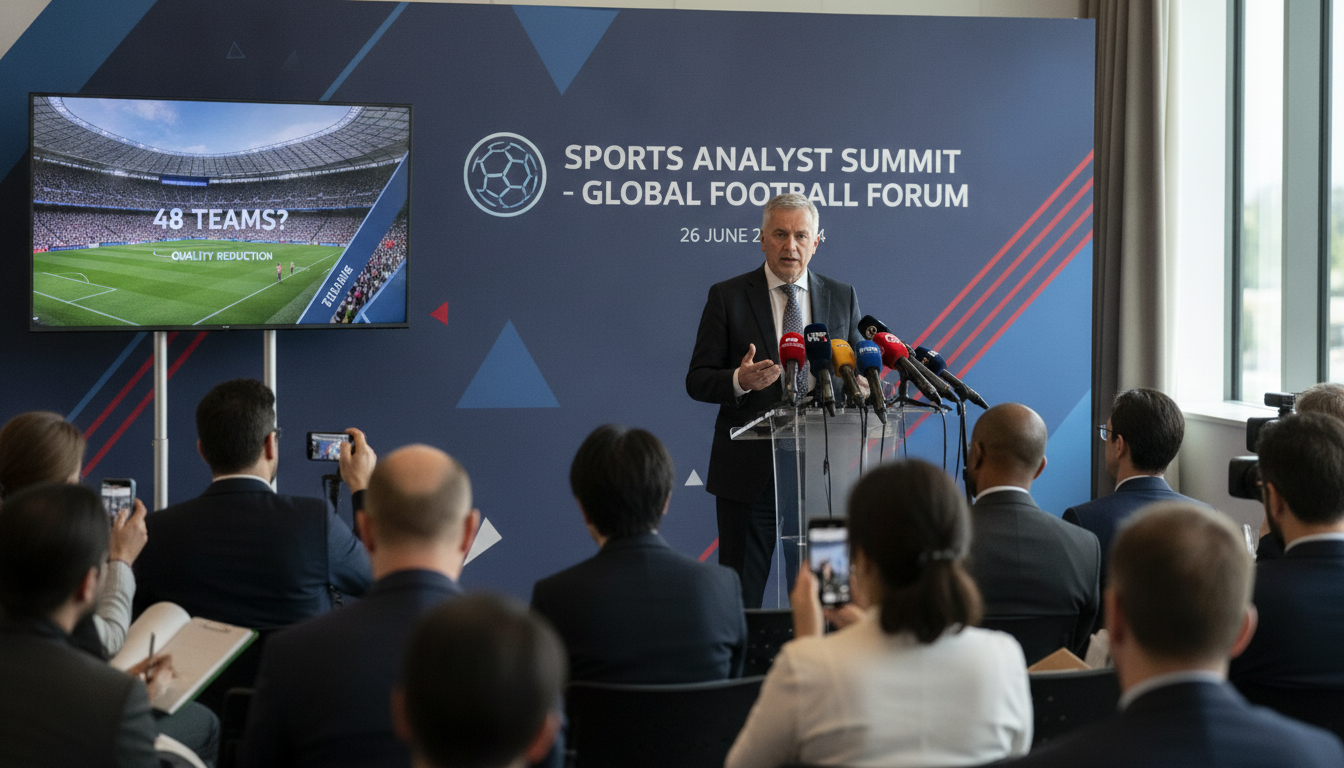
Bon criticised the move to a 48‑team World Cup, saying the larger field has diluted the overall quality of play. He suggested the expansion was driven more by inclusivity and commercial aims than by sporting considerations, and that it has increased the disparity in match competitiveness.
He pointed to lopsided scorelines in the ongoing tournament as evidence, arguing a smaller tournament with higher-quality teams would present a stronger technical showcase. Bon also raised concerns over scheduling strain, saying more matches will increase player fatigue and could disrupt domestic league calendars and raise injury risks.
Tactical errors and injuries behind shock early eliminations
Discussing the surprising early exits of teams such as Germany and the Netherlands, Bon attributed their failures to a mix of injuries, poor match fitness and cautious tactics. He said Germany suffered from key absences and some players not being fully prepared, while the Netherlands adopted an overly defensive posture that blunted their usual attacking identity.
Bon added that these factors are not purely athletic, noting that preparation, squad selection and psychological readiness all play a role in knockout tournaments. He warned that similar upsets could follow, as international competitions increasingly hinge on marginal advantages.
Norway surge, Ronaldo’s influence and assessment of Brazil
On standout performances, Bon highlighted Norway’s collective play and singled out Erling Haaland as a pivotal figure for the Scandinavian side. While impressed by Norway’s cohesion and Haaland’s form, he expressed scepticism about their chances of lifting the trophy, stressing the difference between momentum and sustained tournament-winning depth.
He praised Cristiano Ronaldo for his leadership and enduring impact on Portugal, describing him as one of football’s all-time greats who can still change games. Regarding Brazil, Bon acknowledged their wealth of individual skill but said collective cohesion gave opponents like Norway an edge in decisive moments.
Positive view of Morocco and Egypt, with praise for Arab football development
Bon welcomed the progress shown by Morocco and Egypt, saying both national teams benefited from exposure to European systems and competitive environments. He noted that technical improvement and competitive spirit among these squads reflect deeper development pathways and stronger youth talent pools.
He called the displays by Arab teams encouraging for the region’s football scene and argued that continued international competition experience is crucial for further advancement. Bon sees these results as validation that investment in coaching and player development can yield rapid competitive gains.
Reflections on UAE coaching experience and recommendations for domestic growth
Recalling his time at Fujairah, Al Nasr, Al Ittihad and Masfout, Bon said he enjoyed his coaching stints in the UAE and would welcome a return to contribute further. He praised the professional strides being made in Emirati football but urged more structural support to accelerate progress.
Bon recommended expanding television coverage, attracting greater sponsorship and enhancing professional conditions for domestic players, especially nationals in the First Division. He argued these steps would raise the league’s profile, improve talent retention and create a healthier pipeline for the national team.
Michele Bon concluded by reiterating that structural choices at club and federation levels shape national fortunes, and that addressing developmental, administrative and commercial aspects is essential for long-term success.
