
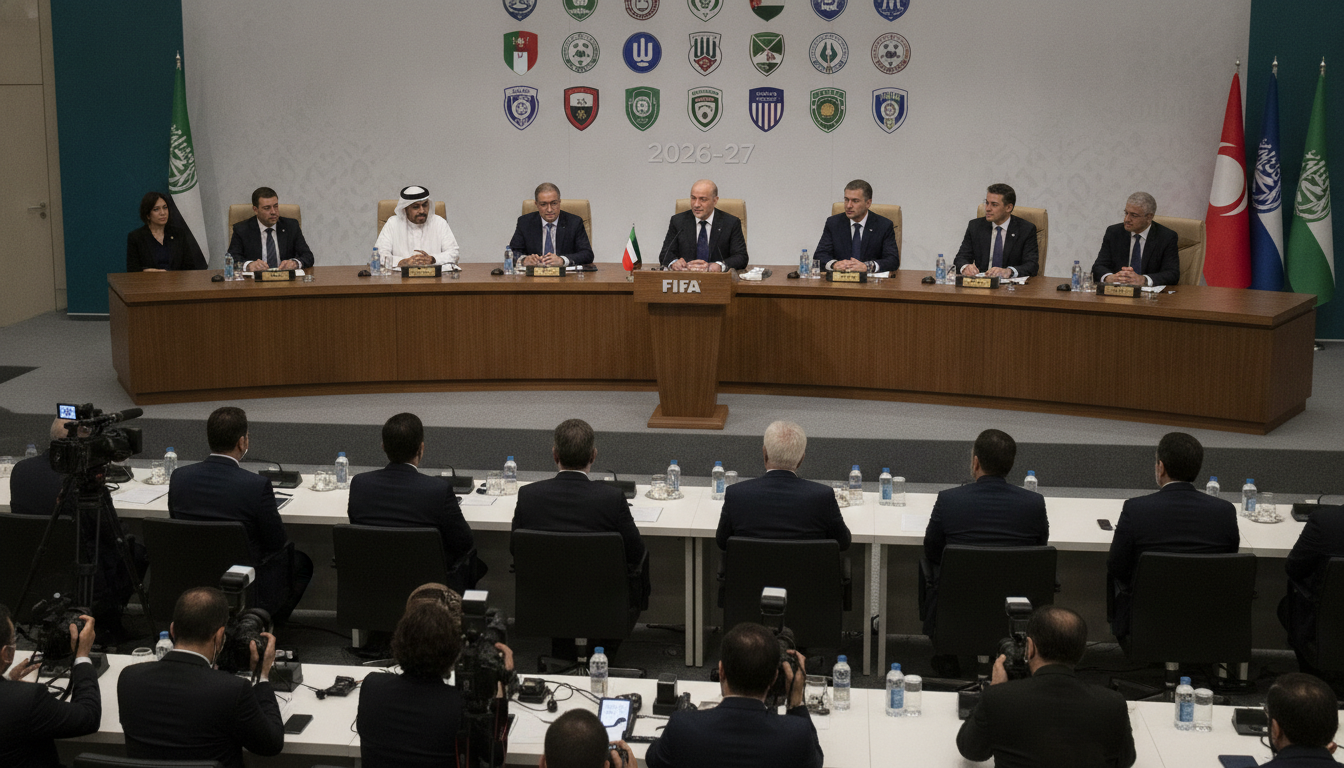
Gulf Champions League expands to 12 clubs for 2026–27 season as draw set for September 9, 2026
Gulf Champions League expands to 12 clubs for 2026–27; competition runs Oct 13, 2026–Apr 30, 2027 with teams selected by domestic results and AFC club rankings.
The Gulf Champions League will feature a record 12 clubs in its third edition after the Gulf Football Federation approved an expansion from eight teams for the 2026–27 season. The tournament, which opens on October 13, 2026 and concludes on April 30, 2027, brings wider participation across member national federations and will hold its official draw on September 9, 2026. The announcement aims to give clubs and national associations time to finalise sporting and logistical preparations ahead of the new campaign.
Confirmed team allocations by federation
The expansion follows a federation-based allocation that grants two slots each to Saudi Arabia, the United Arab Emirates and Qatar, and one slot each to Iraq, Oman, Bahrain, Kuwait and Yemen. The Gulf Football Federation confirmed that the allocations reflect domestic league outcomes and the AFC club competition rankings for the 2026–27 season. The move to broaden the field is intended to deepen competition and increase regional engagement across the Gulf and neighbouring federations.
List of participating clubs for 2026–27
The 12 clubs entered for the third Gulf Champions League edition are representative of the allocations announced by the federation. From the UAE: Al-Nasr and Ajman; from Saudi Arabia: Al-Ettifaq and Neom; from Qatar: Al-Duhail and Qatar SC; from Iraq: Erbil SC and Al-Zawraa; and single entrants Al-Shabab (Oman), Al-Riffa (Bahrain), Kazma (Kuwait) and Shab Hadramout (Yemen). These entries were ratified under the tournament regulations that prioritise domestic league placement and national federation standings.
Selection rules and reliance on AFC club rankings
Clubs were chosen in line with the Gulf Champions League regulations, which require selection based on domestic competition results and the national federations’ AFC club rankings for the relevant season. The federation said adherence to those criteria ensured a transparent process and rewards recent domestic performance. Officials also noted that the AFC rankings provided an objective metric to determine additional slots for higher-ranked federations.
Schedule and key organisational dates
Organisers have fixed the competition window from October 13, 2026 through April 30, 2027, with the official draw scheduled for September 9, 2026. The federation said publishing the calendar now allows clubs, broadcasters and host venues to plan travel, training camps and stadium readiness. Competition logistics will cover group-stage formats, matchday windows and contingency arrangements to align with domestic league calendars and continental fixtures.
Sporting implications for clubs and regional football
Expanding the Gulf Champions League is expected to raise the standard of regional competition by exposing more clubs to cross-border matches and varied tactical challenges. For clubs, the tournament offers additional high-profile fixtures that can affect squad rotation, transfer planning and preseason preparation. National federations have welcomed the expansion as a step towards strengthening club pathways and offering players greater exposure ahead of AFC and continental commitments.
Historical context and recent champions
The Gulf Champions League inaugurated with Duhok SC of Iraq lifting the first title, while Al-Rayyan of Qatar won the second edition. Those historical results form part of the tournament’s emerging narrative as organisers seek to build prestige and competitive balance across participating countries. With the field now enlarged, stakeholders expect more unpredictable results and opportunities for clubs outside the traditional power centres to make deep runs.
The federation’s announcement frames the expanded Gulf Champions League as both a sporting upgrade and an administrative milestone designed to elevate club football in the region. The September 9 draw and the October 13 start date give teams a clear timeline to prepare, while the inclusion of 12 clubs reflects a deliberate push to make the competition more inclusive and competitive across the Gulf and neighbouring federations.
