
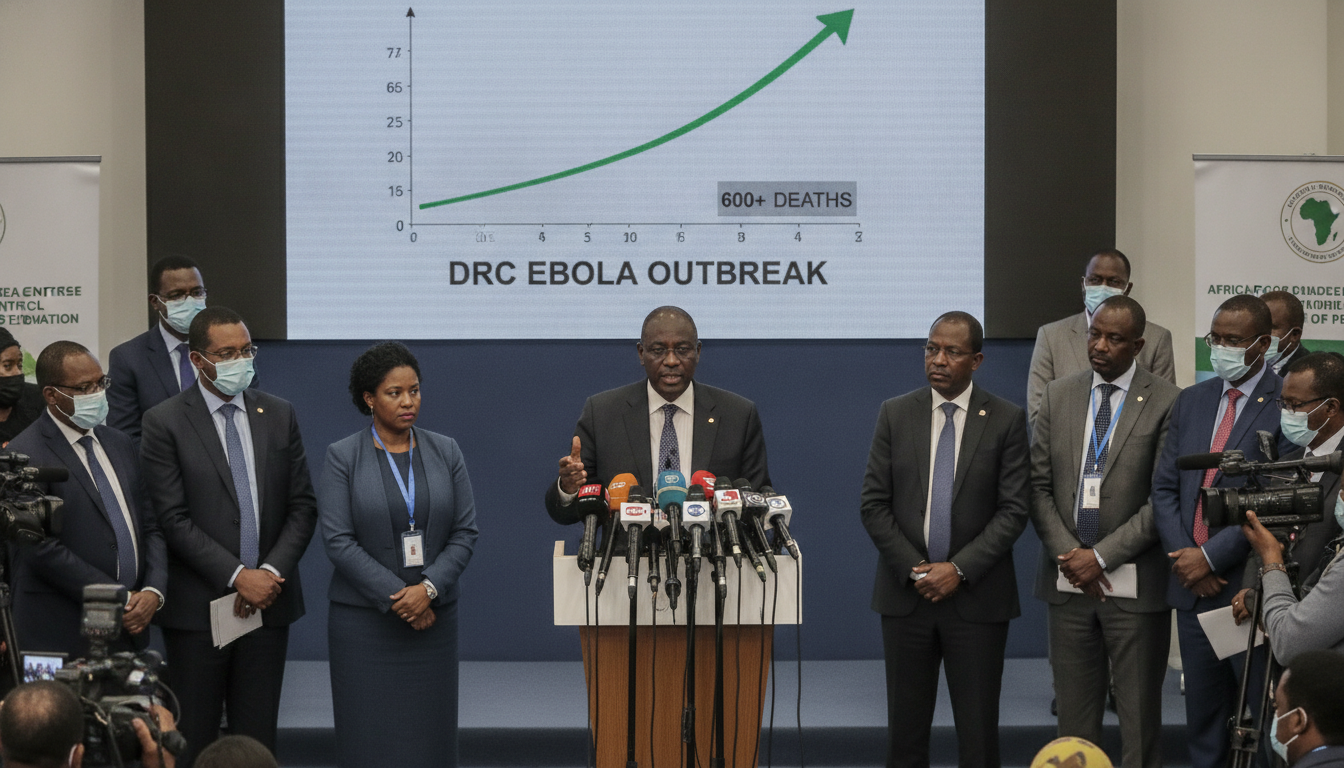
Ebola outbreak in DR Congo accelerating, African CDC calls it “fastest spreading” as WHO reports 1,759 cases
African CDC warns Ebola outbreak in DR Congo is the fastest spreading; WHO reports 1,759 confirmed cases and 600 deaths since mid‑May, and testing ramps up.
Rapid escalation of cases reported
The Ebola outbreak in DR Congo has accelerated sharply since it was declared in mid‑May, health authorities said. The African Centres for Disease Control and Prevention described the current wave as the “fastest spreading on record,” raising alarm across regional public‑health networks.
Updated figures from the World Health Organization show 1,759 confirmed infections in the Democratic Republic of Congo, accompanied by 600 confirmed deaths. Those fatalities rose from just over 500 to 600 in the span of three days, according to WHO updates.
WHO confirms latest caseload and fatalities
The World Health Organization has been issuing regular situation reports as the outbreak unfolds, providing the primary public tally of confirmed cases and deaths. WHO officials noted the steep climb in both infections and fatalities since mid‑May, underscoring the outbreak’s intensity.
The pace of reported deaths—600 confirmed—followed a rapid increase that prompted WHO to intensify coordination with national health authorities and regional partners. WHO statements emphasize the need for enhanced surveillance and rapid response to stem further transmission.
Health authorities describe transmission dynamics
Regional and national health authorities are monitoring clusters of transmission and working to map chains of infection. Officials say the recent acceleration appears driven by multiple, geographically dispersed clusters rather than a single contained flare‑up.
Public‑health teams are prioritising contact tracing and case investigation to identify exposure sites and interrupt onward spread. Authorities have warned that delayed identification of cases and gaps in surveillance can allow Ebola to spread more rapidly within communities.
Response measures being expanded on the ground
Health ministries and response partners are scaling up conventional measures used in Ebola outbreaks, including isolation of cases, safe patient care, and enhanced laboratory testing. Officials report increasing efforts to expand testing capacity to detect cases earlier and reduce transmission risk.
Community engagement and risk communication have been highlighted as critical components of the response, with authorities seeking to address fears and misinformation that can hamper control efforts. International public‑health agencies are coordinating logistics and technical support to bolster local response teams.
Regional and international concern grows
The African CDC’s stark warning has prompted concern beyond national borders, with regional bodies and global health actors monitoring the situation closely. The agency’s characterisation of the outbreak as exceptionally fast‑spreading has sharpened appeals for resources and logistical support.
WHO and partner organisations are maintaining situational awareness and preparing contingency support as required by national authorities. Health diplomats and donor agencies have been urged to prioritise rapid delivery of supplies and personnel support to affected areas.
Uncertainty over trajectory and containment prospects
Despite intensified response efforts, the outbreak’s future trajectory remains uncertain while transmission continues. Public‑health specialists caution that rapid, coordinated action is essential to reverse the current trend and prevent wider spread.
Authorities emphasise that slow or incomplete implementation of response measures could prolong the outbreak and increase the toll on communities already facing fragile health systems. Calls for sustained funding and operational support have been reiterated by both regional and international stakeholders.
The outbreak has prompted urgent reminders about the importance of early detection, robust contact tracing, and well‑resourced treatment and isolation capacity to control Ebola. As testing ramps up and response operations expand, officials say accurate and timely data will be critical to guide interventions and protect public health.
