
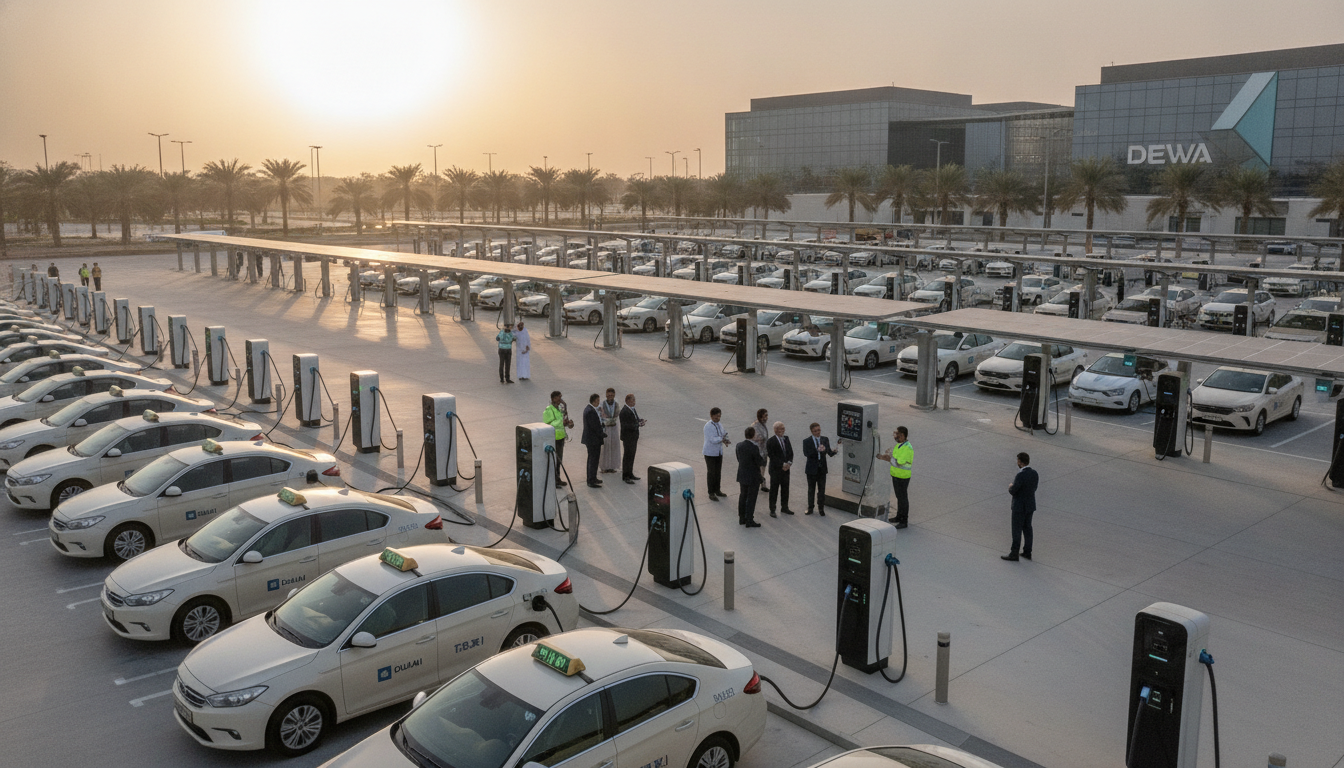
DEWA and Dubai Taxi Launch Electric Taxi Charging Stations with 24 Ultra‑Fast 360kW Chargers
DEWA and Dubai Taxi have inaugurated new electric taxi charging stations in Dubai, marking the first phase of a strategic rollout to support the city’s growing electric fleet. The opening station at Muhaisnah 4 includes 24 next‑generation ultrafast chargers, central to plans for a wider network of dedicated chargers for the taxi fleet.
First Phase Activated at Muhaisnah 4 Headquarters
The first phase was officially unveiled at Dubai Taxi’s main headquarters in Muhaisnah 4, where DEWA and Dubai Taxi opened a station equipped with 24 ultrafast charging points. Each charger delivers up to 360 kilowatts, enabling rapid replenishment of vehicle batteries and concentrated support for the company’s electric taxis.
The facility is designed to charge 24 vehicles simultaneously in roughly 35 minutes, significantly cutting downtime for taxis between shifts. Operators say the configuration will help maintain high service availability during peak hours and reduce idle time that previously limited wider EV adoption in commercial fleets.
Long‑Term Agreement Stemming from WETEX 2025
The station is the first tangible result of a long‑term strategic agreement signed between DEWA and Dubai Taxi at WETEX 2025. Under that deal, both parties committed to establishing more than 200 ultrafast charging points dedicated to the taxi fleet across the emirate.
Officials described the project as part of a phased rollout that will expand coverage to key depots and hubs, enabling route planning that factors in fast recharging. The partnership frames the chargers as infrastructure tailored to the operational needs of public transport and mobility providers rather than general public use alone.
Technical Specifications and Operational Benefits
The chargers deployed at Muhaisnah 4 are described as next‑generation, supporting 360kW output per point and designed for high throughput and reliability. This level of power shortens charging sessions, allowing taxis to return to service more quickly compared with conventional public chargers.
Beyond individual charging speed, the station’s ability to serve 24 vehicles at once addresses queuing and scheduling constraints that often hinder fleet electrification. Fleet managers expect improved turnaround times, lower operating costs linked to reduced idle hours, and simpler shift scheduling as a result.
Officials Emphasize Sustainability and Strategic Alignment
DEWA’s managing director and CEO framed the collaboration as a step to accelerate Dubai’s transition to more sustainable, efficient mobility. He linked the initiative to the emirate’s Green Mobility Strategy 2030 and the Dubai Net Zero Carbon 2050 ambition, saying the infrastructure supports reduced emissions and cleaner air.
Leaders from Dubai Taxi highlighted the project’s operational value and long‑term community benefits, noting the alliance will help scale electric taxi services while ensuring dependable charging access. Company executives said the partnership reflects shared goals to make Dubai a global model for smart, low‑emission transport.
Expected Impact on Fleet Electrification and Service Quality
Fleet electrification proponents say the addition of dedicated ultrafast chargers removes a major barrier to replacing combustion taxis with electric models. Faster, predictable charging reduces uncertainty for drivers and operators, helping to maintain income and service levels even as vehicle types change.
The chargers also create potential for optimizing electricity demand and charging schedules to align with grid capabilities and renewable generation, according to DEWA’s public statements. That grid‑aware approach can enhance system efficiency and reduce the carbon intensity of recharging operations.
Rollout, Monitoring and Next Steps
Operators indicated that deployment will follow a phased schedule tied to fleet growth and depot readiness, with monitoring systems to assess charger uptime and usage patterns. Data collected during early operations will inform site selection and capacity planning for subsequent stations.
The partnership also opens the possibility of coordinated maintenance strategies and standardised billing and access systems tailored to taxi operations. Officials said these practical arrangements are being developed to ensure seamless integration into daily service routines.
The new electric taxi charging stations at Muhaisnah 4 represent an early but significant upgrade to Dubai’s public transport infrastructure, combining high‑power hardware with strategic planning to accelerate the city’s shift to greener mobility. As the wider network of chargers is rolled out, authorities and operators will monitor operational performance and user experience to guide future expansion and ensure the system supports both service reliability and environmental targets.
