
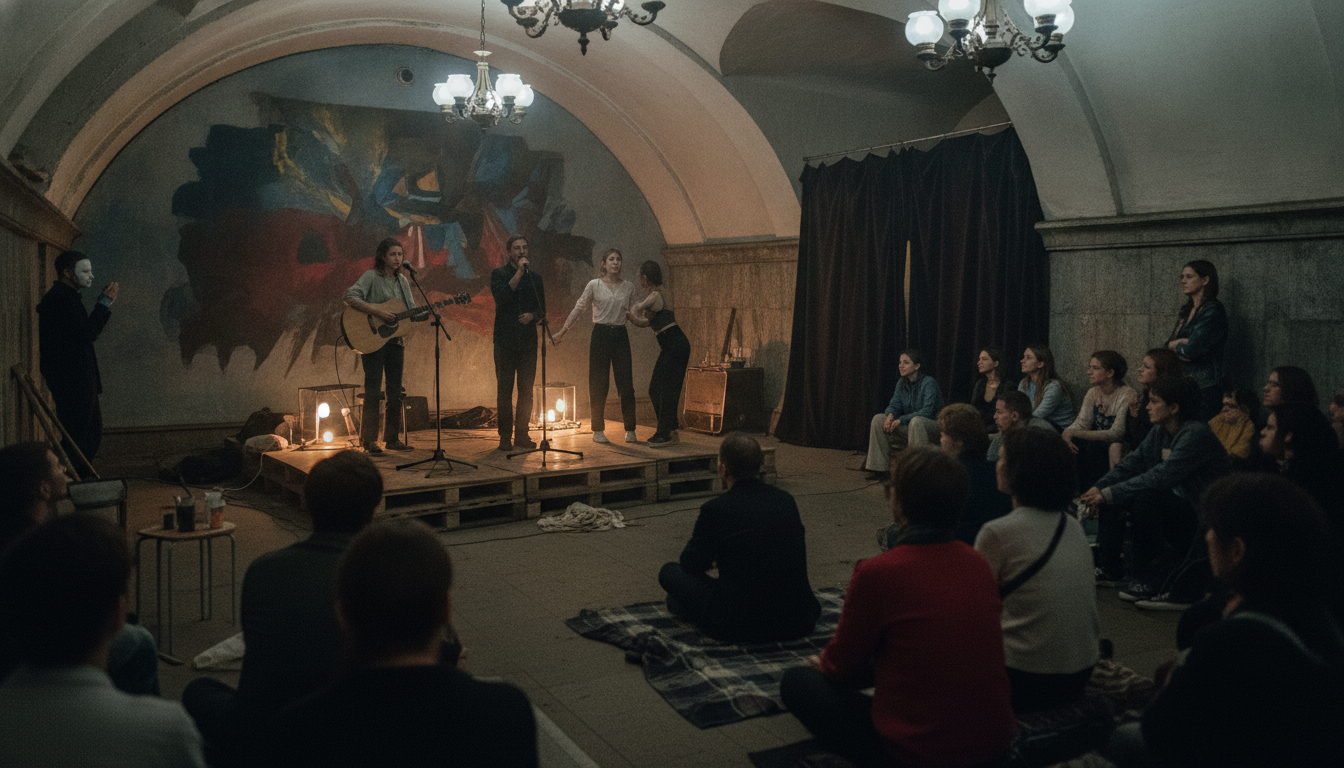
Moscow underground art scene retreats into hidden shows as censorship and drone strikes unsettle the capital
Inside Moscow’s underground art scene, hidden exhibitions and underground theatre have become refuges where artists, actors and audiences gather away from official scrutiny as censorship and drone strikes reshape daily life and sow fear.
Artists Seek Safety in Hidden Exhibitions
Across Moscow, curators and collectors are staging shows in cramped apartments, private studios and invitation-only venues to avoid public exposure. These covert exhibitions often rely on word-of-mouth and strict guest lists to protect participants who fear reprisals for work that strays from sanctioned narratives.
Organisers say the secrecy is pragmatic: it preserves careers and allows risky work to be shown without attracting state interference. For many, these events are less about spectacle than about sustaining a creative community under pressure.
Drones, Shortages and Uneasy Normalcy
Recent Ukrainian drone strikes and targeted attacks on infrastructure have punctured the city’s sense of normality, producing fuel lines and moments of anxiety that contrast with Moscow’s polished public image. The assaults have brought the conflict closer to daily life and heightened concerns among cultural figures about the fragility of their routines.
Residents now speak in euphemisms to skirt taboo topics, referring to the conflict obliquely or using bureaucratic language to explain disruptions. That caution reflects both legal risk and a widespread belief that public debate will not change policy but could bring personal consequences.
Theatre and Film Shape Messages Indirectly
Theatre companies and filmmakers are adapting by embedding commentary in metaphor, staging and visual contrasts rather than explicit criticism. Recent productions and films use nostalgia, black-and-white cinematography and ambiguous narratives to explore displacement and the personal costs of departure without naming the conflict directly.
Directors and actors who have left the country are a visible presence in the city’s cultural conversation, and those who remain often make careful choices to avoid crossing ill-defined lines. The result is a creative output that carries a political charge through suggestion rather than statement.
Schools, Connectivity and Everyday Workarounds
Muscovites navigate restrictions in mundane ways: commuters switch between VPNs to access blocked services, and parents seek schools that maintain international standards while sheltering students from propaganda. Small acts of defiance and pragmatic workarounds are common, from arriving late to avoid mandatory lessons to drafting petitions on trivial issues as a rehearsal in civic engagement.
These adaptations are both survival strategies and signals of a society that continues to value open exchange even as public space for dissent narrows. For many families, the challenge is to protect a sense of normal childhood and educational opportunity amid shifting social expectations.
Boloto Biennale and Metaphor as a Language
Events like the Boloto group’s rooftop installations and clandestine biennales illustrate how artists increasingly rely on symbolism to communicate. Curators and participants say large-scale metaphors and layered imagery can convey complex ideas while reducing the risk of direct confrontation with authorities.
Performances staged in unconventional sites — from parking garages to museum roofs revealed only to invited guests — have become a hallmark of this strategy. These settings not only shield works from immediate scrutiny but also create intense, ephemeral experiences that bind audiences together.
Underground Gatherings as Modern Silent Resistance
For many cultural figures, underground salons, book clubs and private performances function as the closest thing to civic life that remains possible. Participants describe these spaces as “capsules of calm” or “islands of peace” where conversation and art offer temporary refuge from political pressures.
There is little illusion that such gatherings can change national policy, but organisers and attendees view them as essential for maintaining social and intellectual life. The loose network of private events sustains collaboration, preserves alternative histories and keeps alive a form of collective memory that official channels increasingly omit.
Moscow’s underground art scene continues to evolve within these constraints, balancing the need for protection with a persistent drive to create and connect. As public space shrinks and uncertainties multiply, artists and audiences are finding new, often improvised ways to keep cultural life alive while weighing the personal risks of visibility.
