
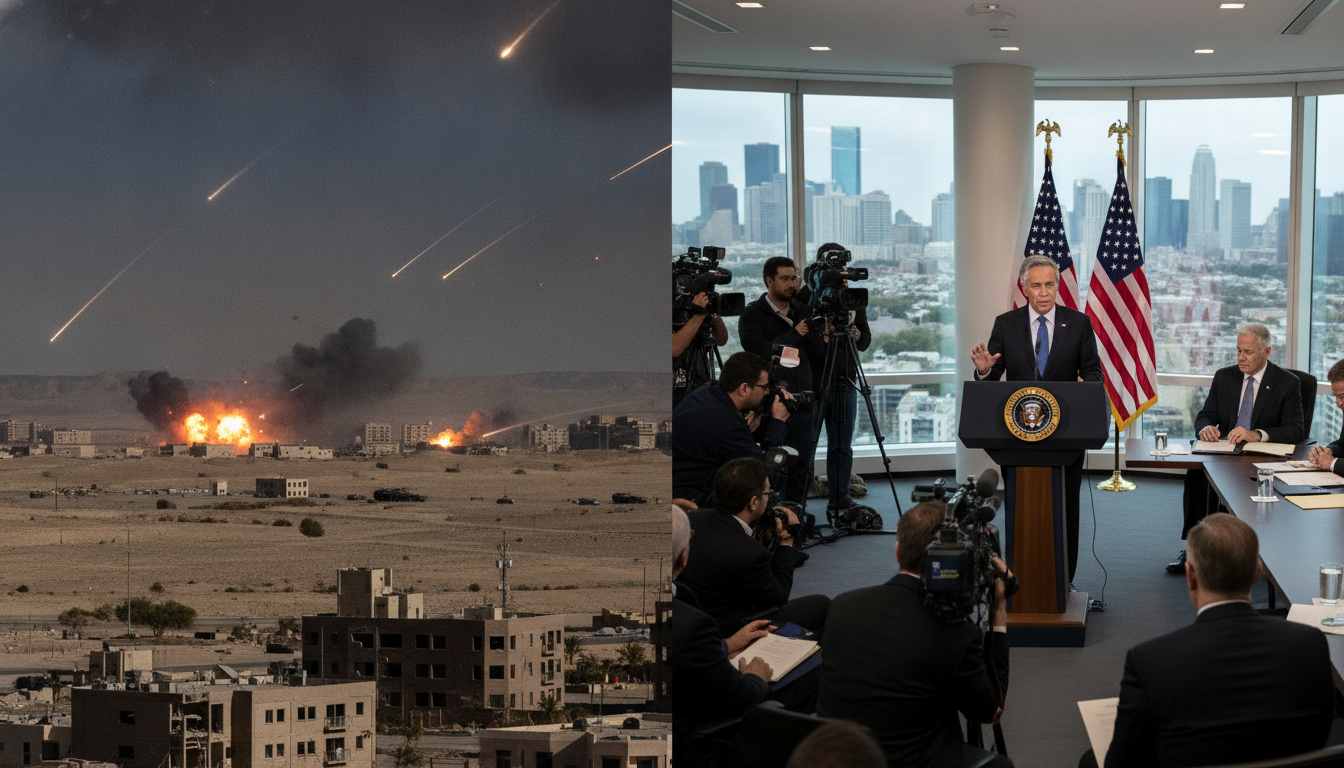
US-Iran talks survive a week of strikes as diplomacy seeks to rebound
US-Iran talks remain on the table despite intense exchanges this week that saw strikes across the Gulf and disputes over the June 17 MoU and Strait of Hormuz.
The United States has affirmed commitment to continuing US-Iran talks even after two days of reciprocal strikes that marked the most serious escalation since the June 17 memorandum of understanding was signed. Diplomats and mediators moved to stabilise communications as both Washington and Tehran traded allegations of breaches to the 60‑day ceasefire arrangement. While neither side has formally abandoned negotiations, the path to resuming technical talks is now clouded by fresh military actions and competing interpretations of the MoU.
Diplomatic messaging amid renewed hostilities
A senior US official told international media that Washington’s negotiating team remains committed to technical discussions intended to produce a lasting peace deal. That stance persisted even as US forces struck dozens of targets in Iran and Iranian units responded with attacks against US assets and regional infrastructure. The parallel of seeking diplomacy while conducting military operations has left negotiators walking a narrow line between pressure and engagement.
Mediators in the region and global capitals quickly moved to de‑escalate after the most recent exchanges, and there were signs of a temporary lull by Friday morning as talks to restore dialogue gathered pace. Both Washington and Tehran continue to accuse the other of violating the terms of the MoU, however, complicating efforts to set an agreed date for the next round of technical meetings.
Sequence of strikes and reported incidents
The sequence began on Tuesday night when the US launched strikes on multiple targets in Iran, citing recent attacks on commercial vessels in the Strait of Hormuz. Iranian state and independent reporting described retaliatory strikes targeting US military infrastructure in Gulf states, prompting further US strikes late Wednesday and into Thursday that struck southern and eastern Iranian provinces. Iranian authorities reported explosions in several southern cities, including Bushehr, where a nuclear facility is located; the United States denied involvement in those particular incidents.
Commercial shipping through the Strait of Hormuz was a focal point of the confrontation, with at least one tanker hit off the coast of Oman earlier in the week and international agencies reporting projectile strikes on vessels. The intensity and geographic spread of the incidents this week represent the sharpest bout of violence since the ceasefire pact went into effect on June 17.
Core terms of the June 17 memorandum
The memorandum signed on June 17 established a 60‑day period during which both sides agreed to a ceasefire on all fronts and committed to technical negotiations toward a comprehensive settlement. Key elements included assurances about free passage through the Strait of Hormuz for the duration of the period, Iran’s renewed pledges regarding nuclear non‑proliferation, and a US commitment to lift oil sanctions and end a naval blockade. The MoU also referenced a permanent end to hostilities, including provisions related to Lebanon.
Many of the broader and longer‑term issues — such as the future administration of shipping lanes, the fate of Iran’s frozen assets, and the mechanics of a sanctions rollback — were set to be thrashed out in follow‑on technical talks originally scheduled to begin in Switzerland and subsequently conducted indirectly in Doha.
Strait of Hormuz dispute deepens tensions
The most immediate and combustible disagreement concerns the rules governing passage through the Strait of Hormuz. Iran’s Islamic Revolutionary Guard Corps issued a map and demanded vessels follow an IRGC‑approved route after earlier closing the strait at the outset of the war. Some commercial ships have instead used a route endorsed by Oman and the United States, staying closer to Omani waters and bypassing IRGC coordination.
Tehran views such parallel routing as a violation of the MoU’s commitment to safe, uncharged passage and has sought to impose fees and new administrative controls in cooperation with regional partners. Washington and commercial operators reject any unilateral tolling or control that would undermine internationally recognised navigation freedoms, a dispute that has quickly moved from legal argument to kinetic confrontation.
Lebanon clause complicates implementation
The MoU’s first article aimed to halt military operations “on all fronts, including in Lebanon,” but the agreement contains no direct mechanism for compelling third parties to cease hostilities. Israel, which is not a signatory, continued operations in southern Lebanon for days after the MoU’s signing, creating immediate strains on the pact’s credibility. Subsequent US‑brokered talks produced an additional framework agreement intended to reduce hostilities, but the arrangement remains fragile and contested by Hezbollah and other regional actors.
Iran has repeatedly highlighted continued strikes in Lebanon as evidence that the United States is not fulfilling its obligations under the ceasefire terms, while Washington counters that it cannot compel third parties to act and that Iran’s interventions through proxies remain a destabilising factor. The unresolved status of Israel’s operations and the role of armed non‑state actors complicate any straightforward implementation of the ceasefire clauses.
Political statements and the negotiating environment
Political rhetoric this week further clouded prospects for an immediate return to formal negotiations. US presidential comments at a NATO summit signalled frustration with Tehran and cast doubt on the MoU’s durability, though officials later stressed that a return to full‑scale war was not the intended outcome. Iranian leaders described the latest US strikes as breaches of the agreement and filed a complaint with the United Nations Security Council.
Despite hostile public exchanges, diplomatic channels have not been severed, and technical teams are reported to be poised to reconvene if conditions allow. The willingness of both sides to keep negotiators in place suggests a recognition that a negotiated settlement remains preferable to sustained confrontation, but trust has eroded and the timetable for resuming structured US‑Iran talks is now uncertain.
The coming days will test whether mediators can translate the diplomatic intent expressed by officials into a secure environment for negotiators to meet and to restore a fragile truce that was designed to buy time for a permanent accord.
