
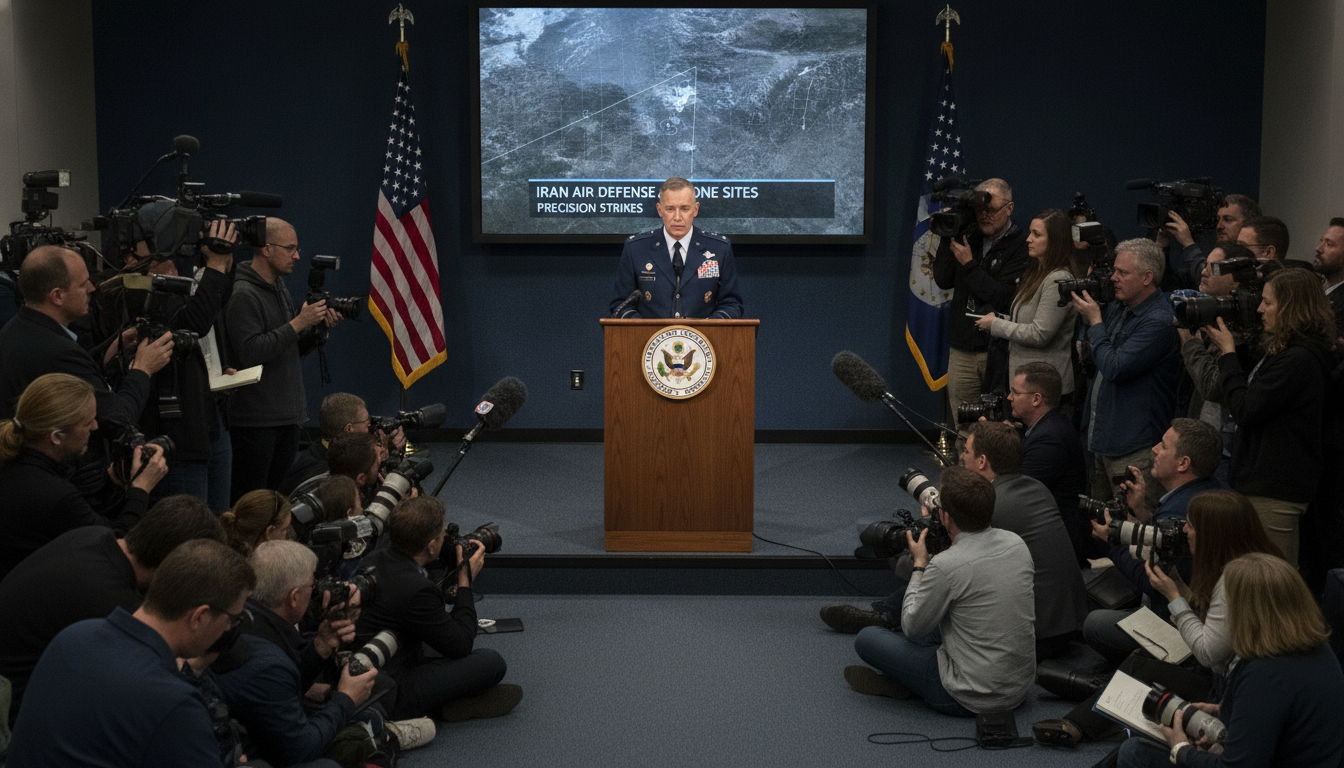
US CENTCOM Completes New Wave of Strikes on Iran to Protect Strait of Hormuz
CENTCOM said it completed precision strikes on July 12 targeting Iranian air defences, radar, missile and drone sites to degrade Tehran’s ability to menace shipping.
Opening summary of the operation
The United States Central Command (US CENTCOM) announced it completed a new wave of strikes on Iran on July 12, saying the operations used precision munitions to hit dozens of military sites across multiple locations. (dvidshub.net)
CENTCOM framed the action as a direct effort to reduce Iran’s ability to continue targeting commercial vessels and civilian mariners transiting the Strait of Hormuz. (dvidshub.net)
Targets and geographic scope of the July 12 strikes
CENTCOM said the strikes on July 12 struck Iranian military air-defence systems, coastal radar installations, missile and drone capabilities, and multiple small attack boats. (dvidshub.net)
Officials described the campaign as hitting dozens of sites across southern Iran and nearby coastal areas, with the intent of degrading command-and-control nodes and weapons launch platforms that can threaten international navigation. (gulfnews.com)
First-time employment of sea-launched one-way drones and new tactics
The command noted that for the first time U.S. forces employed one-way attack sea drones alongside one-way aerial attack drones during the operations, signalling an expansion in the types of systems used against Iranian maritime capabilities. (dvidshub.net)
CENTCOM also said conventional fighter aircraft and naval vessels participated, reflecting a multi-domain strike package designed to address both coastal and inland targets. (dvidshub.net)
Why the strikes were launched: protecting commercial shipping
CENTCOM stated the strikes followed a series of incidents in which Iranian forces were accused of attacking or threatening commercial ships in the Strait of Hormuz, including a recent strike on a Cyprus-flagged container vessel that caught fire. (rferl.org)
The U.S. military characterised the operations as necessary to safeguard freedom of navigation and to deter “unprovoked” harassment and threats the command says Iran has continued to carry out against merchant shipping. (dvidshub.net)
Scale of the campaign and reported results
CENTCOM and U.S. outlets reported that the July 12 action was the third wave of strikes in a week, with one statement putting the number of targets struck across the three nights at roughly 300 and describing about 140 targets in the latest round. (gulfnews.com)
U.S. releases accompanying the operations included video and imagery aimed at documenting strikes on radar, missile sites and small-boat concentrations, while Pentagon officials said the attacks were calibrated to degrade capabilities rather than to provoke broader escalation. (gulfnews.com)
Regional risk and immediate reactions
The strikes amplify an already tense security environment across the Gulf, where commercial and military vessels, regional air defences, and allied bases have been placed on heightened alert in recent weeks. (apnews.com)
Governments in the Gulf and international shipping firms have been monitoring the situation closely as both Tehran and Washington exchange military actions and warnings, raising concerns about the potential for miscalculation near critical choke points. (apnews.com)
The new U.S. actions also come amid diplomatic efforts and intermittent ceasefire frameworks pursued by outside parties, tensions that officials say complicate both military calculations and negotiations. (washingtonpost.com)
The strikes underscore a U.S. determination to enforce the security of international sea lanes while signalling to Tehran that attacks on civilian shipping will be met with sustained and expanding military responses. (dvidshub.net)
As both sides assess the impact of the latest strikes, regional partners and global maritime operators will watch for indicators of whether the campaign achieves its stated aim of deterring attacks on commerce or instead prompts further exchanges that could widen the confrontation.
Diplomats and military planners say the immediate focus is on preventing disruptions to commercial traffic through the Strait of Hormuz while avoiding actions that might trigger a broader regional conflict.
