
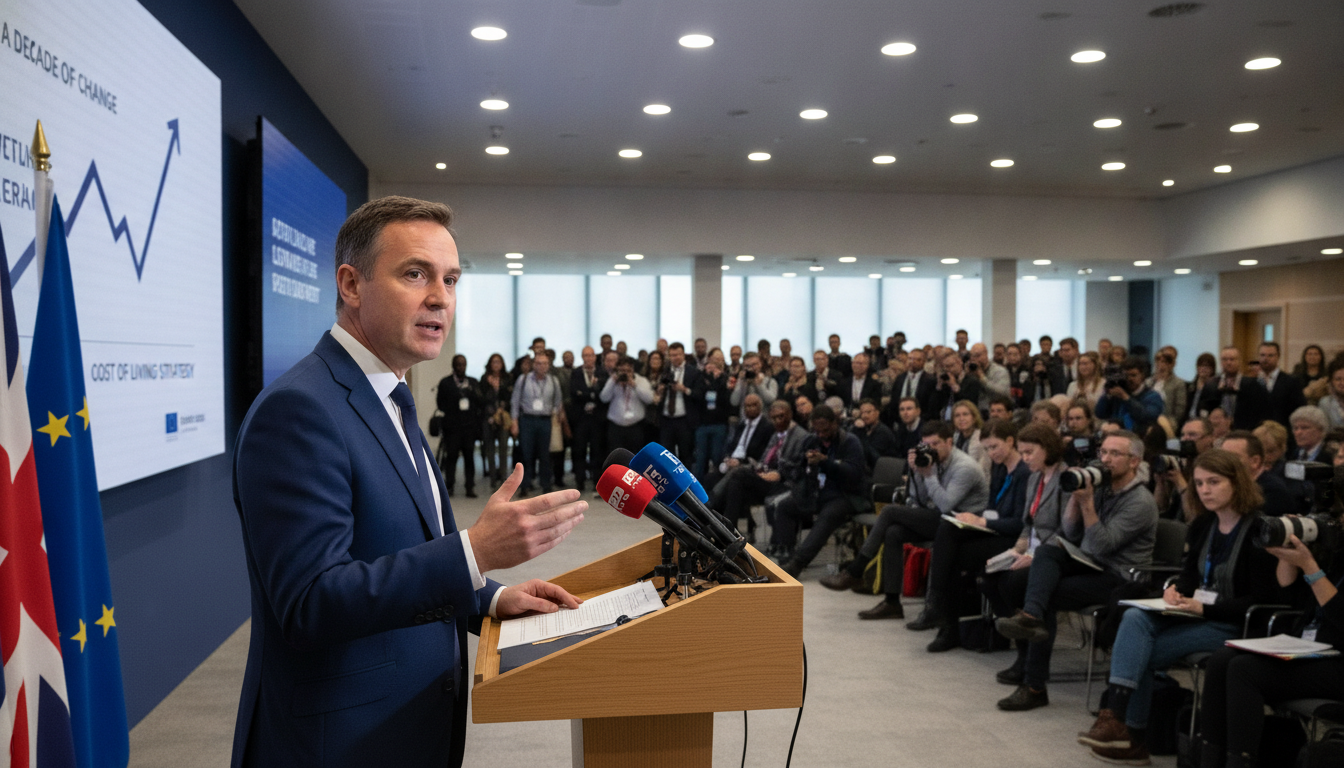
Andy Burnham announces ten-year plan to radically transform UK and tackle cost-of-living crisis
Andy Burnham unveils a 10-year plan to transform the UK: revive industry, expand social housing, combat homelessness and ease the cost-of-living crisis.
Andy Burnham pledged on Monday to launch a ten-year programme of sweeping reform aimed at “radically” transforming the United Kingdom and easing the pressures of a deepening cost-of-living crisis.
In his first address as prime minister, Burnham said the plan would restore public confidence, revive industry and expand social housing while placing a greater role on the state to oversee essential services.
The new prime minister, who succeeds a string of short-lived leaders as the seventh occupant of Downing Street in a decade, framed his mandate as the largest domestic reset since the 1980s.
Ten-year transformation pledge
Burnham outlined what he described as a decade-long strategy to reset Britain’s economic and social priorities and to return a sense of hope to citizens.
He said the programme would include measures to stimulate industrial renewal, boost homebuilding in the social sector and create an “economy in which the state has a stronger supervisory role” over vital services.
The prime minister did not set out detailed policy or fiscal measures during the speech but emphasised the scale and ambition of the proposed transformation.
Immediate focus on homelessness and social relief
On his first morning in office, Burnham visited a homeless centre to underscore a pledge to place tackling rough sleeping at the forefront of his agenda.
He told the public he would act quickly to “alleviate burdens on households and help them confront rising living costs,” although he stopped short of announcing concrete interventions.
The visit, attended by family members in the public gallery, was intended to signal a shift toward visible, social priorities from the outset of his government.
Economic headwinds and fiscal constraints
Analysts note Burnham faces severe constraints in delivering expansive public programmes while managing elevated public debt and sluggish economic growth.
The prime minister acknowledged the limited fiscal space available and framed part of his plan around targeted state involvement rather than unfunded largesse.
Observers say his government will need to balance immediate relief for households with medium-term measures that can sustain public finances.
Devolution, industry and the northern mandate
Burnham pressed for greater devolution and promised to transfer more powers to cities as part of efforts to energise regional economies.
His record as Manchester mayor, where he won three successive terms and cultivated a reputation for delivering local investment, underpins his pledge to give towns and cities more control over economic levers.
Reviving hard-hit industrial areas and leveraging local leadership are central to Burnham’s strategy for rebalancing growth across the country.
Foreign policy and support for Ukraine
Burnham said he would open talks with Ukrainian President Volodymyr Zelensky to reaffirm Britain’s commitment to supporting Kyiv against Russia.
The prime minister framed sustained defence and diplomatic backing for Ukraine as a priority even as domestic reform plans take shape.
Officials indicated the conversations were intended to reassure allies of continuity in Britain’s foreign policy stance.
Political outlook and electoral implications
Burnham’s ascendancy reshapes a crowded political field, with the Labour leader positioning him as a counter to Nigel Farage’s Reform UK in next general election calculations.
Conservative leader Kemi Badenoch criticised the appointment as lacking a clear plan for Britain’s future, underscoring immediate political contention over the new government’s direction.
British media have also speculated that Burnham may approve North Sea oil and gas projects as part of an effort to bolster energy security, a move that would carry both economic and environmental debate.
Burnham’s promise of a decade-long overhaul faces tests of credibility in the months ahead as his government must translate broad priorities into deliverable policies against a backdrop of constrained finances and volatile politics.
How quickly he can publish detailed measures, secure parliamentary support and demonstrate early wins on homelessness and household relief will shape public and political assessment of whether his “largest change in four decades” is achievable.
