
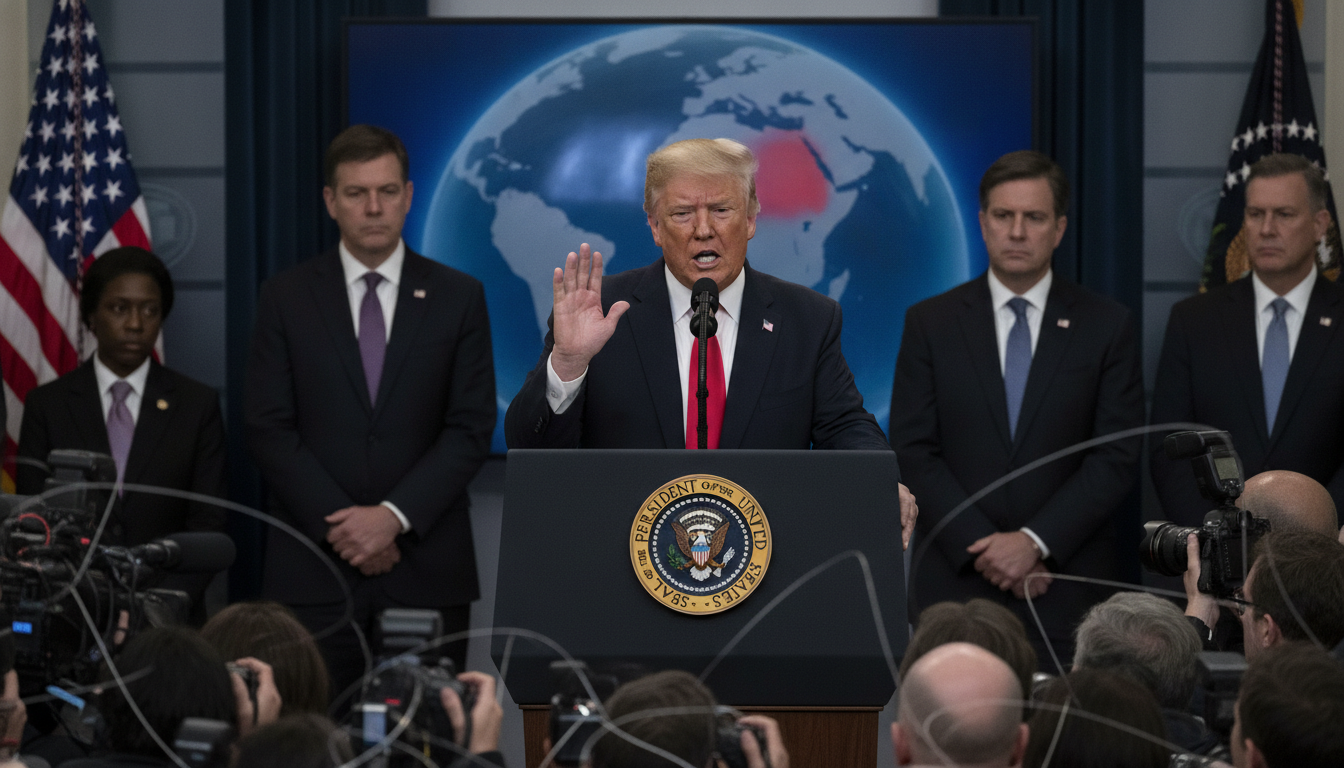
Trump Signals He Is Considering ‘Largest-Ever’ Attack on Iran
Former U.S. President Donald Trump says he is weighing the option of the largest-ever attack on Iran, telling Axios he is “ready” to order strikes if he decides to act.
Trump Signals Readiness for Major Strike
Donald Trump told Axios he is considering launching what he described as a bigger attack on Iran than any previous action, saying he is close to making a decision and prepared to follow through. The remark, in which he said Iranians “want to negotiate” but have “not received enough pain,” was presented as a direct signal of intent rather than a formal policy announcement.
The comments add a combustible element to already strained U.S.–Iran relations and were framed by Trump as leverage to extract concessions. While the statement conveys determination, it stops short of specifying targets, timing, or the scope of any proposed military operation.
Comments to Axios
In his interview with Axios, Trump emphasized that Tehran remained open to negotiations but had not suffered sufficient pressure to bring it to the bargaining table. He did not provide details on whether his readiness to strike reflected a new strategy or a continuation of previous hardline positions.
Axios reported the remarks as attributable to Trump, and the former president’s tone suggested urgency and decisiveness. The interview has drawn attention because it was public and unequivocal in rhetoric, even as operational specifics were absent.
Potential Military Scope and Implications
Trump’s reference to a “larger” attack raises questions about what such an operation would entail, including whether it would target military sites, infrastructure, or assets beyond conventional installations. Military planners and analysts routinely caution that escalation can produce unintended consequences across a region already tense with proxy conflicts and economic pressures.
A larger campaign could involve sustained air and missile strikes, naval deployments, and cyber or special operations components, but no official plan or authorization has been announced. Without clear parameters, the statement functions more as a political signal than as a concrete timetable for action.
Regional Security Concerns
Leaders across the Middle East closely monitor rhetoric from Washington and Tehran, given the potential for spillover effects that could affect shipping lanes, energy markets, and allied security. Gulf states, many of which maintain strategic and economic ties with both the United States and Iran, face the prospect of heightened instability if military confrontation escalates.
Regional military installations and commercial maritime traffic are often cited as vulnerable to wider conflict, a consideration that governments and private companies weigh when issuing advisories. The prospect of a major strike therefore raises alarms among policymakers focused on preserving stability and protecting trade routes.
Diplomatic Options and Iranian Response
Trump’s assertion that Iran is willing to negotiate but has not felt “enough pain” frames coercion as the primary lever for diplomacy in his assessment. Officials and analysts typically argue that a mix of diplomatic engagement, economic measures, and international pressure is required to sustain long-term de-escalation and address nuclear and regional-security concerns.
Tehran’s official reaction to this specific comment was not provided in Trump’s interview, and Iranian authorities have in various past statements alternated between threats of retaliation and willingness to pursue talks under certain conditions. How Iran interprets overt threats can influence its posture, ranging from increased brinkmanship to signals seeking back-channel dialogue.
What Comes Next in Washington
A public declaration of intent by a prominent political figure tends to prompt questions about the chain of command, legal authorities, and the degree of support among policymakers and military planners. Congressional leaders, Pentagon officials, and national security advisers typically require more than rhetoric to mobilize resources or to approve kinetic action.
Any movement toward strikes would likely force consultations at multiple levels of government and could trigger debate over the aims, risks, and timeline of military engagement. For now, the statement should be read as a high-profile warning that complicates diplomatic space without yet committing to an outcome.
The coming days are likely to produce statements from U.S. officials and regional partners clarifying positions and assessing risks. Observers will watch for any movement in diplomatic channels or military deployments that might indicate an escalation from rhetoric to planning.
Observers also note the domestic political context in which such comments are made can influence messaging and strategic calculations. How allies, opponents, and neutral actors respond will shape whether the comment remains a forceful signal or becomes the opening salvo of a broader campaign.
The situation remains fluid, and the absence of operational specifics means that policymakers and regional partners will base responses on subsequent developments and official communications. The public remarks underline the fragility of current U.S.–Iran relations and the high stakes of any escalation.
