
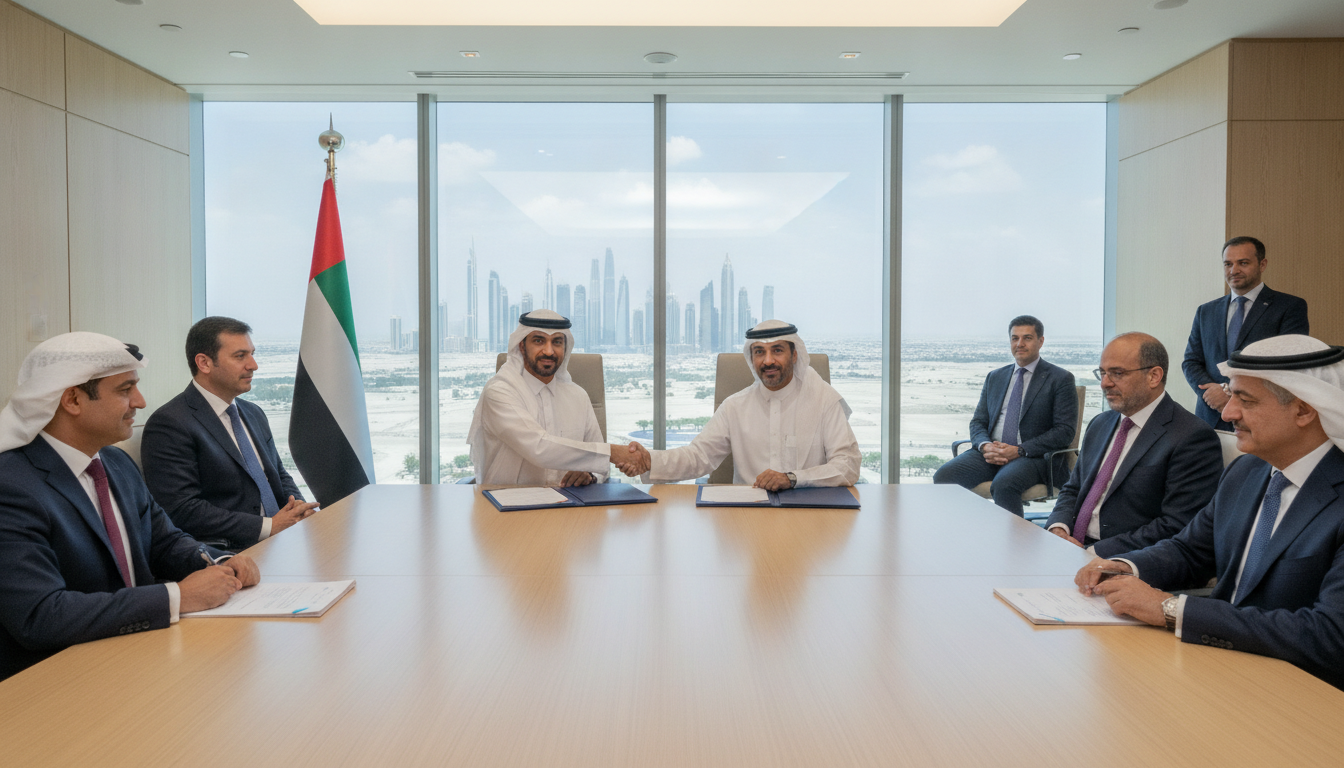
Dubai Civil Aviation Authority and Dubai Environment and Climate Change Authority sign MoU to boost aviation sustainability
Dubai Civil Aviation Authority signs MoU with Dubai Environment and Climate Change Authority to strengthen sustainability, safety and monitoring across the emirate’s aviation sector.
Agreement formalised to advance sustainability in aviation
The Dubai Civil Aviation Authority and the Dubai Environment and Climate Change Authority have signed a memorandum of understanding to deepen institutional cooperation. The MoU targets strategic partnership building to support Dubai’s environmental sustainability and aviation safety objectives.
The agreement, announced in a joint press statement, commits both authorities to exchange expertise, coordinate initiatives and develop joint programmes that link aviation operations with environmental protection. The collaboration is framed as part of the emirate’s wider agenda to integrate innovation, data-driven policy and interagency coordination.
Objectives and areas of cooperation
Under the agreement, the authorities will focus on areas including environmental monitoring, aviation safety and institutional innovation. Planned activities include sharing technical know-how, coordinating regulatory approaches and developing pilot projects that reduce environmental impact from aviation operations.
The partnership aims to support Dubai’s environmental and climate targets by aligning aviation policies with the emirate’s sustainability roadmap. Emphasis will be placed on practical measures that can be scaled across airports and aviation facilities to lower emissions and improve ecological resilience.
Officials underscore institutional integration
Mohammed Abdullah Lanjawi, Director General of the Dubai Civil Aviation Authority, described the MoU as a strategic step towards a safer and more sustainable aviation ecosystem. He said the collaboration reflects a commitment to unify institutional efforts and adopt leading practices in safety, security and environmental protection.
Ahmed Mohammed bin Thani, Director General of the Dubai Environment and Climate Change Authority, highlighted the role of science and data in the new partnership. He noted that advanced tracking and monitoring technologies will be repurposed to strengthen environmental surveillance and inform policy decisions across the emirate.
Technical cooperation and environmental monitoring
A central plank of the agreement is the use of advanced tracking technologies and data analytics for environmental monitoring. The authorities plan to integrate observational systems used in aviation with environmental data streams to improve air quality assessment and emissions tracking.
This approach aims to create a more granular understanding of aviation-related environmental impacts, supporting targeted interventions at airports and flight corridors. The data-centric model will inform mitigation measures and help measure progress against Dubai’s climate commitments.
Implications for aviation safety and operational resilience
Officials said the MoU will also reinforce safety and security frameworks within civil aviation by embedding environmental considerations into operational planning. Coordinated protocols are expected to enhance risk management and improve emergency preparedness across aviation infrastructure.
Linking environmental oversight with safety governance is intended to produce co-benefits: reduced ecological footprint alongside strengthened operational resilience. Authorities anticipate that harmonised standards and shared training will raise performance across both domains.
Implementation plan and next steps
Both authorities outlined a phased approach for implementing the MoU, starting with technical exchanges, joint assessments and pilot initiatives at selected facilities. The partnership will prioritise capacity building, joint research and the development of best-practice guidelines that can be adopted across the sector.
Regular evaluation and mutual reporting will be used to track outcomes and adapt programmes as needed. Stakeholder engagement with airports, airlines and other government entities will form part of the rollout to ensure broad uptake and alignment with regulatory frameworks.
Positioning Dubai as a model for integrated governance
The agreement is presented as part of Dubai’s broader ambition to be a global exemplar in sustainable and innovative governance. By pairing aviation oversight with environmental science, the emirate aims to demonstrate how cross-sector collaboration can accelerate climate action while maintaining high standards of safety and service.
Observers say the MoU may encourage similar partnerships regionally, where aviation growth and environmental stewardship are increasingly viewed as interdependent priorities. Dubai’s approach seeks to balance economic vitality with measurable environmental progress.
The memorandum between the Dubai Civil Aviation Authority and the Dubai Environment and Climate Change Authority marks a formal step toward coordinated policy, technology sharing and joint programmes that align aviation operations with the emirate’s sustainability and safety goals.
