
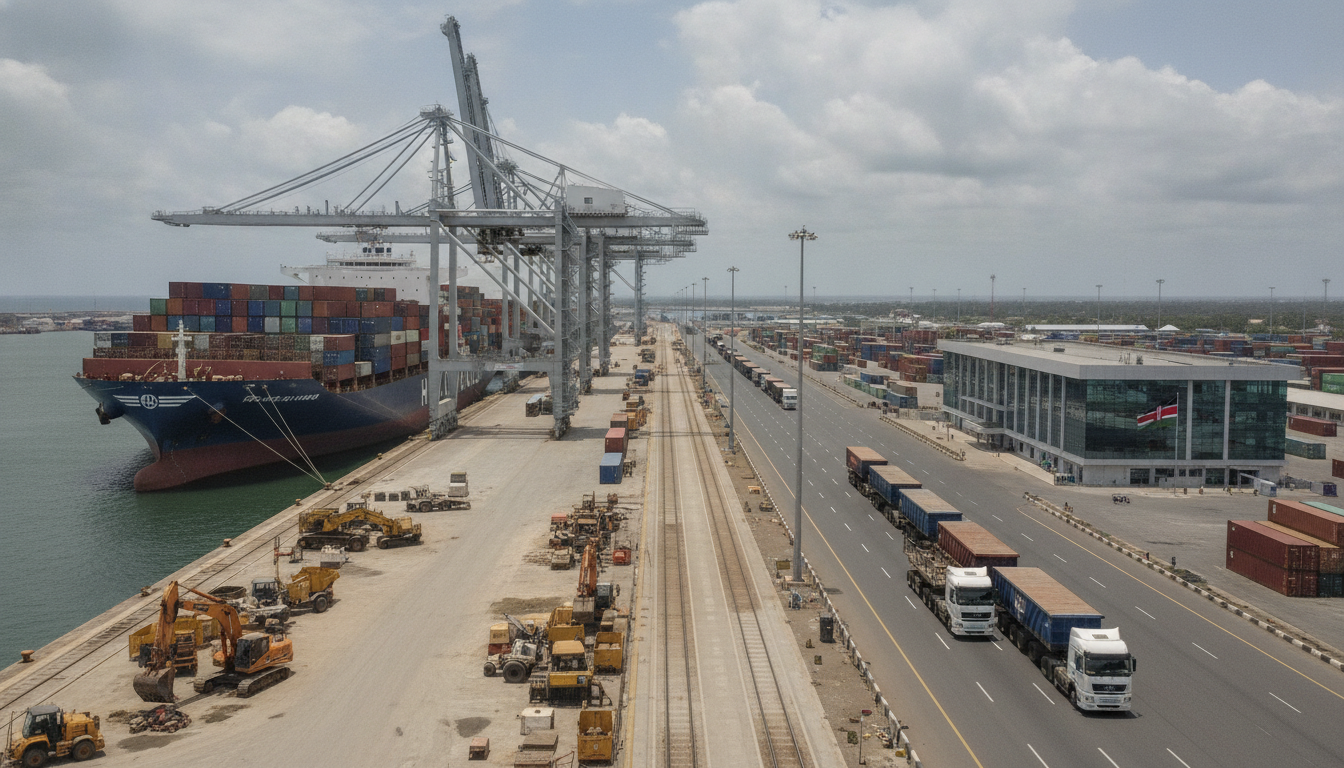
Lamu corridor revival gathers pace as shipping reroutes and investors return
Shipping diversions after the Middle East war and investor interest are reviving the Lamu corridor, accelerating major infrastructure projects across East Africa.
For more than a decade the Lamu corridor project has been a promise on Kenya’s northern coast, but recent shipping diversions and renewed investor attention have brought the scheme back into play. The Lamu corridor project, intended to link Kenya’s Lamu port by pipeline, rail and road to oil fields in South Sudan and markets in Ethiopia, is once again under discussion among policymakers and financiers. After years of delay the port at Lamu, which received its first vessels in 2021, is operating on a limited scale while plans for the wider corridor gain fresh momentum.
Revival driven by shipping diversions
Since February, conflict in the Middle East prompted dozens of vessels bound for the Gulf to reroute toward East African ports, including Lamu, creating an immediate uplift in activity. Port authorities report a noticeable increase in calls and enquiries, turning the long-stalled project into a practical alternative for some regional and international shippers. This short-term traffic bump has catalysed new political and commercial conversations about completing the multi-modal corridor.
Port of Lamu’s operational reality
Although Lamu’s deepwater port was touted as the linchpin of the corridor when the initiative launched in 2012, the port remains the only operational element after 14 years of planning. Capacity is presently limited and most large-scale components — the pipeline, the proposed railway and associated highways — are not yet built. Local managers say the port’s modest traffic since 2021 has demonstrated potential, but noted that full economic returns depend on linking the wider regional network.
Regional megaprojects reshape ambitions
The rejuvenated interest in the Lamu corridor is part of a broader resurgence in African megaprojects that includes recent, high-profile undertakings across the continent. Major investments such as the continent’s largest hydropower dam completed in 2025 and a multi‑billion dollar refinery entering production have shifted expectations about what African governments and private investors can deliver. These projects have encouraged policymakers to treat ambitious transport and energy links as economically transformative rather than purely aspirational.
Financing gap and private capital’s role
Despite enthusiasm, financing remains the principal challenge for large-scale infrastructure in Africa, with annual needs far outstripping current public spending. Multilateral estimates indicate Africa must increase infrastructure investment substantially to sustain higher growth — a gap that requires private capital alongside government funding. Between 2021 and 2024 private financing mobilised annually rose from roughly $13.2 billion to $20.4 billion, and foreign direct investment hit near‑recent highs, but governments still face rising debt service costs and tighter budgetary space.
Geopolitics and competing backers
Global strategic competition has intensified funding options for continental transport corridors, influencing which projects secure backing and how they are structured. Western development finance institutions have moved to support alternatives to long‑standing Chinese-led investments, offering targeted funding and political support for corridors that link mineral belts to global markets. That shift has drawn new capital to initiatives that align with broader geopolitical goals, while also prompting careful scrutiny of economic viability and local benefits.
What completion of the corridor would mean
If built to its original scale, the Lamu corridor would provide Ethiopia and South Sudan with a direct maritime outlet, shorten transit times for regional trade and open new export routes for oil and minerals. Proponents argue the corridor could spur industrial growth and regional integration, but success will hinge on realistic phasing, stronger governance and a mix of public and private financing. Critics caution against overloading governments with unsustainable projects and stress the need for rigorous cost‑benefit analysis before commitments escalate.
Looking ahead, the Lamu corridor’s near-term prospects are tied to whether the recent surge in port traffic is sustained and matched by practical financing and clear timelines. Policymakers and investors face a balancing act between seizing a strategic opening and avoiding the pitfalls of oversized, underfunded projects. The revival of discussions around Lamu highlights both the urgent infrastructure needs across Africa and the complexities of turning megaproject ambition into durable economic benefit.
