
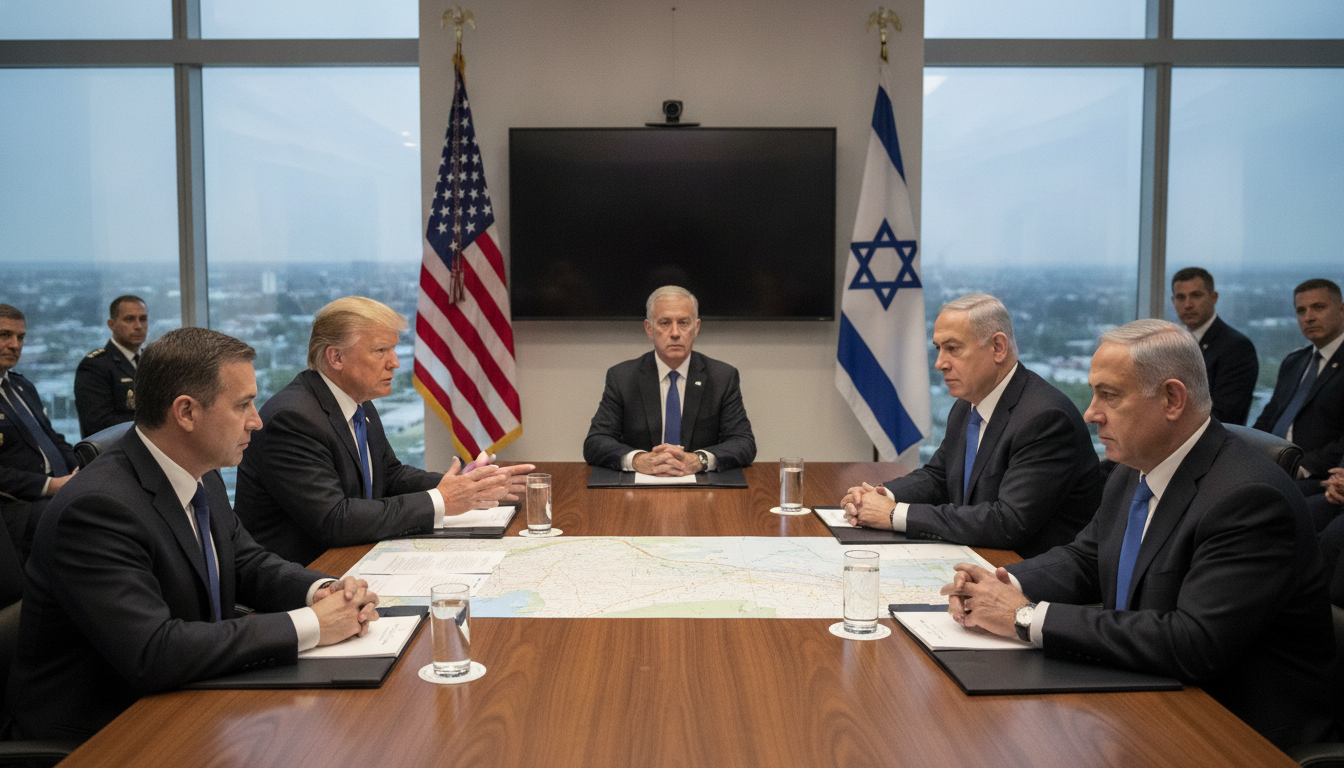
Trump suspends planned US-Israeli strikes on Iran, calls for rapid agreement to reopen Strait of Hormuz
Trump suspends planned US-Israeli strikes on Iran amid regional appeals, urging a swift deal to fully reopen the Strait of Hormuz and ensure regional security.
President Trump announced a suspension of planned US-Israeli military strikes on Iran, saying the pause followed appeals from Tehran and other Middle Eastern governments. The president used his social platform to condition the halt on a rapid diplomatic agreement that would guarantee the immediate and full reopening of the Strait of Hormuz and address Iran’s nuclear capabilities. He said Israel has joined the commitment and called on all sides to act without delay to finalize the deal. The declaration framed the pause as a step toward a safer regional future while underscoring the United States’ continued readiness to respond.
Trump’s Suspension Order
President Trump posted the decision on his Truth Social account, describing the move as responsive to requests from Iran and regional interlocutors. He said the United States had been prepared to use a level of military force and deterrence not seen since World War II but chose to hold off in favor of diplomacy. The suspension was presented as conditional rather than permanent, tethered to swift, verifiable concessions. Officials in Washington have not published formal terms of the arrangement at the time of the announcement.
Conditions Attached to the Pause
Central to the suspension is a demand for the “immediate and full” reopening of the Strait of Hormuz, a vital global oil transit chokepoint. The president also insisted on measures to end what he described as the Iranian nuclear threat, calling for guarantees that would satisfy the United States and its partners. The administration emphasized a rapid, binding agreement as the price for canceling the planned strikes. It remains unclear which verification mechanisms or timelines would be acceptable to all parties.
Israel’s Commitment
The White House statement said Israel has joined the commitment to the conditions set by the United States, signaling Tehran and Jerusalem are temporarily aligned on seeking diplomatic resolution. Israel’s inclusion underscores the bilateral nature of the originally planned operation and frames any negotiated outcome within a US-Israel security partnership. Tel Aviv’s public confirmation of participation would be a key element for regional actors monitoring the development. How Israel’s security concerns will be addressed alongside Iranian demands will be central to further negotiation.
US Military Posture and Deterrence
Despite the suspension, the administration stressed that US forces remain poised and capable of a rapid response if diplomacy fails. The president used strong language to underline American deterrent capabilities, suggesting the military option remains credible and immediate. Pentagon officials historically maintain routine readiness even amid diplomatic overtures, and current signals indicate heightened preparedness in nearby commands. Analysts caution that showing both restraint and force can be a delicate balancing act that affects regional calculations.
Regional Appeals and Tehran’s Response
Trump said the pause followed direct appeals from Tehran and unspecified countries in the Middle East, portraying the decision as responsive to regional mediation efforts. Tehran’s public confirmation or detailed terms of its countercommitments were not included in the initial announcement, leaving substantial ambiguity about the scope of concessions it might accept. Regional capitals that rely on Gulf shipping lanes have a particular interest in the Strait of Hormuz reopening and could be crucial intermediaries. Observers note that trust deficits and verification remain significant hurdles to any quick resolution.
Diplomatic Track and Risks Ahead
The administration called for immediate action to convert the suspension into a durable agreement, but negotiators face compressed timelines and high stakes. Key issues include inspection access, timelines for nuclear restrictions, enforcement mechanisms, and credible guarantees to all parties, including Israel and Gulf states. Failure to translate the pause into enforceable measures risks a rapid return to heightened military postures and possible escalation. Diplomats and regional leaders will need to reconcile competing security demands if the temporary stay of operations is to become a lasting accord.
The president framed the cancellation of the strikes as a choice in favor of “a better future,” urging all involved governments to conclude negotiations at once. For now, the announcement leaves both a diplomatic opening and a fragile balance of deterrence on the table as Washington, Tehran, Jerusalem and regional partners weigh next steps.
