
Trump says Trump-Iran talks to begin today after he halted planned strike
Trump announces Trump-Iran talks will begin today after he halted a strike, seeking a deal to reopen the Strait of Hormuz and limit Iran’s nuclear threat.
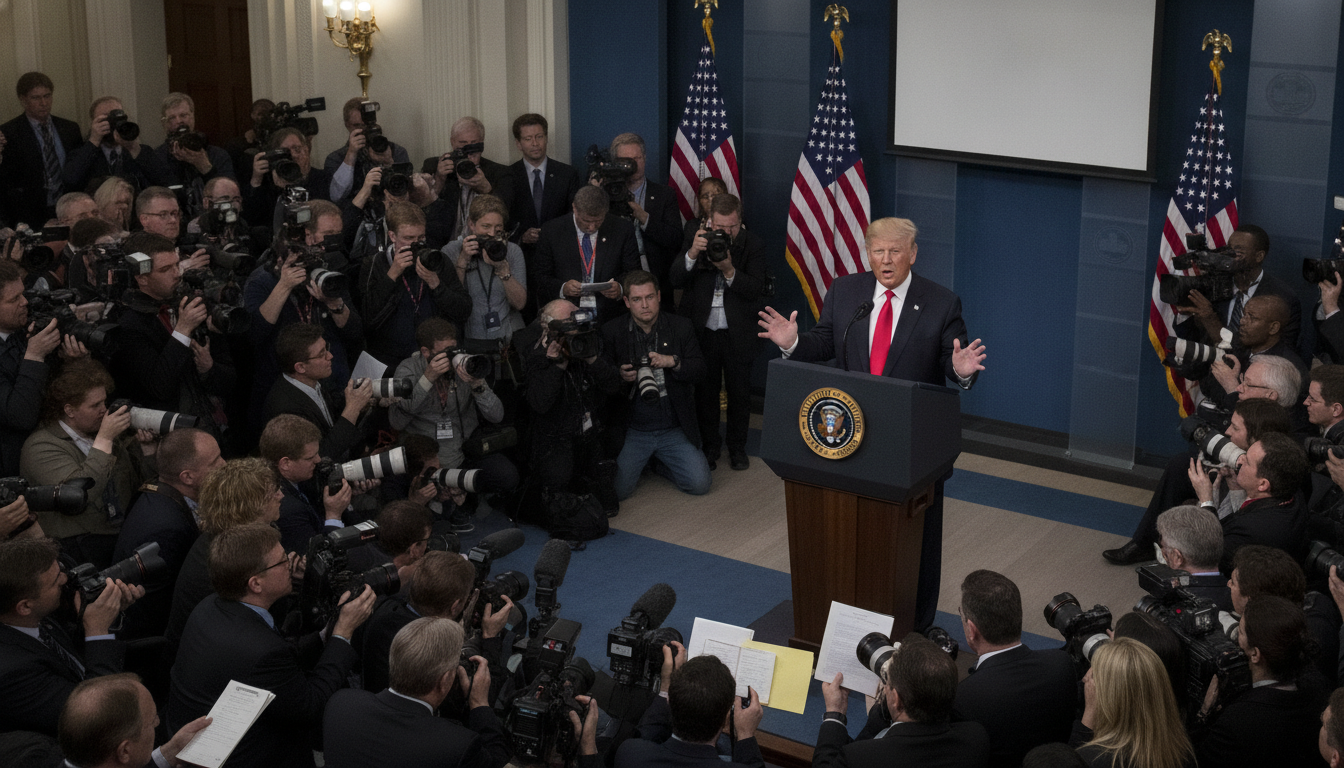
President Donald Trump said Monday that Trump-Iran talks will take place today after he called off an imminent strike on Iran in hopes of reaching a rapid agreement. He told reporters the negotiations were set to start in the afternoon, but he did not disclose a venue or identify the other participants. Trump’s announcement followed a weekend post on his Truth Social platform saying Iran and other regional states had requested more time to finalize an accord.
Planned military action was suspended to allow diplomacy
White House officials said the decision to halt the impending strike reflected a preference for a diplomatic resolution, according to the president’s remarks upon returning from New Jersey. Trump framed the pause as an effort to avoid further loss of life while pursuing a deal that could resolve several points of tension. The suspension was explicitly tied to the prospect of talks that could produce immediate, comprehensive outcomes.
Trump indicated that the pause was contingent on rapid progress, but he gave few operational details and did not identify which U.S. agencies or foreign delegations would be involved. The lack of specificity leaves open questions about the level of military readiness retained while diplomacy proceeds. Observers noted that the move could buy time for negotiated concessions while also preserving the option of force if talks fail.
Agreement aims to reopen the Strait of Hormuz and end nuclear threat
In a statement on his Truth Social page, Trump said Iran and other East Mediterranean states sought time to complete an agreement that would “reopen the Strait of Hormuz immediately, fully and comprehensively” and “end the Iranian nuclear threat,” using language he reiterated in public comments. The reopening of the strait and a rollback or clear limits on Tehran’s nuclear capabilities were described as central objectives. Trump emphasized urgency, saying Tehran must conclude a deal “quickly.”
The Strait of Hormuz is a strategic chokepoint for global oil and shipping, and its closure or disruption would have immediate economic and security ramifications. Any diplomatic package that addresses maritime security as well as nuclear restrictions would need verification mechanisms and guarantees acceptable to multiple regional actors. Those details, however, were not disclosed by the president.
No deadline demanded from Tehran, Trump declines to set one
When pressed on whether there was a firm deadline for Iran to accept terms, Trump declined to set a cutoff and avoided committing to a specific timeline in his remarks on Sunday. He responded to reporters by stressing that a negotiated settlement was preferable if it prevented further casualties and escalation. The president noted that the choice to pursue talks did not mean abandoning pressure, framing diplomacy as a course that might spare lives while achieving objectives.
The absence of a public deadline leaves the negotiations’ tempo ambiguous and may reflect a deliberate bargaining posture. Diplomats sometimes withhold timetables to preserve leverage and create flexibility for back-channel exchanges. Analysts caution that the success of such a strategy often depends on parallel incentives and credible enforcement mechanisms.
Venue and participants of talks are not disclosed
Trump told reporters the talks would begin in the afternoon but did not identify where the meetings would be held or which countries would participate. The president’s reticence on logistics means that confirmation of third-party mediators or regional stakeholders is not yet available. That privacy could be intended to protect sensitive negotiations or to allow informal discussions to proceed without immediate public scrutiny.
The president also said that Iran and other Middle Eastern states had requested time to conclude an agreement, a detail suggesting regional involvement beyond the two direct parties. Whether Gulf states, European partners, or UN representatives will play formal roles remains unclear from the administration’s public comments. Such participation could shape the scope and enforceability of any final arrangement.
Diplomatic pause carries wide regional and economic implications
A negotiated settlement that reopens the Strait of Hormuz and addresses nuclear concerns would reduce immediate risks to global energy markets and could ease tensions across the Gulf. Regional powers will be watching for concrete measures, including verification, sanctions relief or reimposition, and security guarantees, that would accompany any deal. The potential for rapid de-escalation, however, hinges on reciprocal commitments and transparent monitoring.
Even as talks commence, military and intelligence officials are likely to maintain contingency plans, given the history of sudden shifts in regional dynamics. Markets, shipping insurers and allied capitals will be alert to any official confirmations or changes in threat assessments. The next 48 to 72 hours may be critical for determining whether the diplomatic window yields tangible advances.
The coming hours will test whether the Trump-Iran talks can produce a swift, verifiable agreement that meets the administration’s objectives while satisfying regional stakeholders. For now, the president’s announcement has paused immediate military action and put the emphasis on diplomacy, even as key details — venue, participants and precise timelines — remain undisclosed. Observers will be monitoring official statements and any emerging terms that could reopen the Strait of Hormuz and address concerns over Iran’s nuclear capabilities.
