
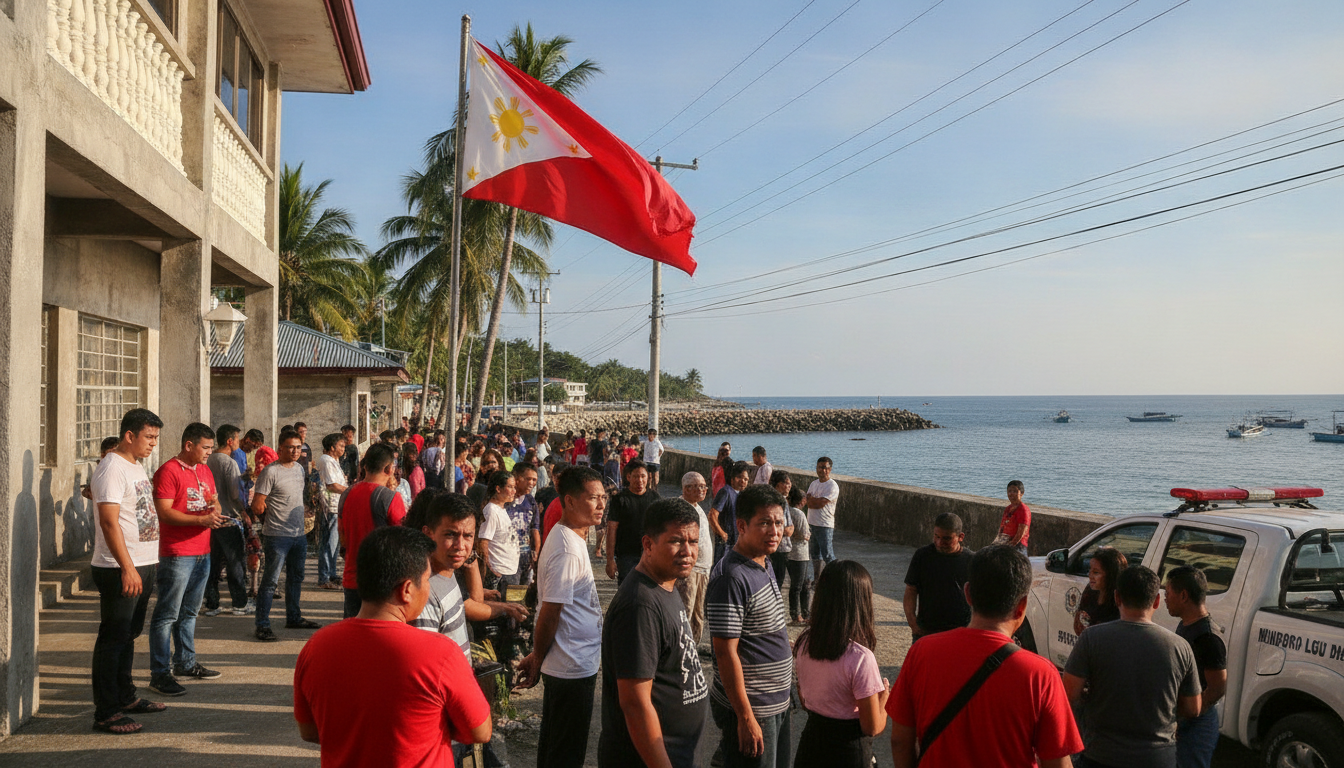
5.8 Magnitude Earthquake Strikes Off Mindoro Coast; No Immediate Reports of Damage
A 5.8 magnitude earthquake struck off the coast of Mindoro, Philippines, on August 7, 2026, with the epicentre near Mamburao, officials said. The Mindoro earthquake prompted monitoring by local authorities, who reported no immediate casualties or major damage.
Tremor Details and Epicentre
The Philippine Institute of Volcanology and Seismology (PHIVOLCS) recorded the quake as a 5.8 magnitude event with an epicentre located approximately 21 kilometres west of Mamburao. The agency reported the hypocentre at a shallow depth of about 10 kilometres beneath the sea floor, a depth that can increase the likelihood of strong local shaking.
Seismic instruments detected the tremor on August 7, 2026, and initial readings were released publicly by PHIVOLCS as part of routine monitoring. No tsunami warning was issued following the event, according to the institute’s preliminary bulletin.
Local Impact and Early Reports
Local authorities and emergency services in Occidental Mindoro said there were no immediate reports of fatalities or significant structural damage in municipalities close to the epicentre. Residents in Mamburao and nearby towns reported feeling strong shaking, but early assessments suggested most impacts were limited to short-lived alarm and minor non-structural disturbances.
Municipal officials began rapid visual inspections of critical infrastructure, including hospitals, schools and bridges, in order to identify any hidden damage. These on-the-ground checks typically focus first on facilities where structural failure would pose the greatest public safety risk.
Official Response and Monitoring
PHIVOLCS continued to monitor aftershocks and seismic activity through its network of stations across the archipelago. The institute issued public advisories reminding residents to stay alert for possible aftershocks and to report any observable damage through established local channels.
Local disaster management offices reiterated standard safety protocols and maintained readiness to mobilise search-and-rescue or medical teams if required. Authorities also coordinated with coastal municipalities to ensure that emergency communication lines remained open and operational.
Regional Seismic Context
The Philippines is part of the Pacific Ring of Fire, a region known for frequent earthquakes and volcanic activity, and Mindoro has experienced seismic events in the past. Geologists note that shallow quakes — those occurring within the upper crust — can produce stronger ground motions locally, which is why monitoring agencies pay particular attention to depth as well as magnitude.
Seismologists routinely analyse patterns of foreshocks and aftershocks to refine their understanding of ongoing activity following a mainshock. Such analysis helps emergency managers assess evolving risk and determine whether heightened alerts or targeted inspections are necessary.
Safety Measures and Public Preparedness
Emergency officials advised residents to follow established earthquake safety steps: drop to the ground, take cover under sturdy furniture, and hold on until the shaking stops. After the tremor, people were urged to move to open areas away from cliffs, unstable slopes, and damaged structures, and to avoid using elevators until buildings have been inspected.
Households were encouraged to check for gas leaks, electrical damage and water line breaks, and to report hazards to municipal hotlines. Authorities also recommended preparing an emergency kit with essentials such as water, first-aid supplies, flashlights and important documents in case further disruptions occur.
The Mindoro earthquake serves as a reminder of the need for regular preparedness drills, resilient building practices and community awareness campaigns. Local governments often review building assessments and update contingency plans in the weeks after seismic events to address any vulnerabilities.
Emergency teams and scientific agencies maintained surveillance throughout the day, and residents were asked to rely on official updates rather than unverified social media reports. Authorities indicated they would release more detailed assessments if subsequent inspections identify structural issues or if aftershock activity intensifies.
