
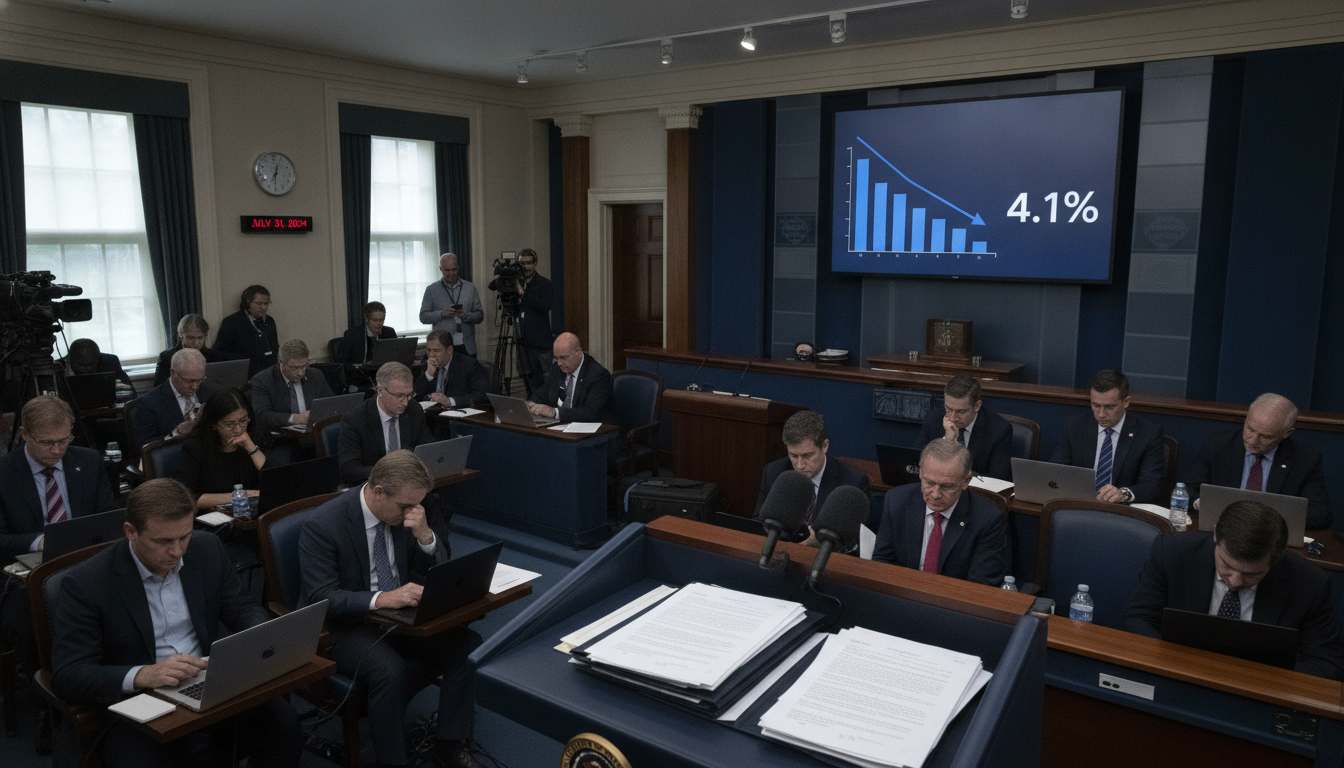
July US Jobs Report: Nonfarm Payrolls Decline by 23,000 as Unemployment Falls to 4.1%
July US jobs report: nonfarm payrolls fell 23,000 vs 83,000 expected; unemployment eased to 4.1% as participation slipped to 61.4%, showing mixed trends.
Headline numbers and immediate reaction
The July US jobs report showed an unexpected contraction in employment, with the economy losing 23,000 nonfarm payroll positions compared with forecasts calling for an increase of about 83,000. The headline unemployment rate moved lower to 4.1% from 4.2% in June, presenting a mixed signal about labour market strength. Markets and analysts reacted to the surprise mix of weaker payrolls and a lower jobless rate as evidence of an uneven recovery.
Details of the payroll decline
The nonfarm payrolls figure is the central metric in the US jobs report and traditionally guides assessments of labour demand. July’s loss of 23,000 jobs reverses recent months of modest gains and falls short of consensus projections compiled by economists. The swing from an expected gain to an actual decline underscores the volatility in monthly employment readings and the need to look at underlying components.
Unemployment rate falls despite job losses
The unemployment rate’s decline to 4.1% in July appears counterintuitive given the drop in payrolls, but such movements can reflect shifts in the labour force rather than straightforward hiring trends. A smaller labour force or fewer people actively seeking work can push the unemployment rate down even as employers add fewer jobs. Analysts cautioned that the lower jobless rate does not by itself confirm broad labour market strength without parallel improvement in other measures.
Participation rate signals lingering slack
July’s labour force participation rate edged down to 61.4% from 61.5% in June, indicating a smaller share of the population is working or looking for work. The participation metric is closely watched because it captures those on the sidelines who might re-enter the workforce under improved conditions. A declining participation rate can mask underlying weakness by mechanically lowering the unemployment rate and complicating policy interpretation.
What the report means for policy and markets
Policymakers and investors will weigh the mixed July US jobs report in light of inflation trends and prior central bank guidance. Weaker payroll growth may lessen near-term pressure for aggressive policy tightening, while a lower unemployment rate could argue for caution against easing prematurely. Market responses are likely to be driven by how participants interpret whether the report signals a genuine slowdown in hiring or a temporary pullback influenced by participation and survey noise.
Seasonality and data revisions to watch
Monthly employment statistics are subject to seasonal patterns and subsequent revisions, which can materially change the narrative over time. The Bureau of Labor Statistics typically revises prior months’ estimates as more data become available, and those revisions often reshape assessments of momentum. Economists advising clients will be monitoring upcoming revisions and complementary series, such as hourly earnings, job openings, and initial claims, for a fuller picture.
Outlook and indicators to follow
Looking ahead, policymakers and market observers will focus on whether subsequent reports confirm the softening signalled by July’s payroll decline. Key indicators to watch include the next nonfarm payrolls release, moves in the participation rate, wage growth, and the monthly jobs data revisions. Together, these data points will clarify whether the labour market is cooling in a way that could influence inflation and monetary policy decisions.
The July US jobs report highlights a labour market showing mixed signals: an unexpected drop in nonfarm payrolls alongside a marginally lower unemployment rate, with a modest decline in participation pointing to continued structural complexity.
