
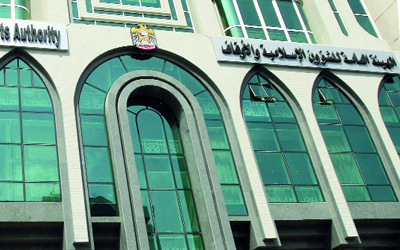
The General Authority for Islamic Affairs and Endowments reported that Zakat al-Fitr this year is 20 dirhams per person, and the expiation for intentionally breaking the fast is 900 dirhams for each day, distributed among 60 poor people.
In detail, the Fatwa Department of the Authority stressed that Zakat al-Fitr is obligatory. The person pays it on behalf of himself and on behalf of whomever he is obligated to support, and it is paid before the Eid prayer. Its value is estimated at approximately 20 dirhams, and it is permissible to pay it a day or two before, as well as from the beginning of the month of Ramadan, and it is paid to a poor or needy Muslim. Its value may be paid to trusted official bodies such as the Red Crescent.
The Fatwa Department of the Authority explained that whoever intentionally breaks the fast during the day in Ramadan without an excuse has violated the sanctity of the month and must repent and pay expiation, and has the choice of either feeding 60 poor people for each day (a mudd of rice and other things), or fasting for two consecutive months for each. A day, pointing out that feeding is better if he wants the value, as it is equivalent to 900 dirhams for 60 poor people.
The Fatwa Department of the Authority indicated that it is permissible for the elderly to break their fast if they are sick and unable to fast, and it is desirable for them to pay a ransom, which is feeding one mudd for each day, and there is nothing wrong with the children giving it on their behalf, daily, or giving it on their behalf once after the end of the month of Ramadan.
|
Zakat disbursements 1- The poor: those who have no money. 2- The poor: those who have money but it is not enough for them. 3- Those who work on it: Zakat workers take a reward from it for their work on it, even if they are rich. 4- Those whose hearts are reconciled: those who are given money to convert to Islam or to improve their Islam and remain steadfast in it. 5- In necking: in freeing slaves. 6- Debtors: such as someone who bears a burden or guarantees a debt and is obligated to pay it or pays a fine in paying his debt or in atonement for a sin from which he has repented. To these people, an amount of zakat is paid to them that is sufficient for them. 7- For the sake of God: spending on jihad for the sake of God. 8- Ibn al-Sabil: He is a traveler who is passing through a country and does not have anything to use during his travel, so he is given enough alms until he returns to his country. |
He stressed that personal debt does not invalidate Zakat al-Fitr because it is obligatory for every Muslim, male or female, young or old, who finds what is preferable to his sustenance and the sustenance of those who must support him on the day of Eid.
He explained that if the traveler fasts, he should stop and break his fast according to the timing of the place he is in, and the time of the country he is heading to, or the country from which he departs, does not matter. If the sun sets on him, he should break his fast, even if he is on the plane. He should also hold fast when dawn begins in the place where it rose. In it, the dawn, and God Almighty said: {Eat and drink until it is clear to you, the righteous, from the righteous, from the dawn. He pointed out that it is permissible to break the fast at the time of travel if a person leaves his place of residence before dawn and does not intend to fast, and the distance he traveled was the distance of shortening prayers, which is estimated at approximately 84 kilometers. This is because the fasting person traveling during the month of Ramadan has conditions to break his fast, including: that he begin traveling before sunrise. Fajr, including: He must not have intended to fast during this travel. If one of these two restrictions is violated, it is not permissible to break the fast. For its part, the Zakat Fund stressed its full readiness to receive masses of donors at its headquarters in Abu Dhabi, in addition to its many electronic services to calculate the payment of zakat during the holy month of Ramadan, indicating the Fund’s keenness to achieve the greatest goal of zakat, which is to spare the poor from asking. He stressed that the role played by the Fund in helping many families deserving of zakat comes as an embodiment of the vision of the late founding father Sheikh Zayed bin Sultan Al Nahyan, because of the importance of zakat in purifying the money of the zakat person, preserving the dignity of those deserving of zakat, and spreading the spirit of love and compassion among them.
The Fund explained that those to whom Zakat al-Fitr is paid are the poor and the needy, and in determining who is poor and who is needy, it is based on what people are accustomed to, and that the date for paying Zakat is before the Eid prayer, but to make it easier for the people, it may be paid a day or two before the Eid, or at the beginning of the month. There is no specific condition to determine its time, day or night.
He pointed out that it is not permissible to spend zakat money for public charitable purposes, such as building and maintaining mosques, printing the Qur’an, Islamic scholarly books, and so on. What is required is to spend it to those who deserve it from the poor and needy and other recipients of zakat, which are specified in verse 60 of Surat Al-Tawbah.
The Fund permitted paying zakat on funds to more than what is due, provided that the intention is that the excess of this year’s zakat is deducted from next year’s zakat, indicating that offering zakat after reaching the quorum is permissible according to the majority of scholars.
Follow our latest local and sports news and the latest political and economic developments via Google news
