
CAF Confirms 24 Teams for Africa Cup of Nations 2027
CAF confirms a 24-team Africa Cup of Nations 2027 to be hosted by Kenya, Tanzania and Uganda in June–July 2027; qualifying starts in September–October 2026.
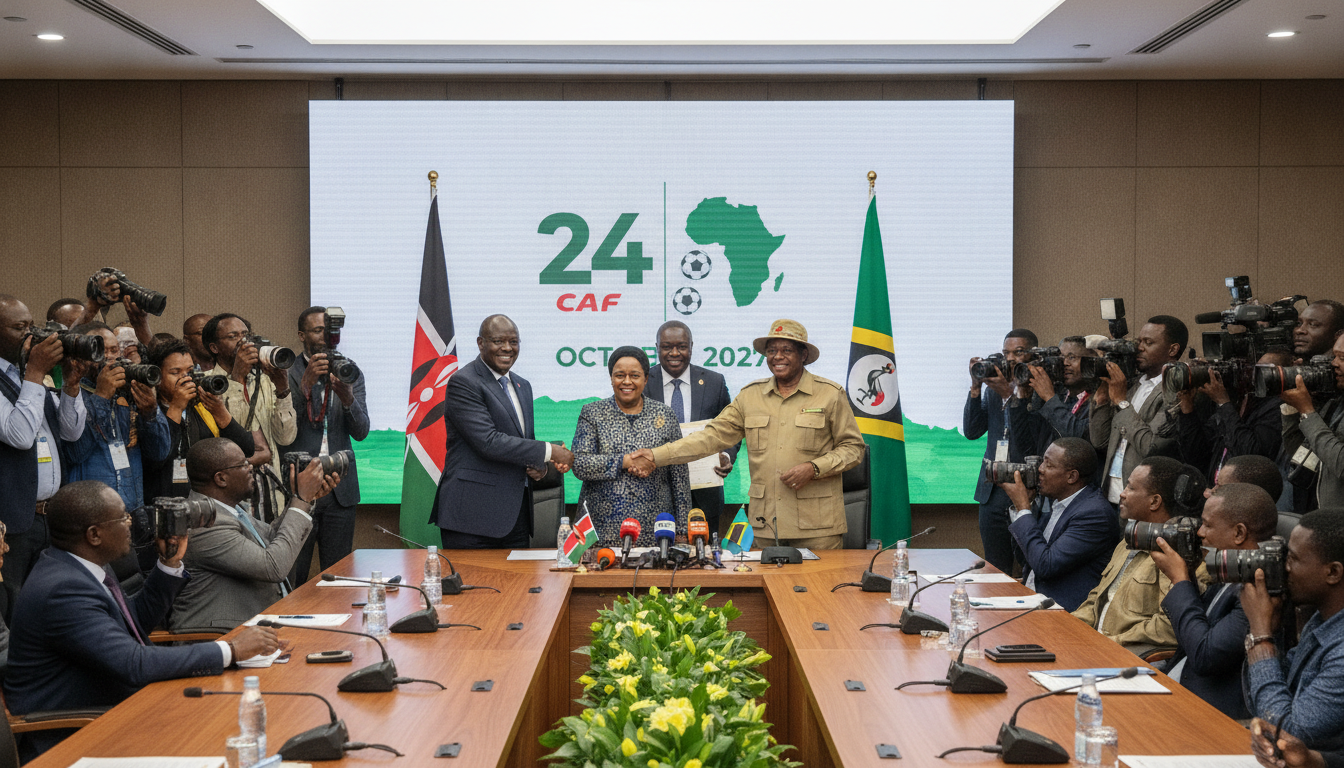
The Confederation of African Football (CAF) has formally confirmed that the Africa Cup of Nations 2027 will feature 24 national teams, settling recent confusion in media reports. CAF president Patrice Motsepe announced the decision at a press conference, and the tournament is scheduled for June–July 2027 in Kenya, Tanzania and Uganda. The organisation also set the qualifiers to begin in September–October 2026, providing national federations a clear timeline for preparation.
CAF Confirms 24-Team Format
CAF issued a direct clarification after some outlets circulated conflicting information about the tournament size. The statement from the governing body reiterated that the competition will retain the 24-team format for 2027. Officials emphasised that reports suggesting otherwise were inaccurate and that the confirmed format is now official.
CAF’s confirmation removes uncertainty for national associations planning their squads and logistics. The 24-team format affects qualification structures, match scheduling and the distribution of groups once the draw is held. Federations and confederations will now be able to finalize their plans with the confirmed number of slots.
Hosts and Dates Set: Kenya, Tanzania and Uganda
Kenya, Tanzania and Uganda will co-host the Africa Cup of Nations 2027 across multiple venues in the three East African countries. CAF confirmed the June–July 2027 window for the tournament, aligning with a traditional summer schedule for the competition. The joint hosting arrangement will require close coordination on fixtures, travel and accommodation for teams, officials and supporters.
The trio of hosts said earlier they were prepared to collaborate on infrastructure upgrades and operational plans to meet CAF standards. Joint hosting has become more common for major tournaments as federations seek to share costs and showcase regional cooperation. Organisers in Nairobi, Dar es Salaam and Kampala will now move into detailed planning phases.
Qualifying Window and Match Calendar
CAF announced that qualifying for the Africa Cup of Nations 2027 will begin in September–October 2026, establishing the entry point for national teams. The qualifying timeline gives member associations roughly nine months from the start of qualifiers to the tournament proper to conclude any playoff fixtures and complete preparations. CAF’s calendar will dictate international windows and domestic league adjustments to accommodate national team commitments.
National federations will need to align domestic schedules, player release protocols and travel arrangements with the qualification calendar. The set qualifying window should also allow CAF to structure a fair and transparent draw, fixtures list and contingency planning ahead of the final tournament.
Media Reports and CAF’s Rebuttal
CAF directly addressed discrepancies in earlier media coverage, describing some published reports as inaccurate. The federation framed its statement as corrective, noting that the confirmed details were communicated by President Patrice Motsepe at the press briefing. By issuing the clarification, CAF aimed to prevent confusion among fans, broadcasters and potential commercial partners.
Clear communication from CAF is critical as stakeholders negotiate broadcasting rights, sponsorship agreements and ticketing strategies. Any ambiguity around the tournament format or schedule can have wide operational and financial consequences for organisers and participating associations.
Logistics, Venues and Operational Challenges
Staging a multi-nation, multi-venue Africa Cup of Nations will require significant logistical coordination across borders. Organisers will need to ensure stadium readiness, transportation links, training facilities and accommodation meet CAF requirements. Cross-border movement of fans and teams will also necessitate cooperation on visa arrangements and security protocols between the three host governments.
Infrastructure upgrades, including pitch improvements and stadium capacity enhancements, may be required at several venues. Transport hubs such as airports and intercity transit will be focal points for planning to minimise travel disruption during the tournament period. CAF and the host federations are expected to publish technical requirements and timelines for stadium certification in the coming months.
Stakeholder Reactions and Next Steps
National federations, broadcasters and sponsors are likely to respond to CAF’s confirmation with a mix of relief and rapid planning. The confirmed format and dates allow stakeholders to advance commercial negotiations, ticketing sales strategies and team preparations. CAF will move to finalise qualifying formats, seeding procedures and the tournament draw timetable in coordination with member associations.
Looking ahead, the immediate priorities will include the detailed scheduling of qualifiers, formal submissions of host venues for approval, and publication of operational manuals for teams and match officials. CAF’s statement closes a chapter of uncertainty and sets a clear path toward the Africa Cup of Nations 2027 in East Africa.
With the 24-team format and a June–July 2027 timetable now confirmed, national associations and host cities have a defined framework to prepare for one of the continent’s flagship sporting events, and attention will quickly turn to practical preparations for qualifiers beginning in September–October 2026.
