
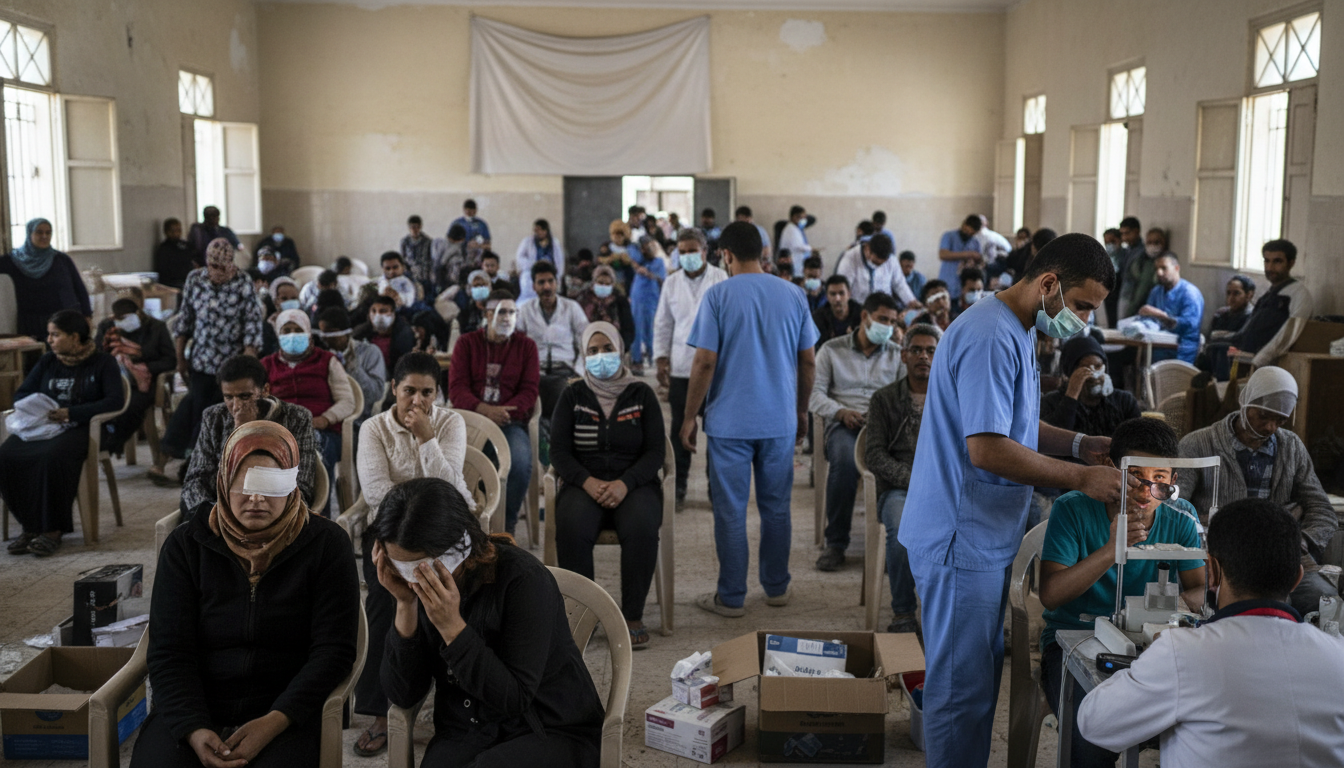
Al-Noor centre in Gaza under strain as war-related visual impairment tops 1,500
Al-Noor centre in Gaza faces unprecedented pressure as war-related injuries have left more than 1,500 visually impaired since 2023, straining UNRWA services.
Al-Noor centre in Gaza faces surge in demand
Al-Noor, a UNRWA-run centre providing education and support to visually impaired children, is experiencing a dramatic rise in demand for its services. As of April 18, 2026, staff report a steady influx of new students and patients whose sight was damaged in the ongoing hostilities in Gaza. The centre, which has long been a focal point for specialized education and rehabilitation, is now coping with caseloads far beyond its usual capacity.
The surge has forced administrators to stretch space, equipment and personnel, intensifying daily operational challenges. Teachers and therapists report that many recent arrivals need both acute medical attention and long-term rehabilitation, a dual need that the facility was not built to handle at current levels.
Longstanding services disrupted since 1962 founding
Al-Noor has operated since 1962, offering tailored schooling, mobility training and psychosocial support to visually impaired children across Gaza. Over six decades, the centre developed curricula and community outreach programmes tailored to local needs, becoming a key part of UNRWA’s disability services. Today those programmes are being disrupted by resource strain and intermittent access to supplies and specialist referrals.
Restrictions on movement, damage to infrastructure and interruptions to utilities have complicated routine operations and placed additional burdens on families. Staff say that continuity of education and consistent therapeutic schedules are essential for progress, and the current environment is making that continuity increasingly difficult to maintain.
More than 1,500 new cases of visual impairment since 2023
Aid organisations and medical sources indicate that more than 1,500 people have been left visually impaired since 2023 as a result of injuries tied to the conflict. Many of these cases involve children and young adults who require urgent assessment, surgical care where possible, and adaptive education services. The scale of new injuries represents a significant escalation compared with previous years and has rapidly outpaced local capacity.
Medical teams working in Gaza describe a spectrum of eye injuries ranging from blunt trauma and burns to complications from delayed treatment. Where specialised ophthalmic surgery or prosthetic devices are needed, shortages of trained personnel and equipment are compounding the challenge.
Education, rehabilitation and daily life under strain
Al-Noor’s programme mix includes Braille literacy, orientation and mobility training, assistive technology instruction and psychosocial support for families. These elements are crucial for children to regain independence and re-enter community life, but staff now report waiting lists for assessments and therapy sessions. Classroom sizes have increased and adaptive devices such as Braille materials and tactile learning aids are in short supply.
Transportation to the centre has become a barrier for many families due to checkpoints, fuel shortages and damage to roads. Parents and caregivers frequently cite the cost and risk of travel, which further limits children’s access to regular schooling and rehabilitation services.
Humanitarian response and calls for urgent support
UNRWA and partner organisations have called for increased humanitarian access, urgent medical supplies and funding to scale up eye-care services and rehabilitation in Gaza. Donors and international NGOs are being asked to prioritise ophthalmic equipment, consumables, and training for local clinicians and rehabilitation specialists. Coordination between medical, education and protection actors is being highlighted as essential to meet both immediate surgical needs and longer-term educational integration.
Local staff and community groups are also mobilising to provide interim support through volunteer networks and community-based rehabilitation initiatives. However, those efforts are limited by a shortage of funding and by constraints on importing specialised equipment.
Looking ahead: capacity gaps and recovery pathways
Experts working with disability services warn that without rapid reinforcements the backlog of untreated eye injuries will grow, with lifelong consequences for many affected children. Recovery pathways require a combination of emergency surgical care, rehabilitation, assistive devices and adapted education plans tailored to each child’s needs. Investments in teacher training and mobile outreach services could help bridge gaps while longer-term repair of health and transport infrastructure proceeds.
Stakeholders stress that durable solutions will also depend on predictable access for humanitarian convoys and the removal of obstacles that interrupt care pathways. Strengthening local clinical capacity and restoring supply chains are seen as immediate priorities by health and education planners.
The situation at Al-Noor highlights a broader humanitarian challenge: the intersection of conflict-related injury with long-term disability services. As pressure mounts on Gaza’s limited specialised facilities, international and regional actors are being urged to coordinate support that sustains both medical treatment and the educational continuity essential for children’s futures.
Al-Noor’s staff say they remain committed to serving visually impaired children despite the strain, but they warn that sustained external support is now essential to prevent a generation from losing access to education and rehabilitation.
