
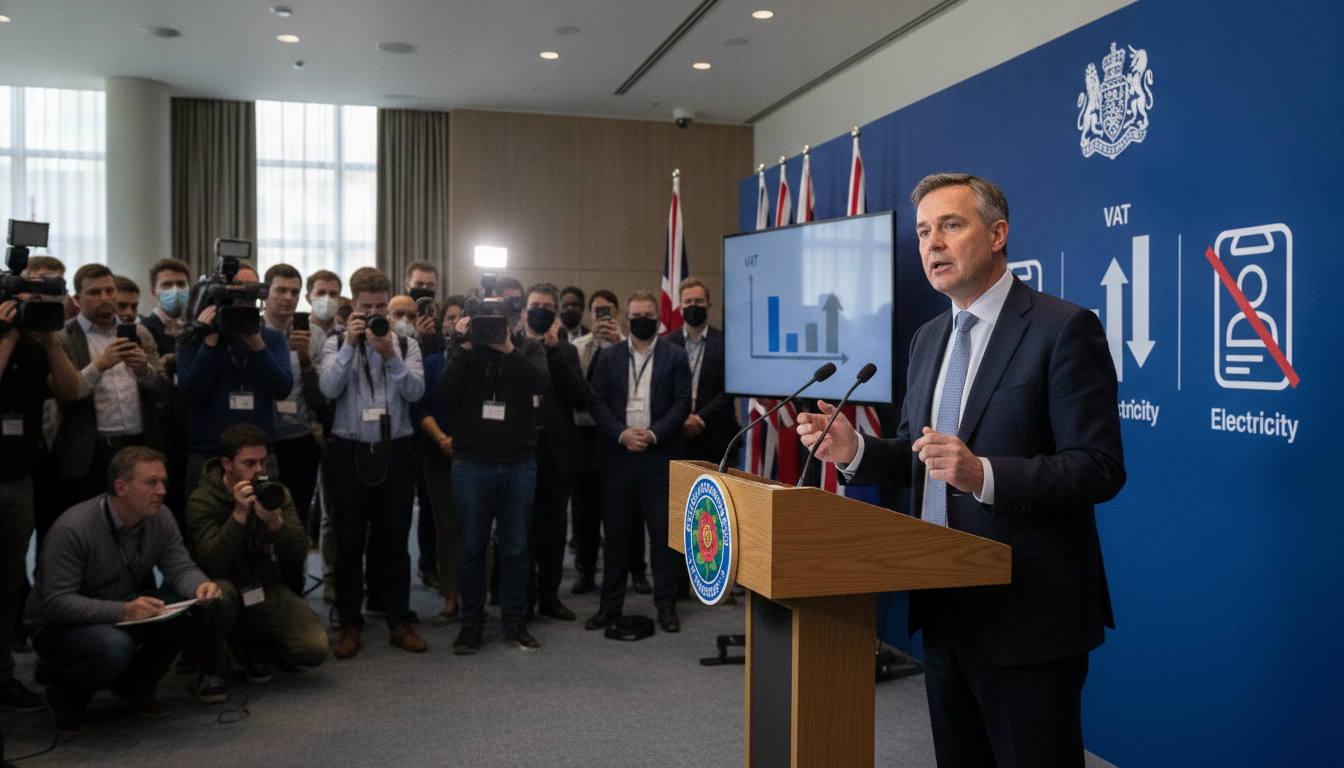
UK cuts VAT on electricity in first move as new PM promises relief for households
UK Prime Minister Andy Burnham has scrapped VAT on electricity bills, saying the cut will save households about $60 this year as he seeks to tackle rising living costs and deliver immediate relief.
Immediate tax cut on electricity
The new government announced the removal of value-added tax on electricity tariffs as one of its first policy moves, intended to ease pressure on household budgets. Officials estimated the change would translate to roughly $60 of annual savings per household, a measure framed by the prime minister as short-term breathing space for consumers. The decision comes amid volatile energy markets and growing public impatience over the cost of living.
A-defining political move on day two
Mr. Burnham introduced the policy on his second day in office, presenting the VAT on electricity cut as a signal of his administration’s priorities. The step was positioned as a direct response to voter concerns that contributed to the resignation of his predecessor, Keir Starmer. In public remarks, the prime minister stressed his aim to put more money back in people’s pockets and restore confidence among households struggling with energy bills.
Funding from abandoned national digital ID
Government aides said the electricity tax cut will be funded by cancelling a proposed national digital ID card, a program previously championed as a tool to curb illegal migration. Officials estimated the termination of the digital ID plan would free up about $2.4 billion, money that the administration says can be redeployed for immediate cost-of-living relief. Critics, including some former allies of the previous government, questioned whether the calculation fully accounts for long-term costs and implementation complexities.
Opposition and internal criticisms on fiscal footing
Political opponents and some former ministers have voiced scepticism about the funding claim and warned the measure could complicate the government’s fiscal position. Darren Jones, a prominent figure in the outgoing cabinet who was dismissed this week, disputed the previous digital ID program’s financial footing and demanded clearer accounting. Bond markets have also exerted pressure, signalling investor concerns about any measures that might increase public borrowing without offsetting savings elsewhere.
Cabinet reshuffle signals policy recalibration
Burnham made a number of rapid cabinet appointments overnight, moves interpreted as both consolidating his leadership and shaping policy direction. Wes Streeting was named defence secretary after serving as health secretary under the previous administration, while Ed Miliband will take the Foreign Office portfolio. Shabana Mahmood remains home secretary, providing continuity at a pivotal domestic ministry.
John Healey installed as chancellor
Perhaps the most notable appointment was John Healey as chancellor of the Exchequer. Healey, who stepped down from the defence brief last month amid disagreements over military spending, replaces Rachel Reeves in the Treasury role. His elevation is likely to affect fiscal priorities and spending decisions, particularly in areas where he previously advocated for increased defence allocations. Observers say his new remit places him at the centre of reconciling relief measures with longer-term budget discipline.
International reaction and the U.S. president’s endorsement
Internationally, the prime minister received an early public endorsement from former U.S. President Donald Trump following a brief telephone call between the two leaders. In a social media post, Mr. Trump praised the new prime minister and offered support, framing the conversation as positive. The exchange draws attention to how Mr. Burnham will navigate the UK’s relationship with the United States, balancing diplomatic engagement with domestic priorities.
Immediate implications and the path to the budget
Government officials acknowledged that the full fiscal impact of the VAT removal must be detailed at the upcoming budget, where ministers are expected to lay out the wider financing strategy. Analysts say the budget will be a crucial test of the administration’s credibility with markets and voters alike, requiring a clear reconciliation of short-term relief measures and long-term fiscal sustainability. The new chancellor faces the immediate task of presenting numbers that placate both households seeking relief and investors demanding sound public finances.
The VAT removal on electricity marks a high-profile first step for Prime Minister Burnham as he seeks to demonstrate action on cost-of-living pressures, but it also places immediate scrutiny on how the government will balance relief with fiscal responsibility.
