
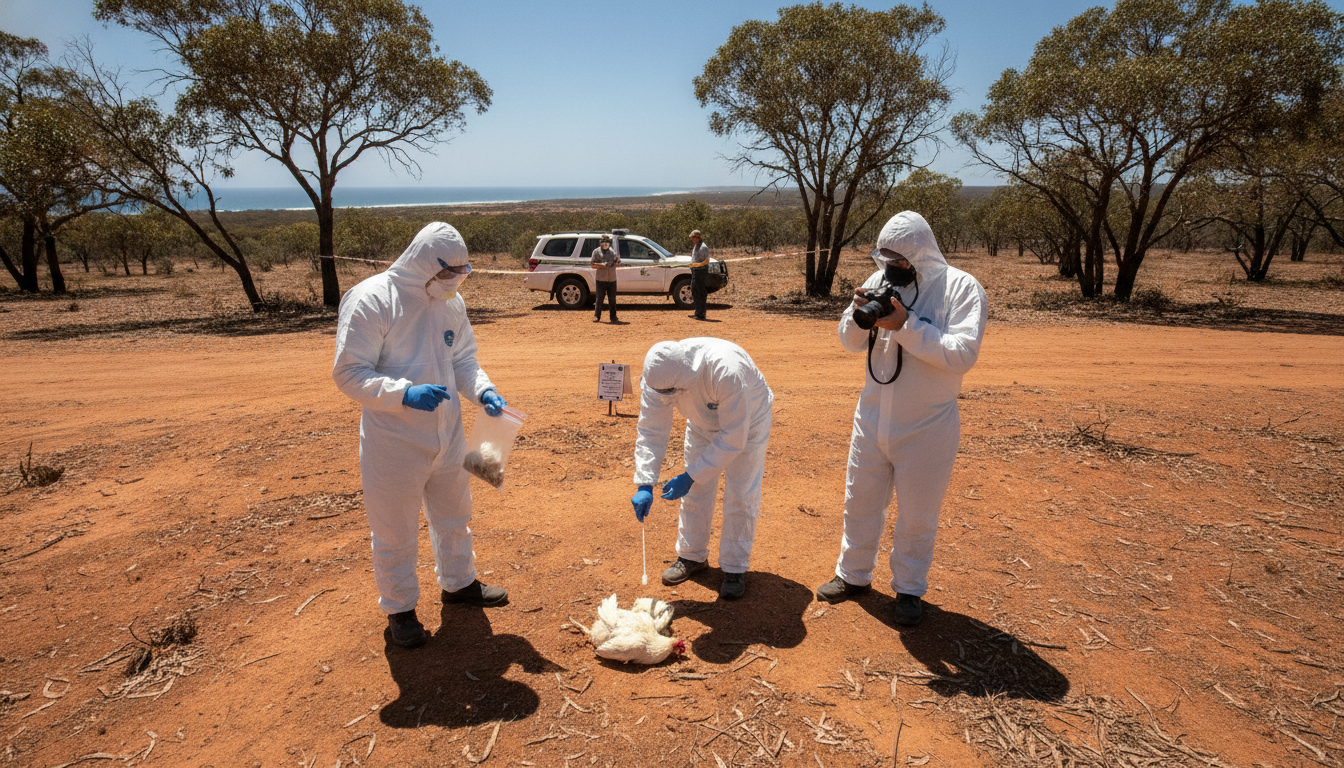
Australia confirms first H5N1 bird flu case in southwest after migratory seabird found at Cape Le Grand
Australia confirms first H5N1 bird flu case in southwest; a migratory seabird was found infected at Cape Le Grand National Park, about 700 km SE of Perth.
Australian authorities have confirmed the first H5N1 bird flu detection in the country’s southwest after laboratory tests found the virus in a migratory seabird discovered on a remote beach. Minister for Agriculture Julie Collins announced the positive result, saying the bird was located roughly 700 kilometres southeast of Perth in Cape Le Grand National Park. The detection marks a new geographic appearance of H5N1 in Western Australia and has prompted targeted surveillance and biosecurity reviews.
Confirmation from Agriculture Minister Julie Collins
Minister Julie Collins publicly confirmed the H5N1 finding following diagnostic testing, identifying it as the first confirmed case in the southwest region. Officials said the virus was detected in a single migratory seabird recovered on the park’s shoreline. Authorities characterized the discovery as isolated but significant for surveillance efforts across coastal and inland habitats.
Location and circumstances of the discovery
The infected bird was found on a beach within Cape Le Grand National Park, a remote protected area in south‑west Western Australia. The site is approximately 700 kilometres southeast of Perth, underlining the distance from previously reported outbreaks elsewhere in the country. Park rangers and wildlife officers initially reported the stranded seabird and arranged for samples to be sent for laboratory analysis.
Laboratory testing and species details
State veterinary laboratories ran tests that returned a positive result for the H5N1 strain, according to officials. Authorities described the bird as a migratory seabird, part of species known to travel long distances and potentially carry avian influenza across flyways. While the specific species detail was not immediately released, officials said genetic sequencing and follow-up testing would help clarify any links to other H5N1 detections.
Public health and poultry sector measures
Federal and state animal health authorities have reiterated there are no reported human cases linked to this detection and that the immediate public health risk remains low. Biosecurity teams are intensifying surveillance around coastal areas and advising poultry producers to reinforce farm-level biosecurity protocols. Authorities are monitoring commercial and backyard flocks for signs of illness and have contingency plans ready to limit spread if further detections occur.
Wildlife monitoring and environmental concerns
Wildlife agencies have expanded monitoring of coastal bird populations and are coordinating with national parks and local rangers to report sick or dead birds promptly. Migratory seabirds can act as vectors for H5N1, moving the virus along established migratory routes and potentially introducing it into new ecosystems. Conservationists have expressed concern about impacts on vulnerable seabird colonies and stressed the need for rapid reporting and testing to understand the outbreak’s scope.
Implications for surveillance and research
Veterinary authorities plan to increase sampling of wild birds in the region and to share genomic data with national and international partners to track the virus’s movement. The occurrence will inform risk assessments for both the poultry industry and wildlife management agencies as migration season progresses. Researchers will seek to determine whether the detected strain aligns with those reported elsewhere in Australia or represents a new incursion into the southwest.
This detection in Cape Le Grand National Park underscores the importance of coordinated surveillance across states and the need for vigilance among poultry keepers and wildlife managers. Authorities continue to update the public as further test results and sequencing information become available, while maintaining that immediate human health risks are being closely monitored.
