
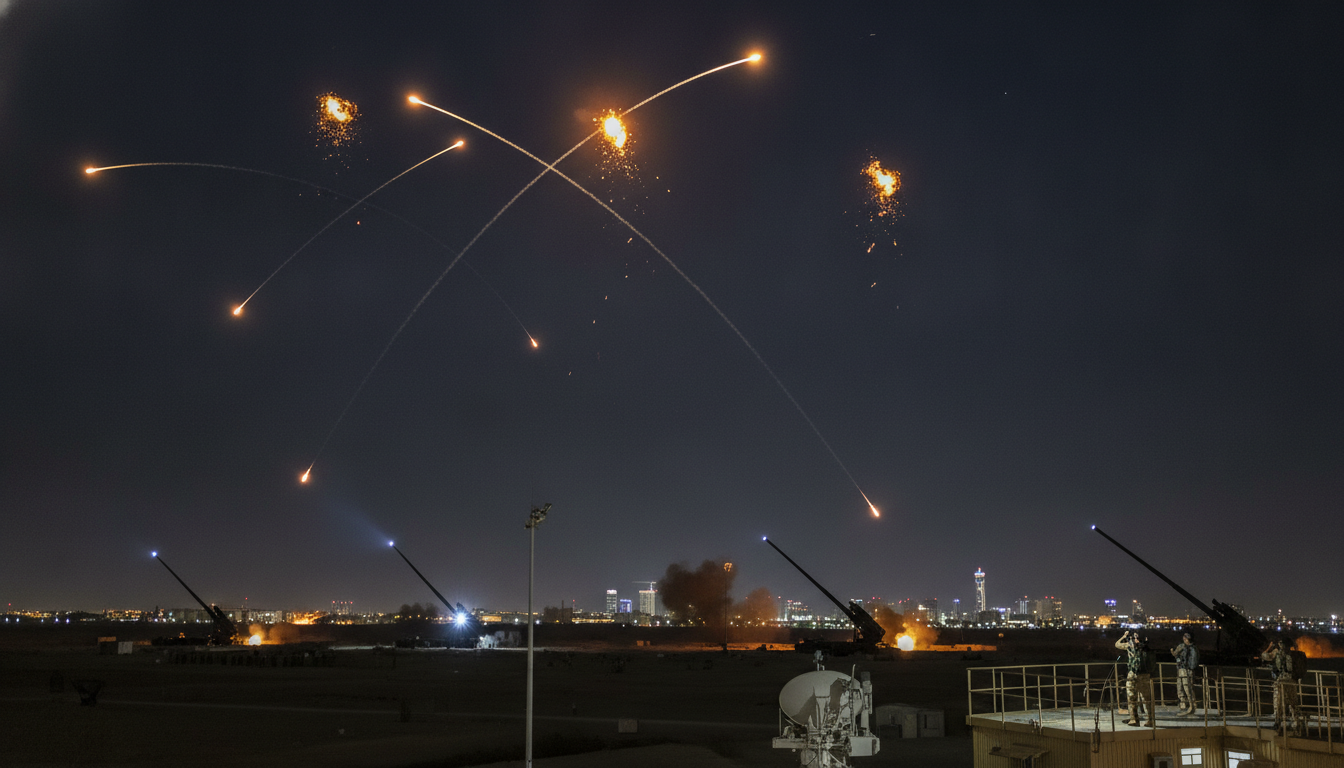
Bahrain Intercepts Iranian Attacks on Bahrain; Air Defences Destroy Missiles and Drones
Bahrain says air defences intercepted and destroyed Iranian attacks on Bahrain, urging public to avoid suspicious debris and report remains to authorities.
Bahrain’s military announced on Wednesday that its air-defence systems intercepted and destroyed a new wave of Iranian aerial attacks aimed at the kingdom, describing the strikes as deliberate attempts to target civilians and infrastructure. The General Command of the Bahrain Defence Force said its forces remain at the highest level of readiness while conducting continued defensive operations to protect the country. (gulfnews.com)
Official military statement
Bahrain’s General Command issued an official statement condemning the attacks and said the interception operations were carried out with high efficiency. The statement reiterated that the strikes, carried out with missiles and unmanned aerial vehicles, form part of what Manama described as a systematic hostile campaign. The command also called on citizens and residents to exercise caution and follow civil defence guidance. (aa.com.tr)
Intercepts involved missiles and drones
According to official and regional reporting, Bahrain’s air-defence assets engaged multiple incoming threats, including ballistic missiles and explosive-laden drones, and neutralised them before they could cause widespread damage. Similar waves of attacks earlier this year prompted Bahrain to report large numbers of intercepted missiles and drones to international bodies. The military did not provide full technical details in its brief statement, citing operational security. (aa.com.tr)
Civilian safety advisory and local impact
Authorities warned people not to approach or touch any unidentified or suspicious objects that may be debris from intercepted missiles or drones. The General Command urged immediate reporting of such findings to allow explosive ordnance disposal teams to clear sites safely and prevent injury. Local hospitals and emergency services reported no significant casualties from the latest reported interceptions, though debris has been found in residential areas during earlier incidents. (gulfnews.com)
Military readiness and allied support
Bahrain emphasised that all units and weapons systems are at heightened readiness to counter further threats, underscoring coordination with allied forces in the region. U.S. Central Command and other partners have played a role in regional air-defence activity and have publicly described joint responses to some incoming threats. Military officials in allied capitals have reiterated support for Gulf states’ right to self-defence as they monitor escalation risks. (axios.com)
Diplomatic and international responses
Manama has reported the attacks to international organisations and has called for strong condemnation of strikes that target civilian areas, citing letters to the United Nations. The kingdom has framed the incidents as threats not only to national security but to regional stability and freedom of navigation. Several Gulf partners and Western capitals have issued statements urging restraint while calling for accountability for attacks on civilian infrastructure. (digitallibrary.un.org)
Analysts warn of potential escalation
Security analysts say the pattern of missile and drone launches raises the risk of further tit-for-tat operations in the Gulf and warns that commercial shipping and critical infrastructure could face continued pressure. Experts highlight the importance of layered air-defence systems and intelligence-sharing to reduce the risk of successful strikes. They also note that diplomatic channels remain critical to preventing an open escalation that could draw in external forces. (aa.com.tr)
Bahrain’s statement underscores the strain on Gulf security as regional conflicts spill across borders, with governments balancing force protection and public safety. The General Command’s advisory to avoid suspicious debris and the continued high alert posture signal that Manama will maintain defensive operations while seeking international support and condemnation of attacks on civilian targets.
