
BlackRock highlights UAE retirement savings opportunity
BlackRock’s 2026 Gulf retirement report shows strong public appetite for defined‑contribution plans and urges reforms to boost UAE retirement savings and capital‑market depth.
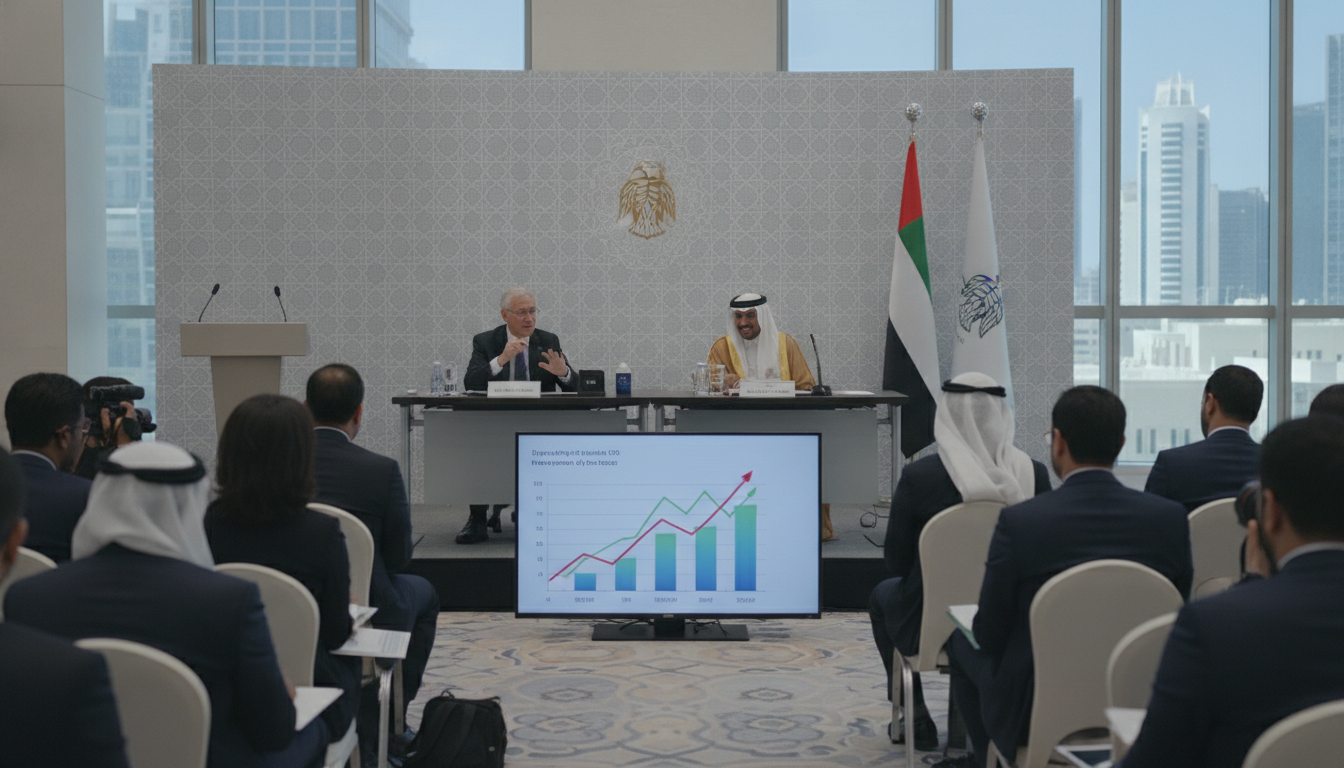
The BlackRock report, unveiled at a Dubai press conference on June 11, 2026, signals a clear opening for policy makers and financial institutions to strengthen UAE retirement savings by expanding employer‑sponsored, professionally managed plans.
The study — titled “Retirement Insights in the GCC 2026” — identifies high public interest in defined‑contribution programmes and a readiness among workers to convert saving intent into long‑term investment.
Public support for workplace retirement plans
Survey findings disclosed by BlackRock indicate that UAE nationals and residents broadly view defined‑contribution schemes as attractive savings vehicles.
Ninety‑three percent of Emirati respondents and 91% of expatriate respondents consider contribution‑based programmes appealing, the report found.
Willingness to participate is also high, with 90% of citizens and 86% of residents saying they would join such plans.
BlackRock interprets these figures as evidence that demand is driven more by a knowledge gap than by lack of commitment to saving.
Household savings remain concentrated in cash, gold and property
The report highlights that a large share of household wealth in the UAE is held in liquid and tangible assets rather than long‑term financial investments.
About 49% of household savings are kept in cash, 40% in gold and 18% in real estate, underscoring limited allocation to tradable financial instruments.
This savings mix suggests potential to channel domestic capital into diversified, long‑term investment vehicles if appropriate products and guidance are provided.
BlackRock notes that redirecting a portion of these holdings could deepen liquidity in UAE capital markets and support productive investment.
Gulf workforce ready but needs financial guidance
Kashif Riaz, director of financial advisory for the Middle East at BlackRock, said workers in the UAE show high awareness and willingness to plan for retirement.
He told reporters that the bigger barrier is understanding how to convert saving intentions into concrete retirement outcomes.
Lamia Al‑Shaabi, head of investment solutions at BlackRock Middle East, added that many people struggle to visualise their financial position three decades ahead.
Both executives underlined the importance of better education, clear product design and professional management to improve retirement readiness.
Employers and regulators pivotal to scaling retirement programmes
The study argues that employer‑sponsored savings plans, supported by regulatory frameworks, can be a fast route to expanding retirement provision across the UAE.
Long‑term workplace plans could boost employee retention and financial security while aggregating investable capital for local markets.
BlackRock recommends collaboration among employers, regulators and financial firms to design default contribution levels, governance standards and investment options that meet diverse workforce needs.
Such coordination is presented as necessary to convert public appetite into sustained participation and measurable retirement outcomes.
Economic and market implications of deeper retirement saving
If implemented at scale, professionally managed retirement savings could increase the supply of long‑term domestic capital for infrastructure, private equity and other strategic sectors.
The report suggests this would support the UAE’s economic diversification goals by providing patient capital to productive investments.
Greater participation in regulated retirement plans could also enhance market liquidity and resilience, benefiting issuers and investors alike.
BlackRock frames the opportunity as mutually reinforcing: better retirement outcomes for individuals and stronger capital markets for the economy.
Many respondents expressed intent to act: 56% said they plan to increase their retirement savings in the coming period, indicating readiness to take additional steps when presented with accessible options.
BlackRock’s research shows similar saving and investment behaviours between citizens and expatriates, which the firm says simplifies the design of broad‑based solutions.
Financial institutions are urged to offer a mix of default investment pathways, targeted advice and flexible contribution mechanisms to meet varying risk tolerances and life stages.
The firm stresses the role of early‑life financial education and workplace enrolment defaults in building long‑term saving habits.
The BlackRock report positions the UAE at an inflection point where policy design, employer engagement and improved financial literacy could turn existing household savings into long‑term investment capital.
Achieving that shift, the study concludes, would raise retirement readiness for individuals while strengthening the UAE’s capital markets and supporting sustained economic growth.
