
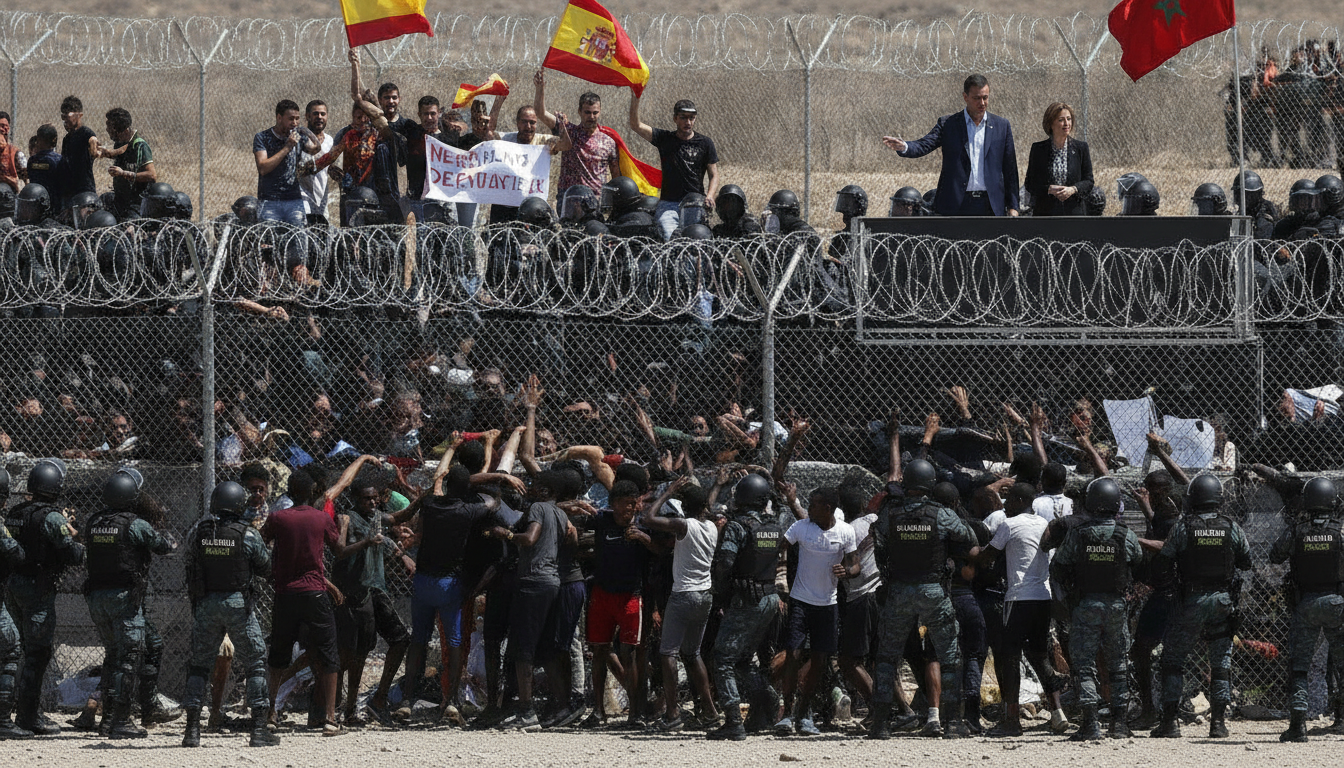
Ceuta migrant arrivals ignite political clash as Spain and EU scramble to respond
Sudden Ceuta migrant arrivals prompt sharp criticism from European leaders as Spain, the EU and neighbouring states move to restore border control and manage humanitarian needs.
The arrival of thousands of people in the Spanish enclave of Ceuta over a short period set off a tense political debate across Europe, with far‑right and centrist leaders blaming competing causes and calling for urgent action. Ceuta migrant arrivals became the focal point of accusations that Madrid’s migration policies invite irregular movement, even as Spanish officials and some migrants pointed to relaxed Moroccan border controls as the immediate trigger. Authorities and Brussels moved to coordinate returns and bolster border management while humanitarian agencies warned of urgent needs among the newly arrived.
Mass movement into Ceuta and immediate response
Spanish security forces reported a large influx of people into Ceuta, a tiny Spanish territory on Morocco’s Mediterranean coast, overwhelmed by the scale and speed of the crossings. Local officials described chaotic scenes as thousands sought shelter, medical attention and processing, prompting rapid deployment of emergency services. Madrid said it was working to restore order, conduct identification and arrange repatriation where appropriate, while setting up temporary reception measures for vulnerable individuals.
Spanish authorities and Moroccan officials traded differing explanations for the surge, with Madrid pointing to a sudden easing of restrictions on the Moroccan side of the border. Several people who reached Ceuta told journalists they had taken advantage of relaxed controls, rather than being directly encouraged by recent Spanish policy measures. Nevertheless, the scale of the movement placed immediate strain on local resources and raised alarms among neighbouring governments.
Right‑wing leaders cite policy as a magnet
Prominent far‑right politicians seized on the Ceuta migrant arrivals to argue that more permissive migration policies act as a pull factor for irregular movement. Figures including France’s Jordan Bardella, Italy’s Giorgia Meloni and British campaigners framed the events as evidence that regularisation efforts and liberal approaches reward irregular migration. Their interventions amplified calls for tougher controls and became a focal point for political messaging ahead of domestic debates on migration across Europe.
Some right‑wing voices depicted the arriving group as strategic actors seeking to benefit from European generosity, rhetoric that stirred controversy and prompted rebuttals from other quarters. The framing resonated with segments of the electorate still influenced by the migration debates of 2015, and several governments responded by signalling reinforced bilateral measures to prevent similar episodes.
Madrid rejects single‑cause explanations
Spain’s government rejected the suggestion that recent administrative steps were the primary cause of the influx, stressing that unauthorised arrivals to Spain have, in recent years, been lower than in other southern entry points such as Italy and Greece. Prime Minister Pedro Sánchez and his ministers emphasised the role played by Moroccan border controls and local dynamics, arguing that migration pressures are complex and multifaceted. Madrid also noted its commitments to international protection and to managing migration in cooperation with partners across the region.
The Spanish foreign minister summoned Italy’s ambassador after Italian officials publicly blamed Spain’s regularisation measures for incentivising movement toward Ceuta. Madrid framed the episode as an operational and diplomatic challenge rather than a straightforward policy failure, urging deeper cooperation with Morocco and EU partners to address root causes and improve border management.
European institutions and member states step in
The European Commission called the scenes in Ceuta unacceptable and pledged to work with Spain and neighbouring countries to reestablish orderly controls and facilitate repatriations where necessary. Ursula von der Leyen and other senior EU officials stressed that any entries must comply with Union rules, while offering logistical and operational support to Spanish authorities. Several member states, including France, announced stepped‑up border checks and the deployment of rapid response teams to assist inspections and security operations.
France’s interior minister ordered increased controls along the shared border and deployed a specialised patrol unit, underlining how spillover effects can quickly prompt cross‑border measures. At the same time, EU diplomats underlined the need for a coordinated approach that combines returns, legal pathways and assistance to transit countries to reduce incentives for irregular journeys.
Humanitarian pressures and operational gaps
Humanitarian organisations on the ground warned that the scale of the Ceuta migrant arrivals strained reception capacity and risked leaving vulnerable people without adequate care. Medical teams reported cases requiring urgent attention, while aid groups appealed for access and resources to provide shelter, food and psychological support. Local hospitals and social services faced an immediate surge in demand, highlighting gaps that authorities vowed to address through emergency funding and partner coordination.
Officials said they were assessing the demographic makeup of the arrivals, including families, unaccompanied minors and others who may be eligible for protection. Rapid identification and safeguarding procedures were prioritised to separate those in need of asylum or international protection from those due to be returned, a process officials acknowledged would take time under challenging circumstances.
The Ceuta episode has rekindled a broader European dispute over migration policy, pitting calls for tougher border enforcement against arguments for managed legal pathways and international cooperation. As Madrid, Rabat and Brussels move to stabilise the situation, the immediate test will be restoring orderly controls without neglecting humanitarian responsibilities.
