
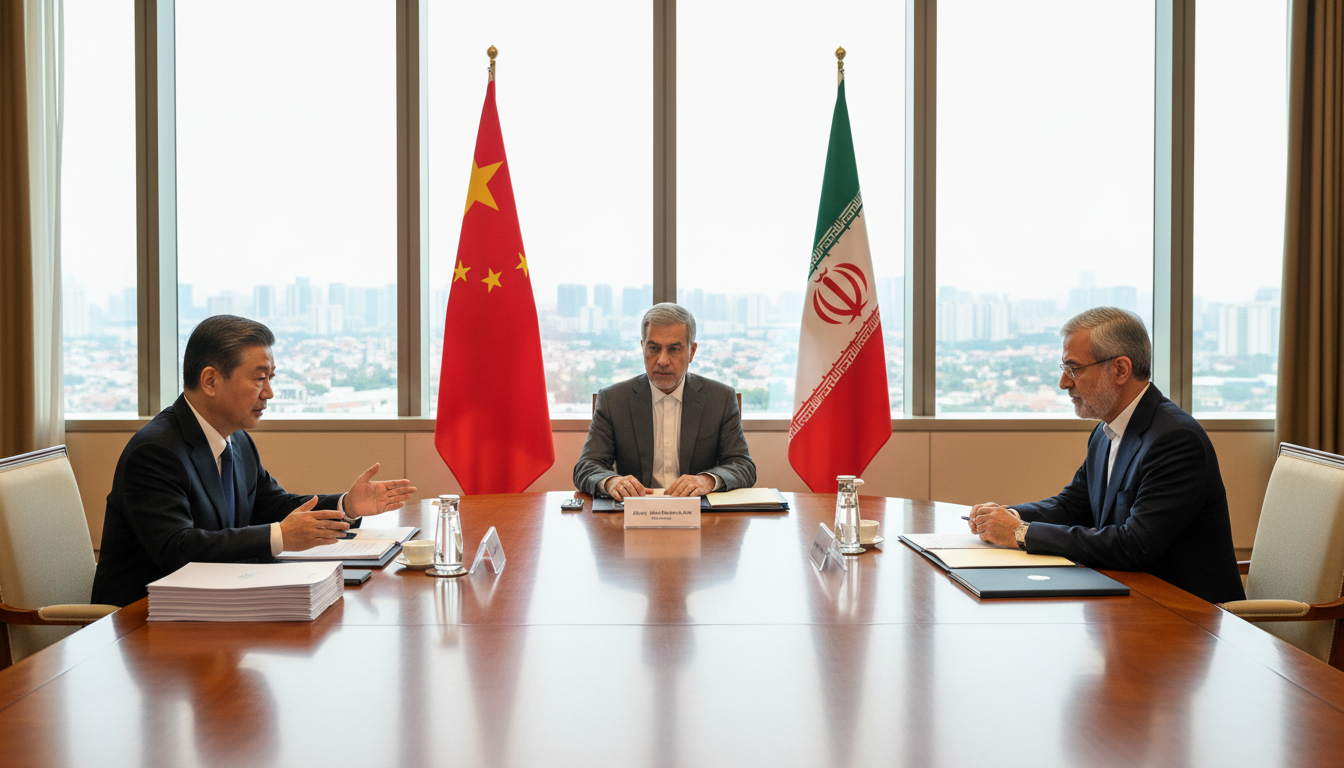
China urges reopening of the Strait of Hormuz as Wang Yi meets Iran’s Abbas Araghchi in Beijing
China urges reopening of the Strait of Hormuz after Foreign Minister Wang Yi met Iran’s Abbas Araghchi in Beijing, calling for a cease-fire and safe passage.
Opening summary of the Beijing talks
China’s top diplomat on Wednesday urged an immediate push to reopen the Strait of Hormuz and pressed for a halt to hostilities after meeting Iran’s deputy foreign minister, Abbas Araghchi, in Beijing.
The meeting put the Strait of Hormuz at the centre of diplomatic efforts as China sought both a cessation of the war and the restoration of safe commercial passage through the vital waterway.
China presses for reopening of the Strait of Hormuz
Foreign Minister Wang Yi framed the reopening of the Strait of Hormuz as a matter of international concern and economic urgency.
According to a summary released by Xinhua, Wang called for a “comprehensive cessation of hostilities” and urged parties to respond to international appeals to restore normal, safe passage.
China’s comments stopped short of directly blaming Tehran for the blockade, but they reflected growing Beijing unease about the disruption’s economic fallout.
Officials signalled that reopening the Strait is pivotal to preventing further shocks to global oil and gas markets that are already affecting Chinese industry.
Wang Yi and Abbas Araghchi meet in Beijing
The talks marked the highest-level Iranian visit to Beijing since the outbreak of the U.S.-Israel conflict with Iran in late February.
Araghchi briefed his Chinese counterpart on Iran’s diplomatic efforts to end the war, including mediation attempts led by Pakistan, and described Tehran as “serious and steadfast” in negotiations.
Beijing appears intent on balancing its longstanding ties with Tehran while avoiding entanglement in direct hostilities.
The Chinese account indicated caution: support for diplomacy and pressure for de-escalation alongside vocal concern over disruptions to international shipping.
Economic fallout and oil markets
The blockade of the Strait of Hormuz has contributed to sharp increases in global energy prices and broader economic strains.
China, which continues to receive Iranian crude on some shipments, nonetheless faces rising import costs that have fed inflationary pressures across the economy.
Wang warned that renewed fighting would exacerbate the economic damage and underlined the importance of negotiating to stabilise markets.
Analysts say sustained restrictions on the strait threaten supply chains beyond energy, affecting goods transit and insurance costs for carriers in the region.
Diplomatic pressure ahead of the US-China summit
The Beijing meeting took place days before a planned summit between President Trump and President Xi Jinping, elevating the stakes of China’s diplomatic posture.
U.S. officials have publicly urged Beijing to press Iran to end the chokehold on the strait, arguing that reopening the waterway is in China’s strategic and economic interest.
Washington has also taken direct measures at sea, including a temporary escort operation for commercial vessels that a U.S. official later said would be paused amid signs of progress.
Comments from U.S. lawmakers and the State Department highlighted expectations that China use its leverage during high-level contacts with Tehran.
Iran’s assurances and cease-fire talks
Iranian officials, represented by Araghchi in Beijing, stressed that Tehran remains committed to diplomacy even as it defends itself militarily.
Araghchi’s delegation briefed Chinese counterparts on cease-fire negotiations and sought to reassure Beijing that Iran is negotiating in good faith.
Beijing reiterated support for Iran’s right to peaceful nuclear development while maintaining opposition to nuclear weapons proliferation.
The diplomatic exchange underscored China’s dual aim: safeguard regional stability and uphold international norms on non-proliferation.
China has also resisted certain U.S. sanctions pressure related to Iranian oil, instructing firms not to comply with unilateral measures in at least one high-profile case.
That stance reflects Beijing’s effort to protect economic interests while navigating a delicate diplomatic path between Tehran and Washington.
China’s appeal to reopen the Strait of Hormuz and its call for a cease-fire signal a clear priority: restoring safe maritime routes and limiting further economic fallout.
As leaders prepare to meet in the coming days, Beijing’s role as a mediator and economic stakeholder will be closely watched by regional capitals and global markets alike.
