
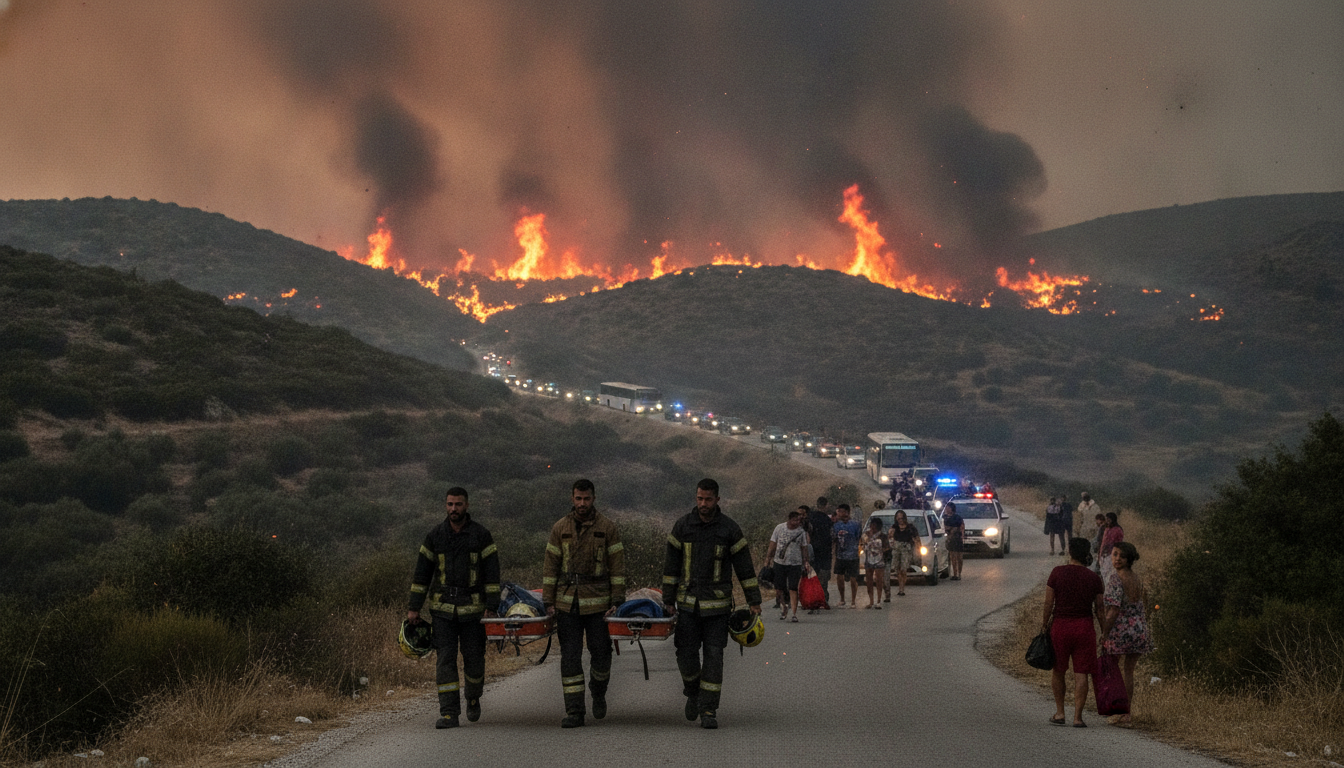
Crete wildfire kills two firefighters and forces thousands to evacuate
Crete wildfire kills two firefighters, forces thousands from homes and hotels as Greece battles multiple blazes; strong winds have grounded aircraft and elevated fire danger across the region.
The Crete wildfire that erupted near Krya Vrysi has claimed the lives of two firefighters and prompted mass evacuations, underscoring an intense week of blazes across southern Europe. The Crete wildfire is the latest and most deadly of several fires that have tested Greece’s emergency response as powerful winds and extreme heat hampered suppression efforts. Authorities mobilized hundreds of personnel and moved thousands of residents and tourists to safety while warning that conditions remain volatile.
Fatalities and identities of those killed
Greek officials confirmed that two firefighters died while battling flames on Crete, one aged 58 and the other 25, though the precise circumstances of their deaths remained under investigation. Emergency ministers and regional authorities expressed condolences and said teams would continue to search and secure the front lines. Local leaders described the losses as a stark reminder of the risks faced by frontline crews confronting fast-moving wildfires.
Evacuations and shelter operations in Agia Galini
Authorities ordered large-scale evacuations in the southern coastal area of Agia Galini after the blaze threatened villages and tourist areas. Approximately 8,000 people were moved from the immediate coastline, with many visitors later being allowed to return to hotels in safer districts as the situation evolved. Municipalities established temporary shelters, including a gymnasium where around 700 evacuees received mattresses, meals and basic aid while relatives and friends also hosted displaced residents.
Firefighting operations hampered by winds and terrain
Crete’s deputy regional governor reported that strong, gusting winds stretched the main fire front for miles and prevented aerial assets from operating safely. More than 220 firefighters were deployed on the ground to cut containment lines and protect settlements, but officials warned that shifting winds could rapidly change the fire’s direction. Crete’s civil protection authorities said residential areas were not under immediate threat at the time, but emphasized that the situation could deteriorate if conditions worsened.
Concurrent fires elsewhere in Greece
Officials said several other fires were active across the country, including a persistent blaze near Plomari on Lesbos where nearly 100 firefighters were engaged. In the Peloponnese region, a firefighter died on the sidelines of a response operation, adding to the toll of losses this season. Civil protection agencies placed wide swathes of Greece — including greater Athens, the Cyclades islands and parts of the Peloponnese — on high alert as prolonged dry weather and low humidity raised the probability of new ignitions.
France and Spain see improvement but remain at risk
Across Western Europe, officials reported progress in some of the largest incidents even as authorities urged continued vigilance. France’s interior minister said conditions had eased slightly with increased humidity, allowing many evacuees to return home, but warned that the overall situation remained complicated. Spanish authorities likewise noted stabilization near Madrid and the return of most of the 60,000 people who had been displaced, though new fires in northwestern provinces prompted fresh evacuations and demonstrated that the emergency was not yet over.
Regional outlook and the link to extreme weather
European monitoring systems flagged “very extreme” fire danger across broad areas of Western and Central Europe for the coming days, citing prolonged heat, gusty winds and parched vegetation. Fire and climate scientists have pointed to hotter, drier summers as a factor that lengthens the wildfire season and increases the frequency of rapid, large-scale fires. Officials reiterated appeals for public caution, urging residents and visitors to avoid activities that can ignite flames and to report smoke immediately.
The Crete wildfire and related blazes have imposed an immediate human cost and strained firefighting resources at a critical moment in the season. Authorities continue to prioritize life safety, evacuation routes and the protection of communities while assessing damage and coordinating relief. As crews work to contain remaining hotspots, officials warned that shifting weather patterns could reignite dormant edges and that vigilance will be required across the region in the days ahead.
