
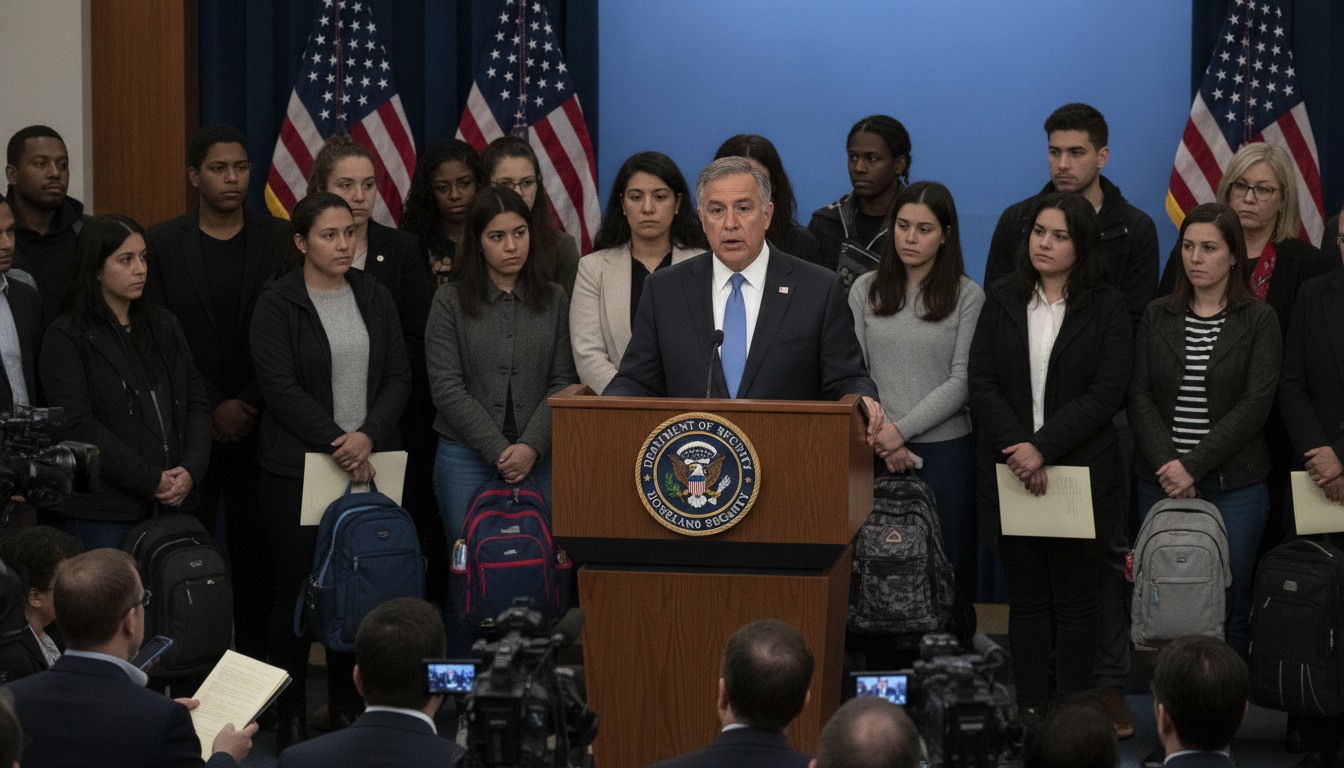
US Homeland Security Tells Temporary Protected Status Holders to Seek Permanent Residency or Return Home
US Homeland Security urges Temporary Protected Status holders to pursue permanent residency or leave the United States, offering repatriation assistance and legal support to those affected.
The U.S. Homeland Security secretary said on Sunday that migrants in the country under Temporary Protected Status should either seek adjustment to lawful permanent residency or prepare to return to their countries of origin. The remarks were made in an interview with CNN and signal a firm stance on the future of TPS beneficiaries living in the United States.
Secretary’s Message to TPS Recipients
The secretary characterized the choice as straightforward: pursue steps toward permanent residency or accept government help to return home. He told CNN that the department would provide support for repatriation where needed while encouraging eligible migrants to explore legal pathways to remain.
Officials framed the comments as an effort to clarify options available to TPS holders rather than announce an immediate change in status for any specific nationality. The statement was delivered on a Sunday interview and directed at the broad cohort of recipients protected under Temporary Protected Status.
Options Offered: Adjustment of Status or Repatriation Support
Department officials said recipients should “complete the procedures” to obtain green cards or utilize available assistance to return to their homelands. The message underscored two practical pathways: legal adjustment to permanent residency or facilitated departure through federal programs.
The secretary emphasized that the department would help coordinate departures for those who choose repatriation, including logistical and administrative support. At the same time, the administration encouraged recipients to consult immigration counsel and pursue any qualifying avenues for lawful permanent residence.
Legal Context for Temporary Protected Status Holders
Temporary Protected Status is a humanitarian designation that shields nationals of certain countries from deportation when conditions at home — such as conflict, natural disaster, or extraordinary conditions — make return unsafe. TPS does not automatically confer a path to permanent residency, and eligibility is periodically reviewed by the administration.
Legal experts note that some TPS recipients may already qualify for adjustment through family petitions, employment-based immigration paths, or other statutory remedies. The secretary’s comments highlighted the limitations of TPS as a long-term solution and urged beneficiaries to examine those alternative routes.
Reactions from Immigration Advocates and Lawyers
Immigration advocates responded with concern, saying that many TPS holders face complex legal and practical obstacles in pursuing permanent residency. Advocacy groups stressed that language barriers, cost of legal services, and changing eligibility rules can impede recipients’ ability to regularize their status.
Attorneys working with migrant communities cautioned that a blanket choice presented publicly may not reflect the individualized legal assessments required for each case. They urged the department to expand outreach and ensure access to affordable legal representation for TPS holders considering adjustment.
Practical Implications for Affected Migrants
For many families, the secretary’s remarks raise urgent questions about housing, employment, and schooling when contemplating either adjustment or return. Employers and local service providers could also be affected if beneficiaries opt to leave or are unable to secure permanent residency in the near term.
Community organizations say they will intensify efforts to inform beneficiaries of deadlines, document requirements, and available legal resources. They also requested clarity from federal authorities about timelines and specific supports for repatriation to avoid abrupt disruptions for vulnerable households.
What TPS Recipients Should Do Now
Immigration specialists recommend that TPS holders promptly review their eligibility for family-based petitions, employment-based petitions, or other forms of relief that could lead to lawful permanent resident status. Seeking qualified immigration counsel is advised to identify viable options and avoid procedural pitfalls.
Beneficiaries considering repatriation should document their circumstances and connect with consular and community services to plan an orderly return. Officials have said the department will provide assistance, but advocates emphasize that coordination and clear guidance will be essential to protect migrants’ rights and well-being.
The secretary’s statements have refocused public attention on the long-term status of Temporary Protected Status beneficiaries in the United States, prompting calls for clearer policy guidance and expanded legal support. As affected communities weigh their options, governmental agencies, legal service providers, and advocacy groups will likely play a central role in assisting decisions about residency, return, and family stability.
