
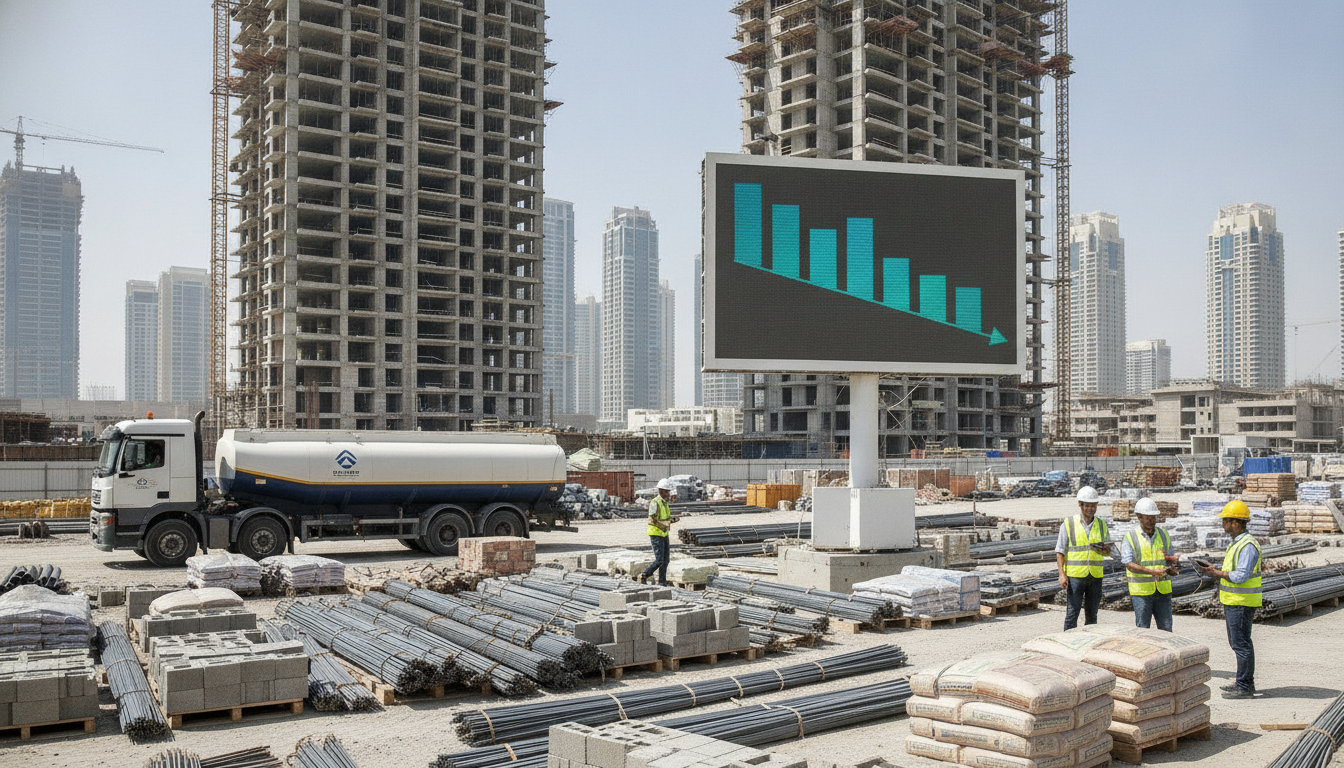
Dubai building material prices show mixed correction in July 2026
July 2026 — Dubai building material prices show mixed correction as fuel and transport costs ease; steel ticks higher while concrete, blocks and sand decline.
Dubai’s building material prices in July 2026 recorded a noticeable correction after months of steep increases, with several key inputs easing even as some items remained elevated. The market showed a combination of slight increases for certain steel products and sharper reductions in transport and concrete costs, reflecting lower fuel expenses and shifting supplier practices. Industry sources and contractors reported that while monthly relief is emerging, year-on-year levels remain substantially higher than in 2025.
July market shows price correction after recent spikes
After prolonged upward pressure through the first half of 2026, July brought a more balanced picture for construction inputs in Dubai. Vendors and contractors reported declines in several cost categories, particularly in transportation and specific concrete products, signaling an early phase of market stabilization. The changes suggest that reduced fuel prices and improved logistics are beginning to feed through to on-site costs, though not uniformly across all materials.
Rebar prices edge higher while freight costs fall
Steel reinforcement recorded modest monthly increases even as hauling costs dropped, creating a mixed impact on overall project bills. The price of 8 mm rebar rose to AED 3,250 per tonne in July from AED 3,200 in June, while 12 mm and 16 mm sizes climbed to AED 3,050 per tonne from AED 3,000. At the same time, transport charges for moving steel fell to about AED 750 per trailer from AED 850, a decline of nearly 11.8 percent, and crane service fees eased to around AED 400 from AED 450.
Concrete and cement movements ease some execution costs
Cement prices held steady in July, with bag rates unchanged at AED 16.25, but concrete prices showed clearer relief for builders. Ordinary concrete was quoted at roughly AED 340 per cubic metre, down from AED 375 in June, a drop near 9.3 percent that can materially lower short-term pouring costs. Reinforced concrete also slipped, to around AED 385 per cubic metre from AED 395, and pump hire rates recorded a sharp fall in minimum charges to about AED 1,500 from AED 1,700.
Blocks, sand and waste hauling record mixed shifts
Masonry and bulk-material prices produced a patchwork of movements across product types in July. Hollow blocks stayed around AED 4.80 per piece while thermal blocks fell from AED 8 to AED 7 per piece, and solid blocks held at about AED 6. Bulk sand remained costly compared with last year but moderated month-on-month, with white sand near AED 1,150 per truck and black sand at approximately AED 1,300 per truck. Waste removal costs also eased to about AED 750 per truck from AED 800 in June.
Annual comparison underscores persistent inflationary pressure
Despite the monthly corrections, the year-on-year comparison versus 2025 reveals that building costs are still significantly higher across many categories. Annual increases ranged widely, with white sand up roughly 21 percent year-on-year and pump hire surging by about 143 percent. Transport services for steel and crane operations also showed dramatic annual uplifts in the order of 125 percent, indicating that one month of easing has not yet reversed the broader trend of rising construction expenses.
Contractors urge suppliers to translate cost drops to clients
Industry leaders are calling for transparent pricing and for suppliers to pass on genuine cost reductions rather than offsetting them through new or hidden charges. Engineer Ahmed Niazi, chief executive of Dar Al-Fursan Building Contracting, said the sector is moving toward gradual stability and emphasized that lower fuel prices should be reflected in final contracts. He warned that some vendors appear to compensate for declines in core inputs by adding auxiliary charges, and urged contractors and regulators to monitor pricing practices closely.
Niazi also encouraged the construction community to prioritize suppliers who adjust prices in line with lower production and logistics costs. He said that while global markets are showing signs of calm, local vigilance is needed to prevent unjustified markups and to ensure that reductions in operating expenses benefit projects and end-users. The executive urged collaboration between developers, contractors and suppliers to maintain fairness and competitiveness in procurement.
Looking ahead, market participants expect a cautious continuation of the stabilizing trend if fuel prices remain subdued and supply chains normalize, but they stress that underlying yearly increases will likely temper the pace of recovery for project budgets. The coming months will be closely watched by developers and contractors seeking to lock in rates and manage inflationary exposure amid uneven movements across different building material segments.
