
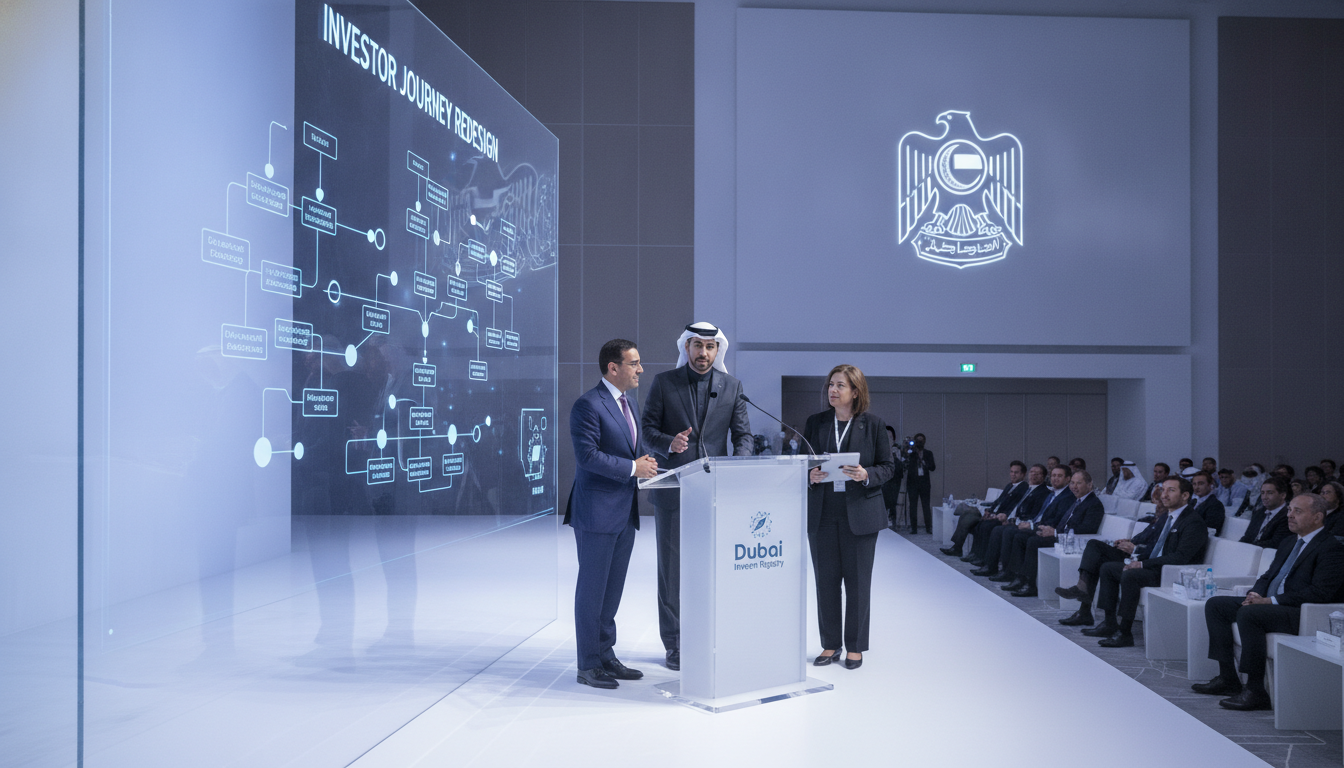
Dubai Free Zones Council to redesign investor journey and accelerate approvals
Dubai Free Zones Council unveils plans to redesign the investor journey, speed approvals and launch a Dubai Investor Register to boost business efficiency.
The Dubai Free Zones Council met under the chairmanship of Sheikh Ahmed bin Saeed Al Maktoum to approve a package of strategic measures aimed at redesigning the investor journey in free zones across the emirate. The council emphasised that redesigning the investor journey will be central to improving ease of doing business and sustaining Dubai’s competitiveness. Officials said the reforms focus on regulatory alignment, digital integration and a risk-based approvals model to shorten processing times while maintaining compliance.
Council meeting chaired by Sheikh Ahmed bin Saeed Al Maktoum
The 35th meeting of the Council reviewed regional and global economic developments and their implications for Dubai’s business environment. Members stressed the need for institutional readiness and business continuity plans to ensure resilience amid shifting economic conditions. The chair highlighted that proactive policy measures are required to preserve the flexibility of the economy and sustain growth in the free zones.
Economic outlook and institutional preparedness
Council discussions began with an assessment of macroeconomic indicators and external risks that could affect trade and investment flows. Participants underscored the importance of targeted policies that enable free zones to respond quickly to market changes. Strengthening governance frameworks and contingency planning were identified as priorities to support long-term stability.
Redesigning the investor journey for speed and simplicity
A central outcome of the meeting was the decision to move from procedural updates to a full redesign of the investor journey across free zones. The proposed model emphasises cross-agency integration, digital transaction layers and smart governance to reduce time and effort for investors. Council members backed a risk-based classification system to streamline approvals for lower-risk activities while preserving stringent checks for high-risk cases.
Dubai Investor Register to unify investor identity
The council reviewed the “Dubai Investor Register” initiative, intended to create a unified economic identity for investors across the emirate. The register is designed to reduce duplicate registrations, enable seamless movement and expansion of investors between free zones, and improve data sharing across government entities. Officials stressed the register will preserve each free zone’s autonomy in issuing and regulating licences while enhancing overall administrative efficiency.
Standardising legal and commercial notices through digital platforms
Council members also discussed a proposal to centralise legal and commercial announcements via approved government digital platforms. The move aims to replace varied print and manual procedures with a single electronic channel for licence-related notices and statutory publications. Proponents argued the change will reduce operational burdens on companies, lower costs and support the broader digital transformation agenda to eliminate unnecessary bureaucracy.
The council framed these initiatives as a cohesive strategy to raise the competitiveness of Dubai’s free zones, aligning with the emirate’s D33 economic priorities and long-term sustainability goals. Emphasis was placed on balancing speed and ease of doing business with robust compliance, risk management and security considerations. Officials indicated further technical work and stakeholder consultations will follow to shape the detailed implementation plans.
Implementation timelines and next steps were discussed, with members recommending pilot phases and phased rollouts to ensure operational continuity. The council encouraged continued collaboration between free zones, federal and local authorities, and private sector stakeholders to test integration points and refine procedures. Metrics for success were proposed to include approval times, cost reductions for businesses and uptake of the Dubai Investor Register.
The council reiterated that digital transformation, inter-agency data sharing and accountability will be key enablers of the redesigned investor journey. By adopting a governance model that leverages technology and risk-based approaches, Dubai aims to cut red tape while maintaining high standards of regulatory oversight. Sources at the meeting highlighted that these reforms are intended to make the emirate more attractive to international investors and to support sustainable economic expansion.
Plans agreed at the meeting will now move into detailed design and stakeholder engagement phases, with updates expected as pilots conclude and regulatory changes are formalised. The council’s decisions signal a concerted effort to modernise free zone administration and to offer a more seamless experience for investors seeking to set up, operate and expand businesses in Dubai.
Dubai’s free zones will retain the authority to issue licences and regulate activities within their jurisdictions, even as coordination improves through shared systems and the investor register. Officials noted that preserving this operational independence is essential to maintain the specialised ecosystems that many free zones have developed. The council affirmed its commitment to ensuring reforms enhance, rather than diminish, the unique value propositions of each zone.
Leaders said the package of measures is intended to support long-term competitiveness by lowering the time and cost of doing business, increasing transparency and strengthening compliance frameworks. As the initiatives progress, the council expects measurable improvements in investor satisfaction and international rankings that reflect ease of doing business. The reforms are positioned as practical steps toward reinforcing Dubai’s role as a leading global destination for trade, investment and innovation.
