
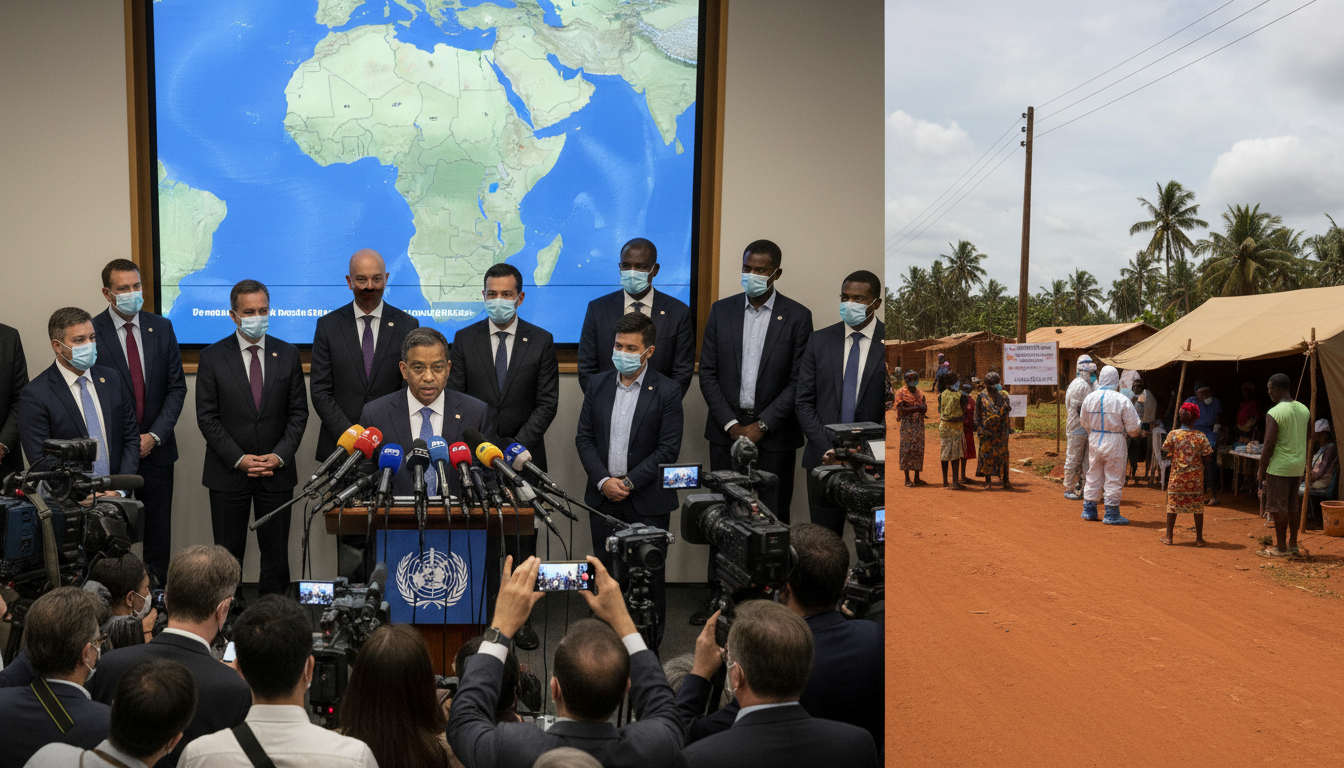
WHO declares global health emergency as Ebola outbreak spreads in DR Congo and Uganda
WHO declares global emergency as Ebola outbreak of the rare Bundibugyo strain spreads across northeastern DR Congo and into Uganda, prompting urgent international response.
WHO declares global health emergency
The World Health Organization on Saturday declared the Ebola outbreak affecting the Democratic Republic of Congo and Uganda a public health emergency of international concern. The declaration followed reports of a growing cluster of suspected cases and confirmed infections linked to the Bundibugyo species. Health authorities emphasized the need for coordinated international action as the outbreak crosses borders and strains local public health systems.
Confirmed and suspected cases in both countries
U.S. Centers for Disease Control and Prevention figures issued on Sunday indicated more than 330 suspected cases, including nearly 90 deaths reported in northeastern DR Congo. Laboratory testing to date has definitively linked 10 cases to the Ebola virus, while two confirmed cases have been reported in neighboring Uganda. Officials also said a small number of Americans directly affected by the outbreak are being assisted to withdraw from the region.
Bundibugyo strain complicates containment
The outbreak is caused by the Bundibugyo species of orthoebolavirus, a comparatively rare form of Ebola that was first identified in 2007. Bundibugyo has fewer field diagnostic tests available and, unlike other Ebola species, currently lacks a targeted vaccine or proven therapeutic regimen. Public health specialists warned that these scientific gaps could complicate rapid containment and increase reliance on classic infection-control measures.
Clinical features and transmission risks
Ebola infections typically begin with non-specific “dry” symptoms such as fever, muscle aches and fatigue before progressing in some patients to “wet” symptoms including severe diarrhea, vomiting and bleeding. Transmission occurs through contact with infected bodily fluids or contaminated materials such as bedding, clothing and medical equipment. The incubation period for Bundibugyo ranges from two to 21 days, and individuals are generally not infectious until symptoms develop, making early detection challenging where other febrile illnesses are common.
Diagnostic and research responses under way
Laboratories in the region and abroad are working to confirm cases while public health teams scale up contact tracing and infection-control protocols. The World Health Organization has said candidate medical products are in development to address Ebola species that currently lack vaccines. Academic teams, including researchers at the University of Oxford, have announced efforts to develop multivalent vaccines that could protect against multiple lethal viruses, including Bundibugyo, although such products remain in the development and testing phase.
Regional history and recent outbreaks
Ebola has a long history of outbreaks in sub-Saharan Africa, with the largest epidemic between 2014 and 2016 claiming more than 11,300 lives across West Africa. In recent years, Congo and Uganda have experienced multiple flare-ups: Congo declared its 16th outbreak in 2025, and Uganda reported significant clusters in both 2022 and earlier years linked to the Bundibugyo strain. Past fatality rates for Bundibugyo outbreaks ranged from roughly 30 percent to 50 percent, underscoring the virus’s capacity for severe disease even when case counts are relatively limited.
International coordination and systemic challenges
Experts have noted shifts in the global health architecture that could affect the current response, citing reductions in the international footprint of some agencies. Observers have pointed to changes in U.S. engagement with global health institutions and the reorganization of bilateral assistance programs as potential complicating factors. Health officials stressed that effective containment will depend on rapid laboratory confirmation, sustained funding for response operations, and cooperation across national borders to synchronize surveillance and treatment efforts.
The WHO emergency declaration aims to mobilize technical support, accelerate diagnostic capacity, and encourage resource-sharing to prevent wider regional spread. Local health ministries are urging communities to report suspected cases promptly, avoid contact with the sick or deceased, and follow guidance from medical teams conducting safe burials and contact tracing. International partners and national authorities said they are intensifying screening at border points and supporting frontline clinics with protective equipment and training.
Community engagement, timely diagnostics and robust infection prevention remain central to halting transmission as authorities work to identify and isolate cases. Continued monitoring and transparency from health agencies will be essential in the days ahead to track the outbreak’s trajectory and inform decisions on travel, trade and medical assistance.
