
EU heatwave adaptation gaps exposed as June temperatures overwhelm infrastructure
June heatwaves exposed EU adaptation gaps: record heat stressed infrastructure and revealed limited funding, pushing calls for faster, coordinated EU action.
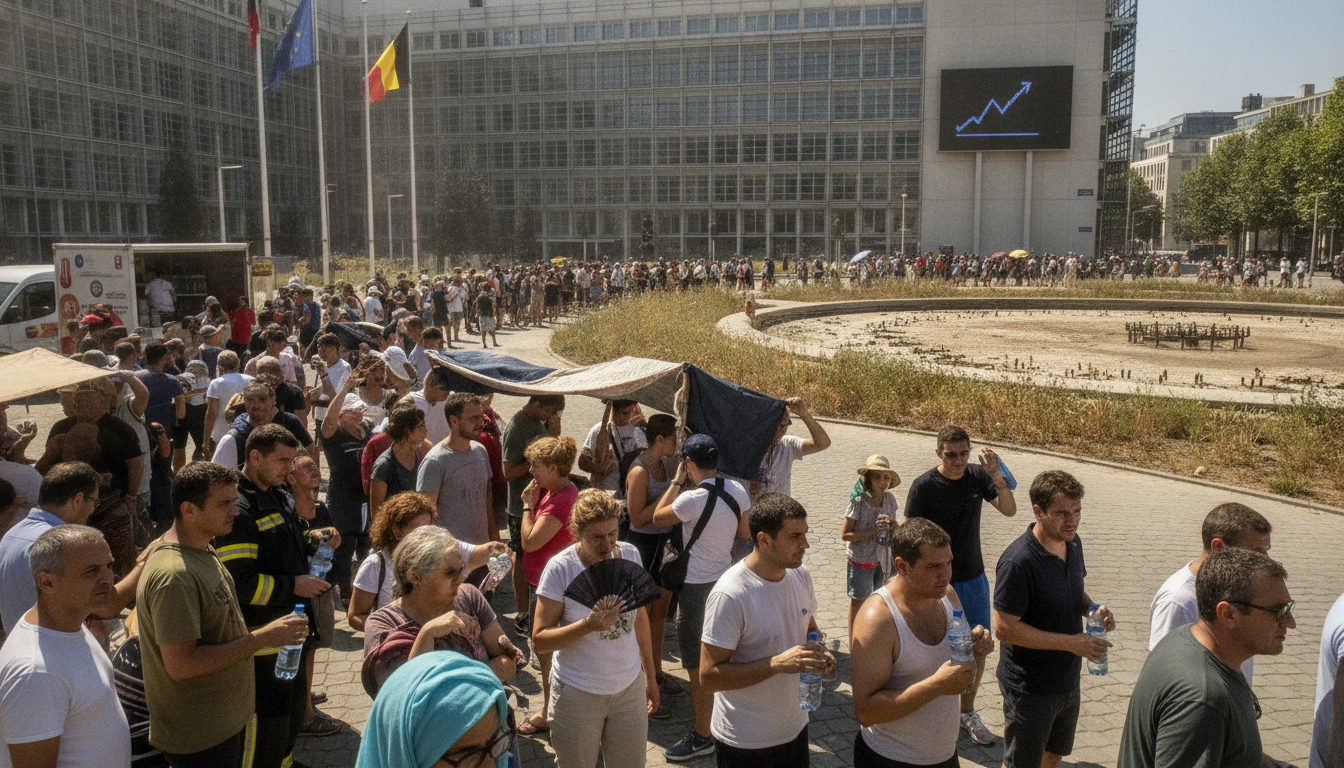
The severe heatwave that swept across Europe in June revealed major shortcomings in EU heatwave adaptation as thermometers topped 40°C in parts of the bloc. Governments, utilities and businesses reported service disruptions, transport failures and excess deaths, underscoring that mitigation-focused policies have not yet translated into widespread preparedness. Officials and health agencies are urging faster investment in adaptation measures to protect public health and economic activity as extreme heat becomes more frequent.
Heatwave damages and human toll
The June event produced widespread impacts: some countries recorded temperatures above 40°C, rail services were disrupted by warped tracks and parts of the power grid experienced outages. Spain reported roughly 1,000 excess deaths linked to the heat, and several regions imposed outdoor work bans and emergency measures. Authorities say these immediate harms reflect the broader reality that current infrastructure and workplace arrangements were largely designed for cooler norms.
EU institutions stress local responsibility, propose a common plan
EU leaders have long prioritised emissions reduction, but responsibility for local adaptation has typically rested with national and regional authorities. The European Commission has signalled it will publish an EU-level adaptation capacity plan later this year that aims to share scenarios and best practices rather than prescribe one-size-fits-all solutions. Commission officials argue that member states understand local fire risks or flood defences better than a central authority, while seeking to coordinate resources and guidance across the bloc.
Funding imbalance between mitigation and adaptation
Official figures for the 2021–2025 period show a stark imbalance in climate spending from the EU budget: about 72% went to mitigation efforts intended to reduce greenhouse gases, roughly 18% was allocated to adaptation, and some 9% addressed both priorities. Observers point out that mitigation enjoys clearer market incentives — such as emissions trading and renewables subsidies — while adaptation is often framed as a long-term insurance cost that lacks comparable revenue streams for private investors. This funding gap leaves critical resilience projects underfinanced.
Economic costs and sectoral vulnerabilities
Economists warn that extreme weather is beginning to register as a macroeconomic variable. A report from a major Dutch bank estimated that climate extremes cost the European economy about 0.3% of GDP in the previous year. Losses vary across sectors: tourism and agriculture in southern Europe face direct revenue drops, while manufacturing and services suffer productivity losses when workplaces overheat. For example, a single day above 30°C is estimated to cost the German economy about €430 million in lost output, highlighting the material stakes of inaction.
Workplaces, buildings and simple adaptation fixes
Adaptation gaps are as much about building design and work routines as about big infrastructure projects. Many northern European buildings were constructed to keep heat in, not to shed it, and only about half of German offices have air conditioning compared with 90–95% in southern Europe. Private companies are starting to adopt low-cost measures: one firm in Cologne used a reflective film on historic glass to cut indoor temperatures by as much as 10°C without altering protected structures. Other adaptations include shifting work shifts to cooler hours, improving ventilation and creating cooling centres for vulnerable populations.
Health measures and the role of early warnings
Public health interventions implemented since the deadly 2003 heatwave appear to have reduced the mortality impact of recent events, according to World Health Organization regional officials. Heat–health action plans, early warning systems and designated cooling spaces have saved lives, but the WHO emphasises that current measures must be scaled up continent-wide to keep pace with warming. Health directors and local authorities are calling for more systematic investment to reach at-risk groups and to integrate heat response into urban planning and transport systems.
Longer-term adaptation will require a mix of targeted local investments and EU-level coordination to direct funds, share data and support regions with fewer resources. Experts recommend financing instruments that make adaptation projects bankable, stronger building-code updates for heat resilience, and strategic upgrades to transport and energy networks to withstand high temperatures. As extreme heat becomes a recurrent feature rather than an occasional shock, policymakers face mounting pressure to rebalance climate spending and to treat adaptation as an urgent economic and public-health priority.
