
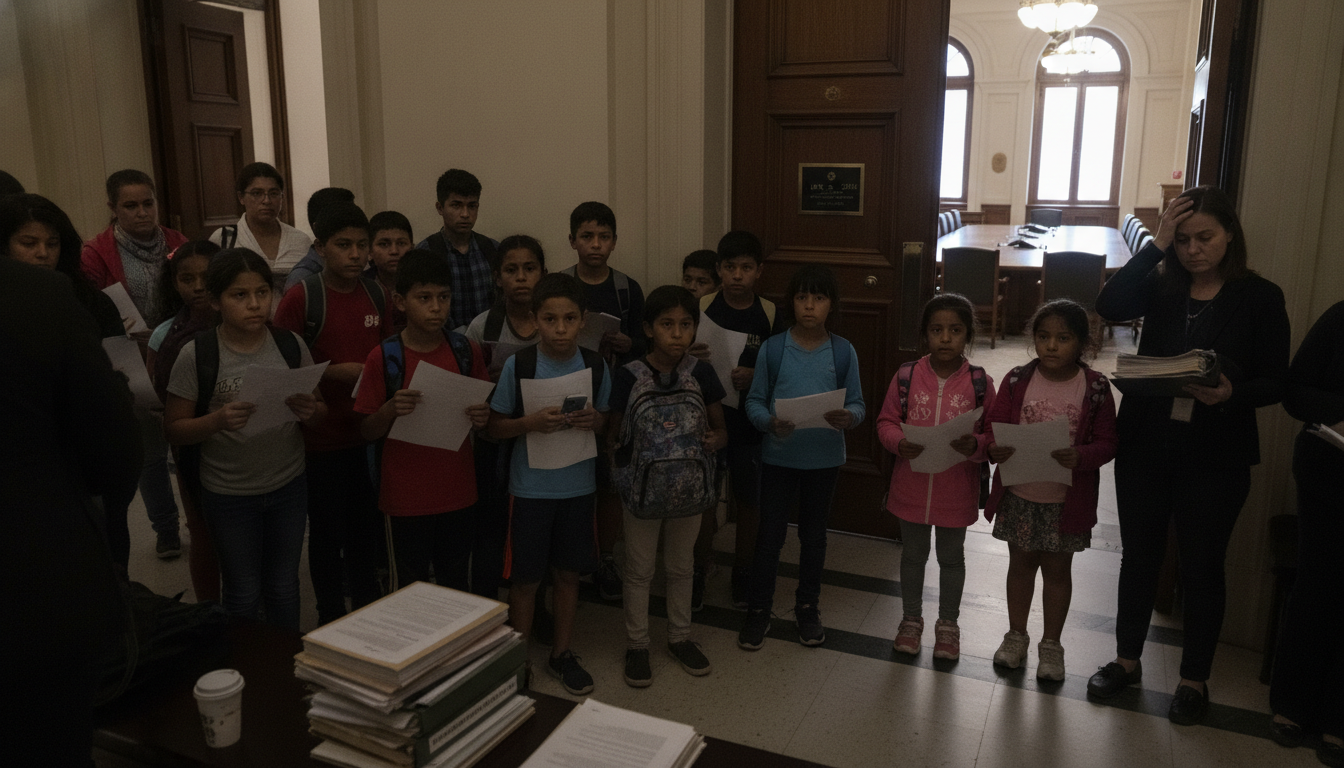
Federal Contract Expiry Threatens Legal Representation for 24,000 Unaccompanied Children
Federal contract expiry threatens legal representation for 24,000 unaccompanied children, raising advocates’ concerns about deportations and access to counsel.
The federal contract that funded legal representation for unaccompanied children expired on Friday, leaving roughly 24,000 young migrants at risk of losing access to counsel. Advocates say the lapse could lead to higher rates of deportation and uncertainty about whether lawyers will still be allowed to meet clients in government-funded shelters. Community groups and legal providers are pressing federal officials for immediate guidance on who will assume responsibility for current cases.
Federal Contract Expires
The contract had paid about 100 nonprofit legal organizations to represent children who arrived in the United States without documentation or a guardian. Those groups provided court advocacy, asylum applications, and other immigration relief efforts that advocates say are vital to fair adjudication. With the agreement now lapsed, providers cannot confirm whether their access to shelter facilities or permission to represent clients will continue.
Scale of the Impact
An estimated 24,000 unaccompanied minors stand to be affected by the contract’s end, according to advocacy organizations working with the children. Many of these young people face complex legal pathways, including asylum claims and humanitarian forms of relief that require formal representation. Advocates warn that without legal help, children are far more likely to miss deadlines, lack evidentiary support, and face expedited removal.
Shelter Access and Client Privacy at Risk
The contract had granted vetted attorneys the ability to enter government-run shelters to meet with their clients and collect confidential information necessary for legal filings. Providers now fear they could be denied entry or pressured to hand over sensitive client data. Legal groups have said they cannot ethically comply with demands that would violate attorney-client privilege or endanger the children they represent.
Advocates Report Financial Strain
Legal providers at a recent news conference said some agencies experienced delayed or withheld payments in the weeks leading up to the contract’s expiration. Nonprofits reported layoffs and furloughs as they struggled to sustain operations without predictable funding. Executives warned that continued financial pressure will further reduce the capacity of organizations to take new cases or see existing cases through in immigration court.
Lawmakers Demand Answers from HHS
Two Democratic members of the House of Representatives have formally asked the Department of Health and Human Services for clarity on the lapse and assurances that statutory obligations will be met. The letter requests details on how the agency will continue to comply with laws and court orders that require facilitation of legal services for unaccompanied children. Lawmakers emphasized the urgency of a plan that protects the rights and welfare of vulnerable minors.
Legal Protections and Available Relief
Multiple statutes and court rulings establish protections for unaccompanied minors, including provisions that encourage access to legal counsel and prohibit certain removals without due process. Beyond asylum, children may qualify for special protections when return to their country of origin would expose them to abuse, neglect, or trafficking. Legal counsel plays a critical role in identifying appropriate relief and navigating procedural hurdles in immigration courts.
Advocates Call for Interim Measures
Nonprofits and child welfare advocates are urging the government to enact interim measures to preserve representation, including temporary funding or expedited transfer of contracts to alternative providers. They say even short interruptions in representation can have irreversible consequences for a child’s case. Organizers also asked federal officials to publicly confirm whether lawyers will retain shelter access and the procedures for resolving outstanding invoices.
The lapse has heightened concern among service providers who say their priority remains the safety and legal rights of the children they serve. Until federal authorities issue specific guidance on funding, access, and compliance with existing legal protections, families and advocates face a period of acute uncertainty about the future of representation for thousands of unaccompanied minors.
