
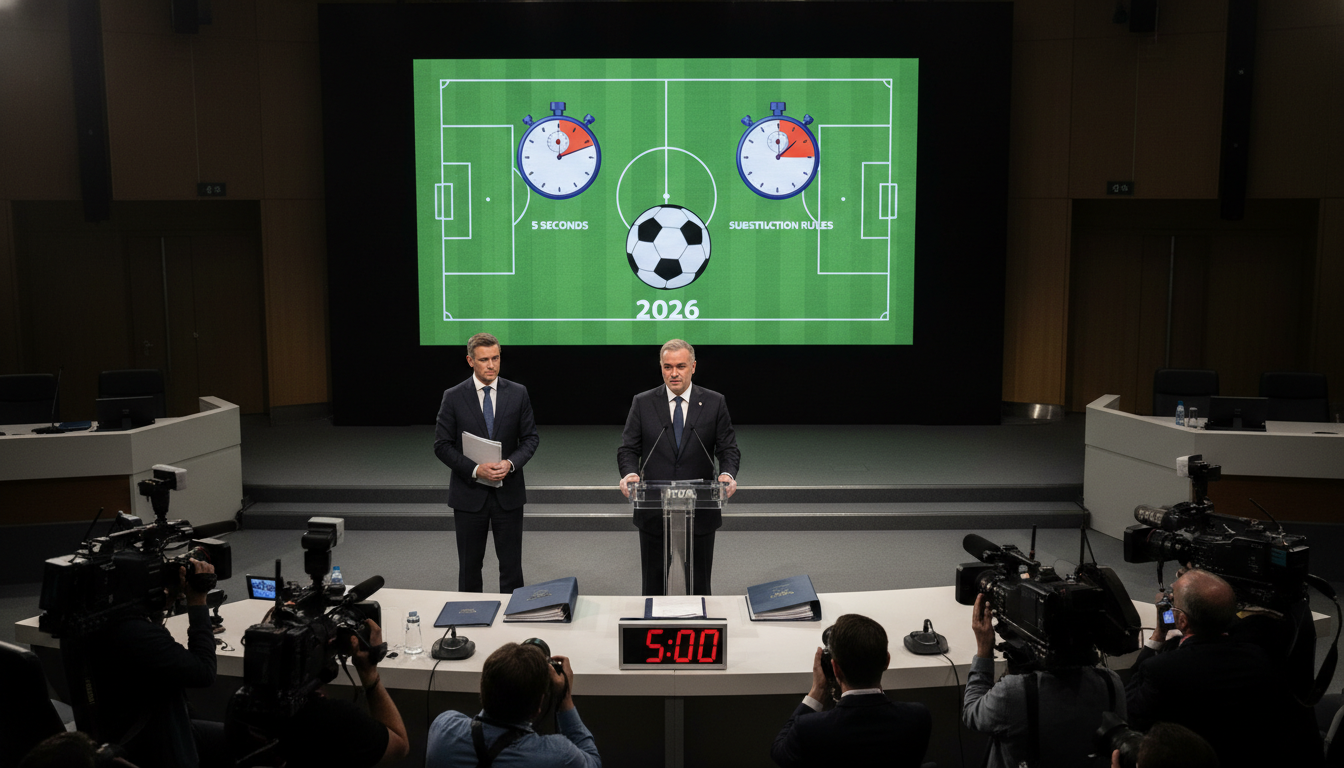
FIFA rule changes aim to speed up play with five second restart limit ahead of 2026 World Cup
FIFA rule changes for the 2026 World Cup include a five second limit on restarts, stricter substitution enforcement and faster VAR to speed up play globally
FIFA has announced a package of rule changes intended to accelerate match tempo and reduce avoidable stoppages ahead of the 2026 World Cup, the governing body said in a move reported by Spanish media. The new measures include a five second time limit for certain restarts, stepped up officiating around substitutions and improvements to the video assistant referee system. FIFA says the changes are designed to keep play flowing and enhance the viewing experience as the tournament expands.
The announcement follows consultations aimed at modernizing the sport and addressing frequent criticisms about time wasting and prolonged interruptions. Football authorities and broadcasters have long sought ways to tighten time management without compromising fairness and player safety. FIFA framed the changes as part of an effort to align match conduct with contemporary expectations for faster paced, spectator friendly football.
Time limits for goal kicks and throw ins
A central element of the FIFA rule changes is a five second limit for executing goal kicks and throw ins, according to the report. Players will be required to restart play far more quickly than in the past, with the aim of curbing deliberate delays that break the momentum of matches. Officials will be expected to apply the new timing consistently to prevent teams from gaining advantage through stalling tactics.
The rule is intended to reduce the cumulative minutes lost to repeated pauses over the course of a match. Match officials will have clear authority to restart play and issue sanctions where delays are deemed intentional. FIFA says the tighter restart clock will encourage continuous play and increase the average effective playing time in fixtures.
Referees to monitor substitutions and player changes closely
The new regulations place stronger emphasis on the conduct of substitutions, with referees instructed to address delays when players leave or enter the field. Match officials will be more proactive in policing time taken to complete substitutions and will penalize persistent or deliberate slowing of the game. The approach is intended to prevent stoppages linked to player changes from becoming a routine tactic.
Teams will likely need to adjust their substitution procedures to avoid disciplinary action, which could include formal cautions or application of other match management tools. Competition organizers and refereeing bodies will provide guidance ahead of implementation to ensure uniform interpretation across different competitions and jurisdictions.
VAR improvements to reduce decision delays
FIFA also plans to make tangible changes to the VAR process aimed at improving both speed and accuracy when on field reviews are required. The FIFA rule changes prioritize reducing the duration of VAR stoppages while maintaining the integrity of critical decisions. Technical upgrades and streamlined review protocols are expected to shorten the time referees spend consulting replays.
Officials argue that faster VAR interventions will help preserve match momentum and reduce the disruptive impact of lengthy video reviews. Broadcasters and fans have long criticized extended VAR checks, and the planned enhancements aim to strike a balance between technological assistance and uninterrupted play.
Changes timed for expanded 2026 World Cup in North America
The timing of the FIFA rule changes is significant given the scale of the 2026 World Cup, which will be hosted by the United States, Canada and Mexico and will feature 48 teams. The tournament’s expanded format increases the number of matches and amplifies concerns about fixture scheduling and viewer engagement. FIFA sees the new measures as a way to protect the spectacle across a larger and more complex tournament structure.
Organizers and host broadcasters are expected to welcome changes that keep matches lively and predictable in duration. With greater global audiences and a denser match calendar, reducing stoppage time can help ensure better scheduling and more consistent coverage for international viewers.
Early reactions and likely adjustments from the football community
Initial responses from coaches, players and broadcasters are likely to be mixed, with supporters praising efforts to modernize the sport and critics warning about rushed restarts. Some managers may express concerns that strict enforcement could disrupt tactical preparations or place undue pressure on players to rush set pieces. Broadcasting partners have indicated that smoother match flow would be beneficial for viewers and commercial partners.
FIFA and refereeing authorities will need to manage the transition carefully through training and trial matches to avoid inconsistent application. Clear communication and early familiarization with the new protocols will be important to minimize controversy when the rules take effect.
The FIFA rule changes mark a clear push by the sport’s governing body to speed up play and enhance the live experience ahead of the expanded World Cup in 2026. Stakeholders across the game will now focus on implementation details and how adjustments play out in competitive fixtures before football’s biggest tournament in North America.
