
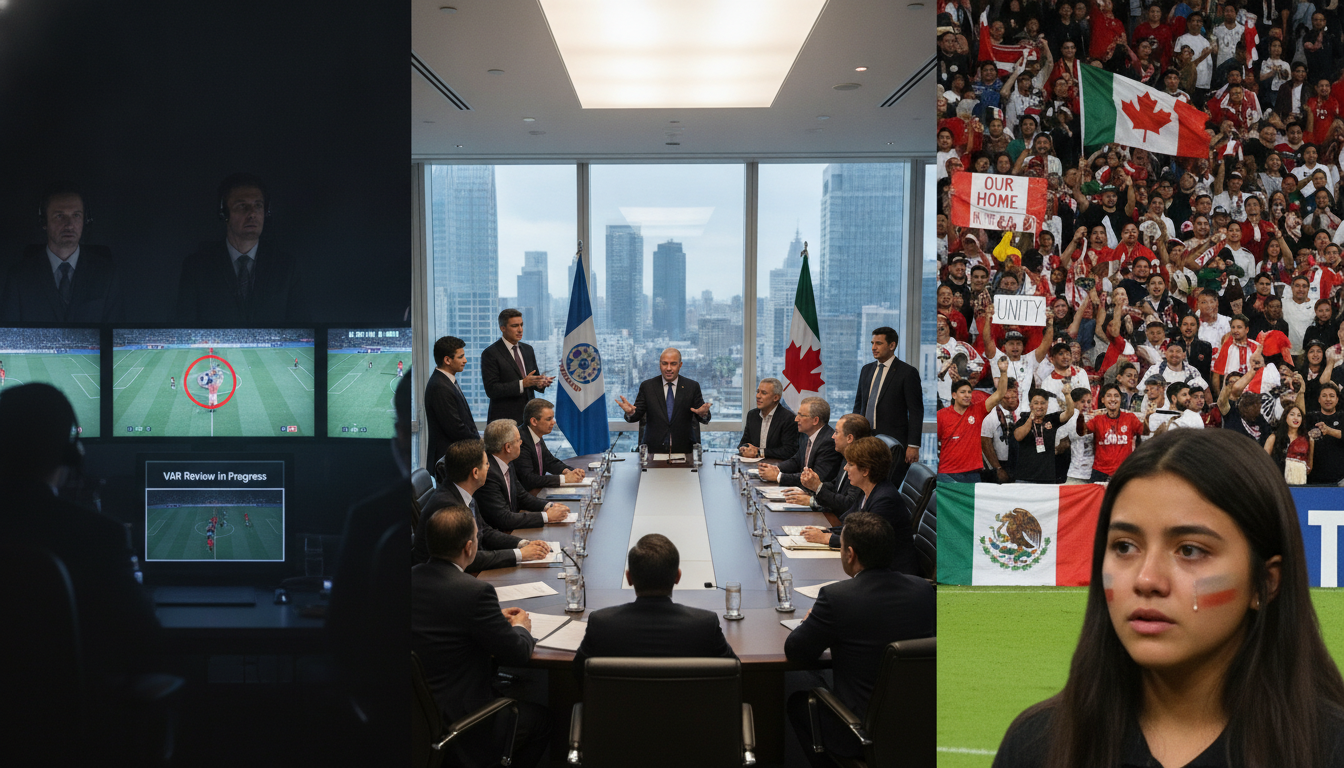
FIFA World Cup 2026 Sparks Debate Over VAR, Politics and Global Fan Passion
A tournament retrospective examining VAR controversies, underdog breakthroughs and the global diaspora fervour that marked the FIFA World Cup 2026.
The FIFA World Cup 2026 has ended up as one of the most talked-about editions in recent memory, blending dramatic underdog runs with heated VAR debates and visible political tensions off the pitch. Fans and commentators across continents have focused as much on refereeing decisions and national narratives as on the goals and trophies, making the tournament an expansive story about modern football.
VAR Decisions Fuel Debate Across Media and Fan Bases
Controversial video assistant referee calls became a recurring theme during the FIFA World Cup 2026, shaping match narratives and influencing knockout outcomes. Spectators, pundits and team officials argued over consistency and transparency, with several high-profile reversals prompting renewed calls for clearer protocols.
Governing bodies acknowledged the volume of scrutiny and signalled intent to review implementation and communication, but players and coaches said confusion persisted. The debate highlighted the tension between technology’s promise of fairness and the reality of human interpretation in high-stakes matches.
Underdog Runs Captivate Global Audiences
The tournament delivered multiple surprise performances from lower-ranked sides whose advances upended predictions and tournaments brackets. These “Cinderella stories” not only produced memorable stadium moments but also shifted how analysts evaluate preparation and squad depth.
Such runs created compelling narratives that extended beyond the pitch, energising national conversations and providing players from smaller federations with international exposure. The presence of breakthrough teams reminded viewers why knockout football remains a core appeal of the FIFA World Cup 2026.
Politics and Football Intersected in High-Profile Instances
Several fixtures and public gestures during the World Cup brought political issues into the sporting spotlight, forcing federations and FIFA to navigate complex diplomatic terrain. National anthems, fan protests and emblem displays underscored how major tournaments can amplify underlying geopolitical tensions.
Officials stressed the need to keep sport as a unifying platform, but the reality of international competitions is that they often mirror broader political dynamics. The experiences during the FIFA World Cup 2026 renewed debate about the role of sports governance in adjudicating conduct that carries political overtones.
Diaspora Communities Turned Matches into Cultural Events
Across host cities and international viewing sites, diaspora communities transformed many fixtures into celebrations of identity and solidarity during the FIFA World Cup 2026. Large expatriate populations in global hubs created vibrant atmospheres, with fan zones and local gatherings serving as focal points for cultural exchange.
Those scenes highlighted the tournament’s power to connect migrant communities to their homelands while also contributing to local economies and social life. Organisers noted the significance of these crowds in sustaining television audiences and sponsorship interest well into the knockout rounds.
Tactical Shifts and Managerial Decisions Shaped Outcomes
Coaches adapted tactics to the demands of an expanded tournament format, producing varied approaches to squad rotation and match management. Teams that combined disciplined defensive structure with flexible attacking plans tended to advance, while others struggled with fixture congestion and injury lists.
Managerial choices—ranging from late substitutions to formation switches—were often decisive and became focal points for post-match analysis. The strategic trends observed may influence national team planning and youth development priorities in the coming years.
Host Infrastructure and Legacy Questions Loom Large
Host cities reported strong short-term economic activity tied to tourism, broadcast rights and matchday spending, but questions remain about the long-term legacy of stadium investments and urban planning. Local authorities face decisions on repurposing venues and sustaining post-tournament community benefits.
Legacy planning will be judged on measurable outcomes such as increased grassroots participation, facility accessibility and maintenance commitments. The FIFA World Cup 2026 has created both opportunities and obligations for hosts to ensure that the event’s infrastructure yields lasting public value.
The tournament’s mix of drama, controversy and cultural resonance has left a complex record that football authorities, national federations and supporters will unpack over months to come. As reviews proceed and policy adjustments are considered, the FIFA World Cup 2026 will be remembered not only for its memorable matches but also for the broader questions it raised about technology, governance and the sport’s global role.
