
Modi austerity call defended by India’s finance minister amid Middle East tensions
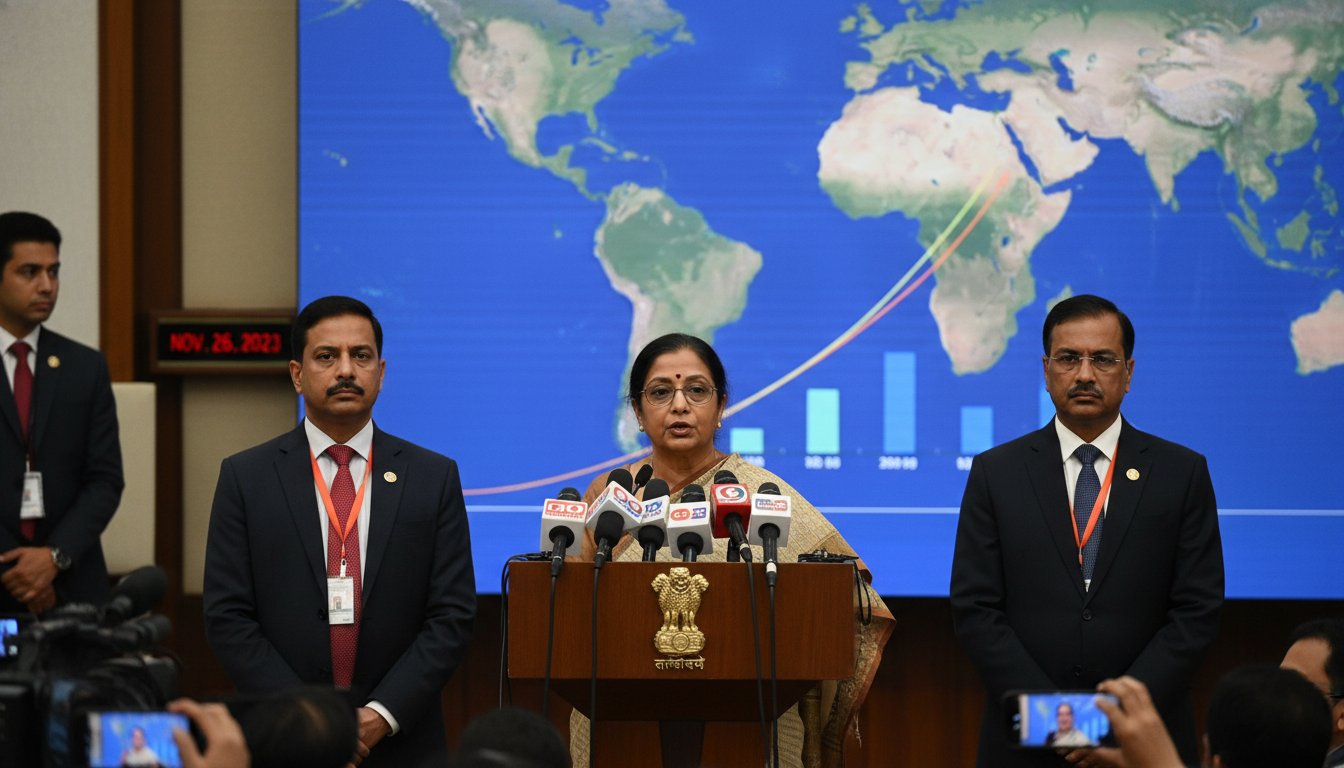
India’s finance minister Nirmala Sitharaman defended Prime Minister Narendra Modi’s “Modi austerity call” on Monday, saying the Middle East conflict with Iran is creating real external pressures on the economy that justify public appeals for lower fuel use. Sitharaman told a Mumbai audience that rising fuel costs, shipping delays and supply disruptions are squeezing businesses and putting strain on foreign-exchange reserves, comments reported by Bloomberg. The defence comes after opposition parties criticised the call as a sign that the economy is under greater stress than official statistics indicate.
Sitharaman frames Middle East conflict as economic shock
Nirmala Sitharaman described the crisis in the Middle East as more than a diplomatic or geopolitical event, arguing it has direct consequences for Indian firms and households. She highlighted practical effects including higher fuel bills, delayed shipments, rising maritime freight costs and shortages of key inputs. The minister said those developments are creating working-capital pressure for exporters and complicating foreign-exchange management.
Modi’s public appeal and foreign-exchange concerns
The prime minister made an unusually public appeal in May asking citizens to curb fuel consumption and avoid non-essential travel to conserve foreign-exchange reserves. Government officials have signalled that such appeals reflect concern about external balances amid heightened geopolitical risk. Critics have read the call as an acknowledgement that external pressures are material and require behavioural change at home.
Immediate business and trade impacts cited by the ministry
Officials noted that higher fuel and transport costs feed directly into manufacturing and logistics chains, raising input prices and delivery times for traders. Export-oriented companies are exposed to rising freight rates and payment delays, which in turn compress working capital and increase demand for short-term financing. Sitharaman said the combination of cost pressures and supply disruptions can erode margins and impede exporters’ ability to fulfil orders on time.
Opposition accuses government of masking economic weaknesses
Opposition parties have seized on the austerity appeal to argue that the Modi administration is downplaying domestic weaknesses while insisting on upbeat official data. They contend that asking citizens to reduce consumption is an implicit admission that policy tools have not fully insulated the economy from external shocks. The ruling party rejects those readings, saying the appeal is a prudent measure to protect national reserves during an extraordinary geopolitical episode.
Implications for energy imports and India–Gulf ties
For the United Arab Emirates and other Gulf partners, India’s statements underscore the central role of energy trade and logistics connectivity to bilateral relations. Any sustained increase in fuel prices or maritime costs would affect trade flows, project timelines and the large Indian diaspora that relies on remittances and cross-border services. Gulf suppliers and Indian importers will likely watch developments closely for potential shifts in purchasing patterns or contract terms.
Policy options and market responses under consideration
Officials and market participants say policy responses could range from targeted fiscal measures to steps aimed at stabilising supply chains and easing working-capital strains for exporters. Central bank and treasury coordination to manage foreign-exchange volatility is also on analysts’ radar, though authorities have so far emphasised behavioural measures alongside technical tools. Financial markets and corporate treasuries will monitor incoming trade and balance-of-payments data for signs of further stress.
Sitharaman’s public defence of the Modi austerity call frames the appeal as a pragmatic response to an externally driven shock rather than a sign of domestic policy failure. As political debate continues, businesses and international partners will be watching for concrete measures that address shipping bottlenecks, fuel volatility and liquidity pressures. The government faces the twin challenge of calming markets while ensuring exporters and importers can operate without prolonged disruption.
