
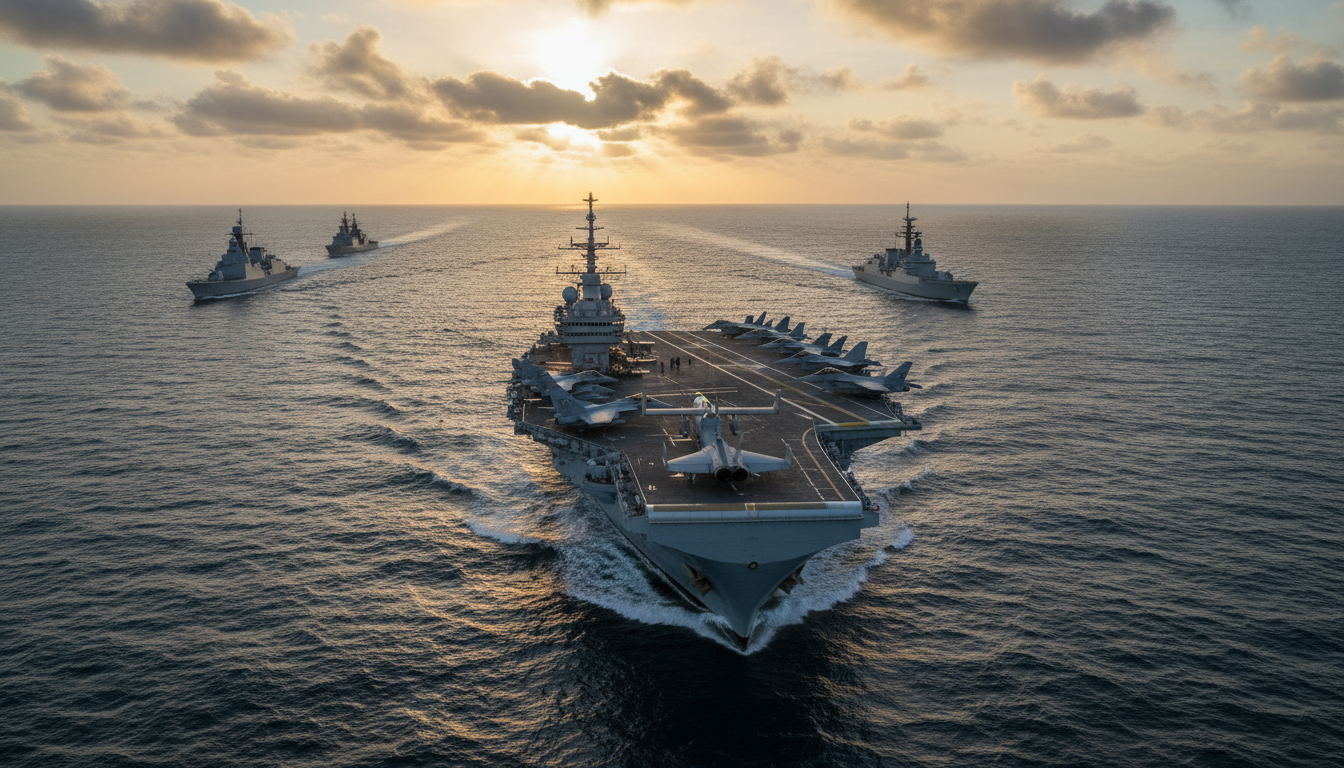
French carrier group moves into Red Sea amid Franco‑British Strait of Hormuz plan
French carrier group moves into the Red Sea to prepare for a possible mission under a Franco‑British plan to secure the Strait of Hormuz and deter threats.
France has dispatched a French carrier group to the Red Sea, the Ministry of the Armed Forces said, positioning naval assets in readiness for a potential future mission linked to a Franco‑British initiative for the Strait of Hormuz. The deployment reflects heightened focus by Paris and London on maritime security in a corridor vital to global energy and trade flows. Officials framed the movement as a precautionary measure to ensure operational options are available should regional tensions require coordinated action.
French Ministry Announces Deployment
The French Ministry of the Armed Forces issued a brief statement confirming that a carrier group is en route to the Red Sea and is preparing for a possible mission. The statement described the move as part of joint planning with British counterparts, without providing details on timing or specific vessels involved.
French officials said the deployment aims to preserve freedom of navigation and to offer a visible capability for rapid response in a region where incidents can quickly affect international shipping. The ministry emphasized that the force posture is precautionary and intended to reduce risks to merchant traffic.
Franco‑British Plan for the Strait of Hormuz
French and British authorities have been discussing coordinated measures to address threats in the Strait of Hormuz, which lies at the centre of recent maritime tensions. The plan, as described by French officials, contemplates a range of options from enhanced surveillance to protective naval operations in cooperation with allies.
Both capitals have repeatedly cited the need to keep sea lanes open for global trade and energy supplies, and the current move appears designed to reinforce that message. Diplomats in the region say the partnership signals a shared commitment to deterrence rather than escalation.
Operational Preparations Underway
Military sources said the carrier group’s movement to the Red Sea involves logistical and operational preparations typical of carrier‑borne operations, including air and maritime coordination and the establishment of support links. Carrier groups bring a mix of air power, escorts and sustainment vessels that offer commanders flexible response options in complex maritime environments.
Commanders are expected to focus on intelligence, surveillance and reconnaissance missions and the ability to protect commercial shipping if necessary. Training and interoperability drills with allied units are likely to be prioritised to ensure rapid integration if the Franco‑British plan is activated.
Implications for Regional Security and Shipping
The deployment comes as commercial operators and regional states watch developments closely, given the strategic importance of the Strait of Hormuz for oil and liquefied natural gas shipments. Any sustained naval presence near choke points can have both stabilising and disruptive effects on shipping schedules and insurance costs.
Maritime security analysts note that visible allied deployments can deter opportunistic acts against merchant vessels, but they also carry risks of miscalculation if not accompanied by clear diplomatic engagement. Regional governments, as well as international shipping organisations, will monitor the situation for signs of escalation or de‑escalation.
Diplomatic Coordination and International Reaction
Paris has indicated that the move was coordinated at least at a planning level with London, reflecting broader Western concern about threats to navigation in the Gulf and adjacent waters. British officials have previously stressed the importance of collective action with partners when addressing maritime security challenges.
Other states with interests in Gulf trade routes are likely to assess the deployment in light of their own diplomatic and security priorities. International organisations that track maritime safety have urged transparency and communication among naval and commercial actors to reduce the chance of incidents.
Timing, Mandate and Uncertainties
The French ministry did not specify a timeline, mandate or rules of engagement for the carrier group’s potential mission, leaving key operational questions open. Analysts caution that without clear legal or diplomatic frameworks, such deployments can create ambiguity about objectives and thresholds for action.
Military planners will need to balance the deterrent value of the carrier group with measured engagement to avoid unintended escalation. Observers say that follow‑up statements from Paris and London, and consultations with regional partners, will be important to define the mission’s scope should it move beyond preparatory posturing.
The movement of a French carrier group into the Red Sea underscores the continued international focus on securing vital maritime routes and managing risks in a volatile region. Officials stress the deployment is a precaution intended to keep options open; how it unfolds will depend on diplomatic coordination and developments on the ground and at sea.
