
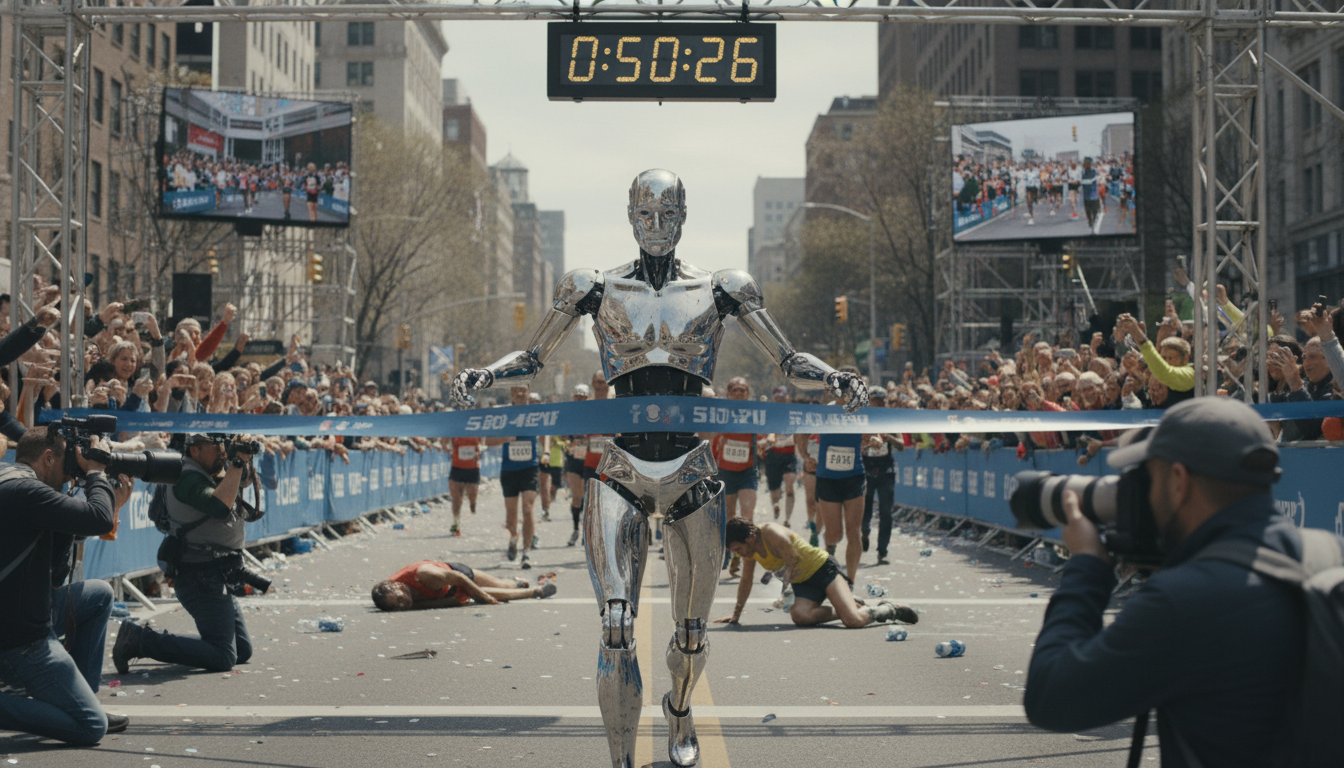
Robot Lightning Completes Half-Marathon in 50:26, Beating Human World Record
Humanoid robot Lightning ran a half-marathon in Beijing in 50:26 on April 19, 2026, surpassing the existing human world record and prompting debate about the future of athletic performance. The robot half-marathon effort was captured on video and released publicly, drawing attention from both the tech community and sports regulators. Observers said the run highlights rapid advances in robotic mobility and raises questions about verification, safety and competition standards.
Robot Lightning Beats Human Half-Marathon Time
A humanoid robot identified as Lightning completed the 21.0975-kilometre distance in 50 minutes and 26 seconds, a time shorter than the established human benchmark for the half-marathon. Organizers in Beijing staged the run on April 19, 2026, and footage of the event circulated widely online soon after. The performance immediately became a focal point in discussions about how to classify and validate robotic athletic achievements.
Details of the Beijing Run and Presentation
The run took place on public roads in Beijing and was documented in a video released by the team behind the project on April 19. Visuals show a bright-red, humanoid machine moving at a steady, high cadence over the course, with the crowd and bystanders visible in parts of the footage. Event organizers said the attempt was intended as a demonstration of mobility engineering rather than a challenge to human competition structures.
Engineering Features That Enabled the Pace
Lightning’s designers combined lightweight materials, high-torque actuators and advanced balance algorithms to sustain the running pace required for a 50:26 half-marathon. The robot’s gait control system appears optimized for energy-efficient strides and continuous stabilization, enabling it to recover rapidly from minor surface irregularities. Engineers also focused on thermal management and battery life to maintain consistent power output throughout the 21-kilometre effort.
Responses from Athletics Officials and Experts
Reaction from the athletics community was immediate and varied, with some officials calling for independent verification before treating the time as a record of any kind. Sports regulators typically require supervised conditions, standardized timing systems and anti-doping protocols for human records, and experts say comparable standards would be needed to evaluate robotic performances. Robotics researchers noted the achievement as a technical milestone while urging careful distinction between demonstrations and regulated competition.
Potential Impacts on Competition, Safety and Standards
The robot’s run has sharpened conversations about how to define categories for non-human competitors in sport and public demonstrations. Questions include whether robotic times should be recorded on official leaderboards, how to ensure fair conditions for comparison, and what safety protocols are necessary for robots operating alongside people. Policymakers and sports federations will likely face pressure to develop guidelines that distinguish autonomous or remotely operated performances from human athletic records.
Future Tests, Transparency and Independent Verification
Teams working on high-performance robots may pursue additional timed runs under more controlled conditions to address concerns about course certification and timing accuracy. Independent testing, transparent methodology disclosures and third-party timing would help validate any claims of record-setting performance. Observers say that replicable results under accepted standards will determine whether robotic runs are treated as technical demonstrations or entered into formal record categories.
The Lightning half-marathon has underscored rapid progress in legged robotics and opened a new chapter in discussions about human achievement and machine capability, with further tests and regulatory dialogue expected in the months ahead.
