
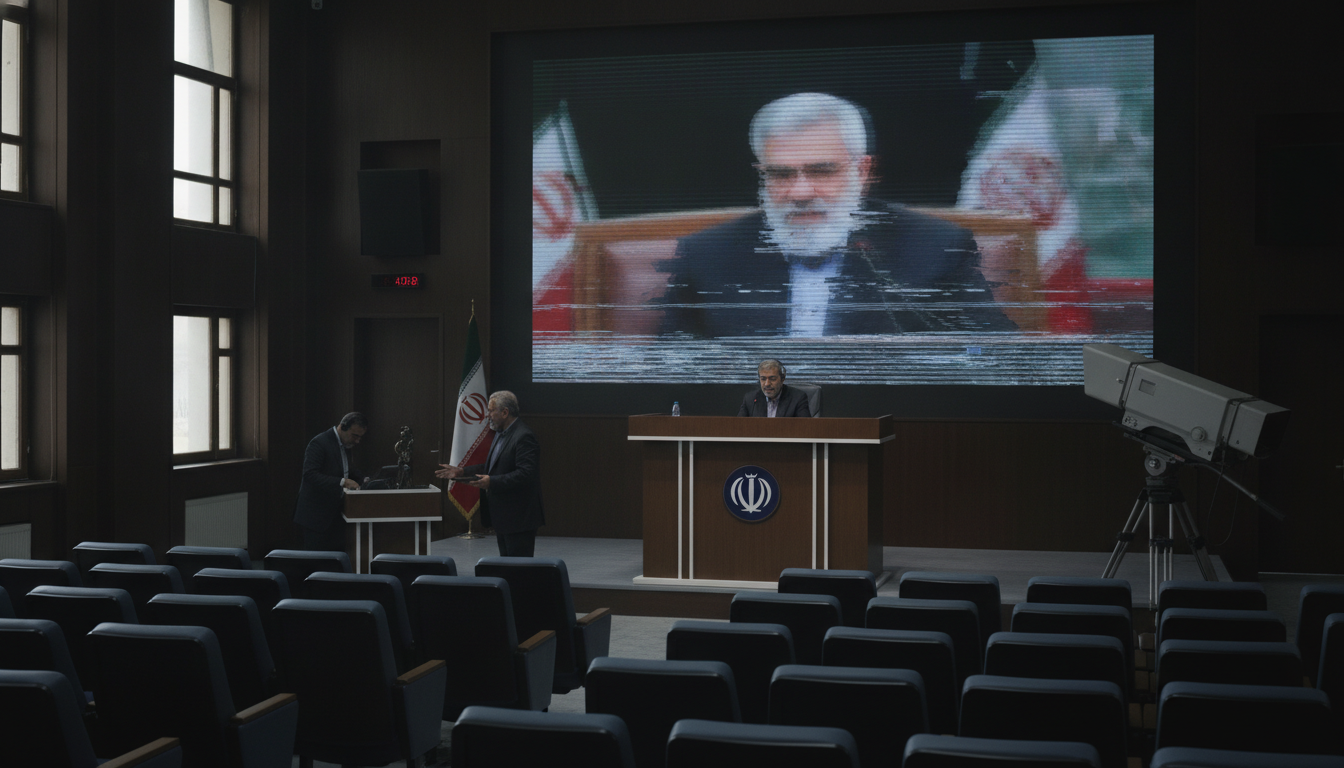
Iran state TV rift escalates as government accuses IRIB of censoring presidential remarks on US talks
Iran state TV rift deepens as government accuses IRIB of censoring presidential remarks on US negotiations; mediators in Tehran work to avert wider fallout.
A public clash has erupted in Tehran as the government accused the Islamic Republic of Iran Broadcasting of cutting parts of President Masoud Pezeshkian’s speech that addressed negotiations with the United States, deepening an Iran state TV rift that officials warn could harm national unity. The Government Information Council said the edits omitted references to private approvals for talks and cited a pattern of similar cuts to remarks by other senior officials. State broadcaster IRIB pushed back, saying it acted to prevent an appearance of division among the country’s leadership. The dispute comes as regional mediators press both sides to keep diplomatic channels open amid heightened military tensions.
Government accuses IRIB of targeted cuts
The Government Information Council publicly accused IRIB on Friday of censoring a segment in which President Pezeshkian described going to the supreme leader for guidance on negotiations with Washington. Officials said the excised passage was part of a broader set of “unusual actions” that also affected appearances by the heads of parliament and the judiciary. The council framed the cuts as politically motivated and said they risked undermining social cohesion during a period of external pressure.
IRIB says edits were to avoid showing division
IRIB’s public relations office rejected the government’s accusations and characterized the broadcaster’s editorial decisions as necessary to prevent “an incorrect and unreal suggestion of duality in the country’s leadership pillars.” The statement emphasized the broadcaster’s duty to present a unified national stance, especially while a new supreme leader has urged “sacred unity” in the face of military, economic and diplomatic pressure. The broadcaster’s leadership is appointed by the supreme leader, a fact officials on both sides referenced in their statements.
Other officials’ remarks were also affected, government says
The government highlighted that cuts were not limited to the president’s speech, noting that an interview with parliament speaker and negotiator Mohammad Bagher Ghalibaf was partially removed earlier this month. Judiciary chief Gholam-Hossein Mohseni-Ejei also reportedly had remarks supporting the president omitted from broadcast. Foreign Minister Abbas Araghchi separately criticized IRIB for airing only brief subtitles from his interviews with international outlets, saying the fuller presentations would have better shown Iran’s case to US audiences and policymakers.
Political factions and budget threats loom large
Government sources blamed a factional element within IRIB, implicitly pointing to ultrahardline groups such as the Paydari Front, and warned that these editorial choices risked serving narrow political interests. Lawmakers and oversight committees have issued warnings to broadcaster directors about the need to display diverse viewpoints and to act as a sign of national unity. Hardline parliamentarians warned the president had threatened to reduce state television funding, though the administration did not confirm any formal budgetary measures.
Mediators arrive in Tehran amid regional tensions
As the domestic dispute played out, Omani mediators were in Tehran to discuss management of the Strait of Hormuz, a strategic waterway at the center of friction between Iran and the United States. Both sides have signaled continued indirect communications, and Iranian officials said the negotiations that Pezeshkian referenced were part of that broader diplomatic effort. The timing of mediator visits underscored concerns that internal media disputes could complicate or be used to influence sensitive regional talks.
Responses from international actors and security officials have further complicated the picture. The US president publicly described the conflict as proceeding in a way he judged favorable and said mediators were still engaged, while the secretary of Iran’s Supreme National Security Council signaled a continuation of missile and drone operations until perceived objectives were achieved. These contrasting public positions reflect the broader strategic friction that accompanies the domestic media dispute.
The confrontation between the Iranian government and IRIB highlights an uncommon public airing of tensions between Tehran’s political institutions and its state broadcaster, raising questions about editorial independence, factional influence, and the management of information during a period of heightened regional risk. As Omani mediators remained in the capital and officials on both sides reiterated competing narratives, Tehran’s leadership will face growing pressure to resolve the dispute without further eroding public confidence or disrupting delicate diplomatic channels.
