
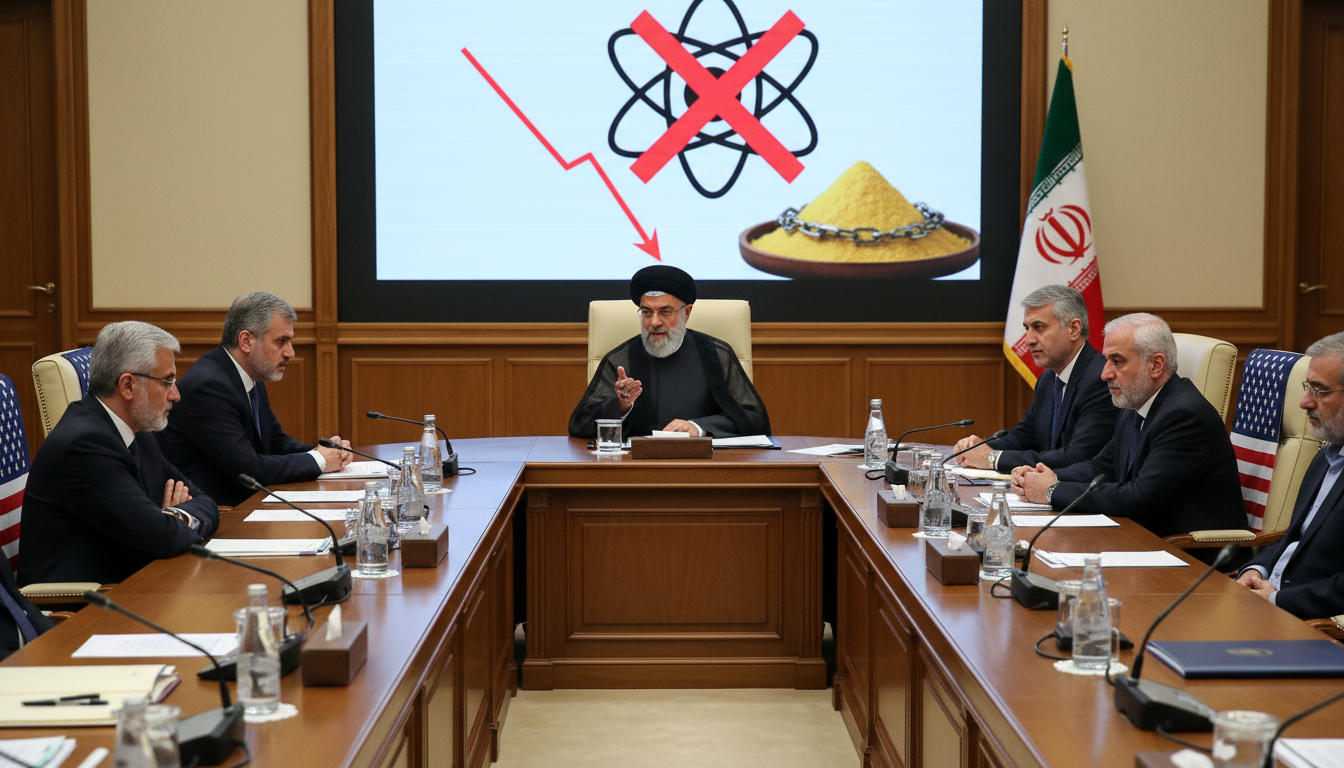
Iran rejects new Iran-US talks and says it will not hand over enriched uranium
Iran rejects new Iran-US talks and says it will not hand over enriched uranium, Deputy FM Saeed Khatibzadeh tells AP at Antalya forum, rejecting US assertions.
Iranian Deputy Foreign Minister Saeed Khatibzadeh said Saturday that Tehran is not prepared to enter a fresh round of Iran‑US talks, asserting that Washington has not abandoned hardline positions.
He also denied U.S. claims that Iran would surrender enriched uranium, remarks he made during an interview with the Associated Press at the Antalya diplomatic forum in Turkey.
Khatibzadeh’s Remarks at Antalya Forum
Saeed Khatibzadeh told the Associated Press that Iran would not resume direct Iran‑US talks while American policy remained unchanged and uncompromising.
He characterized Washington’s stance as inflexible and said that such rigidity precluded productive negotiations at this time.
Khatibzadeh stressed that a resumption of dialogue would require substantive shifts in U.S. positions, and not merely rhetorical calls for diplomacy.
His comments framed Tehran’s refusal as contingent on policy change rather than an absolute rejection of diplomacy.
Response to Trump’s ‘nuclear dust’ Claim
Khatibzadeh directly rejected a recent assertion by U.S. political leaders that American forces could seize so‑called “nuclear dust” or buried materials inside Iran.
He said Tehran would not hand over enriched uranium to the United States and dismissed the claim as inaccurate and inflammatory.
The U.S. statement had referred to roughly 440 kilograms of enriched uranium said to be located beneath sites damaged in previous military strikes.
Iran’s deputy foreign minister described the allegation as part of a confrontational narrative that undermines prospects for negotiation.
Status of Enriched Uranium and Site Damage
Iran’s stance on the enriched uranium reflects long‑running disputes over nuclear materials and transparency that have driven tensions for more than a decade.
Tehran has repeatedly maintained that its nuclear programme is for peaceful purposes while resisting demands that it surrender control over nuclear materials to foreign powers.
Independent verification of the precise location and condition of the reported uranium remains limited publicly, and the claim of buried material has not been independently confirmed by third‑party inspectors in the reporting.
Analysts say the technical challenges of securing, moving, and verifying such material would be significant and politically sensitive if an external power sought to seize it.
Diplomatic Impasse and Preconditions for Talks
Tehran’s announcement sets clear preconditions for any future Iran‑US talks: a demonstrable shift in American policy, according to Khatibzadeh.
That position echoes previous Iranian demands that any engagement include mutual concessions and removal of what Iran calls coercive measures.
U.S. officials have outlined their own sets of requirements in past negotiations, creating a pattern in which both sides link talks to prior political or strategic moves.
Observers say that without concrete signals from Washington and Tehran on de‑escalation, the diplomatic impasse is likely to persist.
Regional and International Reactions
Regional capitals and international observers are watching the exchange of statements closely for signs of either escalation or détente.
Some governments have urged restraint and a return to diplomatic channels, while others have reiterated support for firm positions on nuclear proliferation.
The dispute over claims about seized or buried nuclear material could complicate multilateral efforts to revive broader nuclear agreements or to re‑establish monitoring by international agencies.
Experts warn that inflammatory public rhetoric raises the risk of miscalculation at a time when tensions in the Gulf region remain high.
The deputy foreign minister’s comments signal that Iran seeks clear assurances and a change in U.S. posture before considering direct negotiations, maintaining leverage by rejecting immediate talks and denying any readiness to transfer nuclear material.
