
Iran–US talks in Switzerland produce oversight committee, working groups and Strait of Hormuz safeguards
Qatar- and Pakistan-mediated Iran–US talks in Switzerland agreed to a high-level oversight committee, specialized working groups on the nuclear file and sanctions, and a communication channel to protect shipping through the Strait of Hormuz.
High-Level Talks Conclude in Switzerland
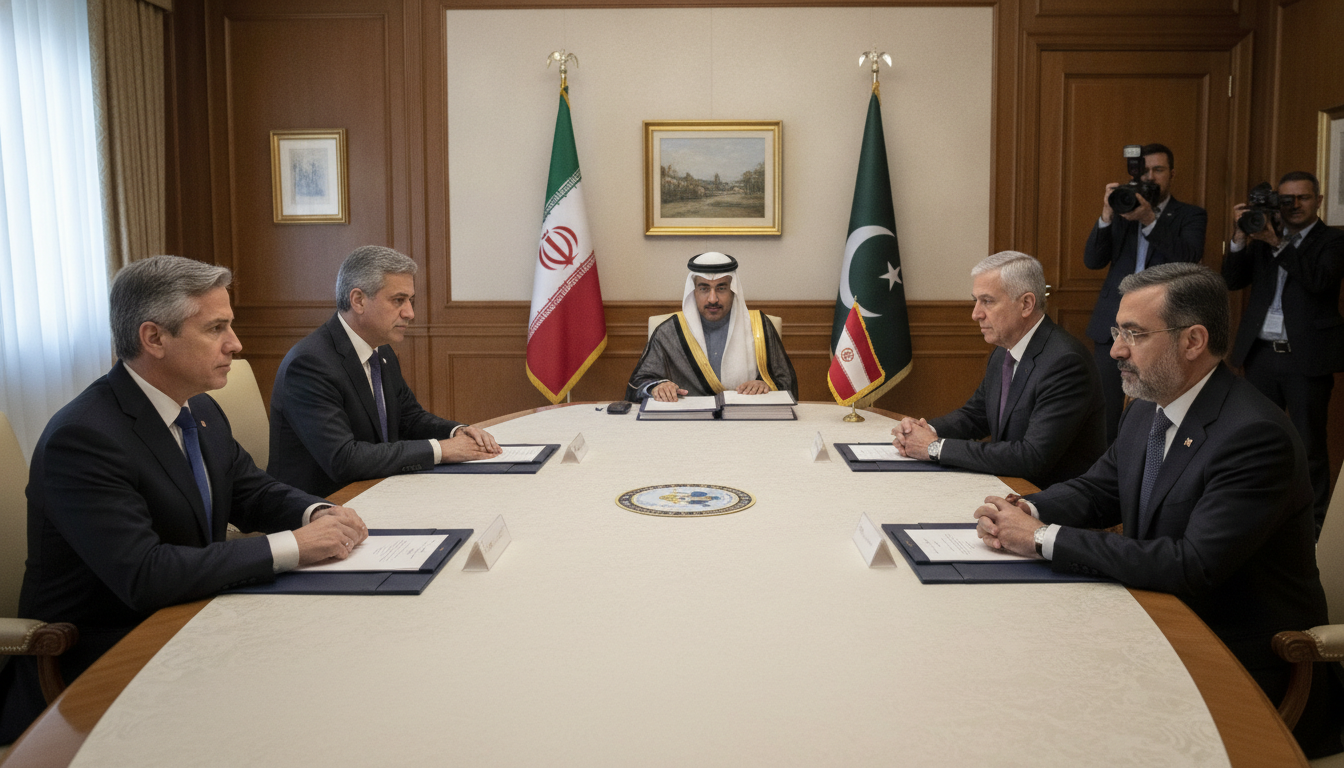
The first round of Iran–US talks concluded at the Burgenstock resort in Switzerland under a memorandum of understanding signed in Islamabad. Delegations from the Islamic Republic of Iran and the United States attended the sessions, with Qatar and Pakistan acting as mediators. A joint statement issued by the mediators set out the core outcomes and institutional arrangements agreed during the meetings.
The statement, released by the Qatari news agency and co-signed by Pakistani officials, framed the talks as a step toward structured engagement and practical measures. It emphasized the formation of bodies and channels intended to translate political understandings into operational steps. Observers noted the unusual directness of arranging procedures for reporting, working groups, and incident avoidance.
Joint Oversight Committee and Reporting Mechanism
Participants agreed to establish a high-level oversight committee to provide political supervision of the mediation effort. The committee will receive periodic reports from the chief negotiators, who were tasked with coordinating day-to-day progress. This oversight structure is intended to ensure sustained attention at senior levels and to hold working groups to deadlines and performance benchmarks.
The chief negotiators will also lead and coordinate specialized working groups, enabling continuity between political direction and technical implementation. The committee is designed to meet and review progress on a regular schedule, and its remit includes the resolution of disputes and assurance of compliance with the memorandum. This formalized chain of command aims to reduce ambiguity that has hindered past negotiations.
Working Groups on Nuclear File and Sanctions
One of the central outcomes was the creation of dedicated working groups to address the nuclear file and sanctions-related issues. These groups will focus on technical, legal, and verification matters that require sustained expert engagement. The mediators will facilitate the groups’ work and ensure that their findings are reported to the oversight committee.
The working group on the nuclear file will look at steps to reduce tensions tied to nuclear activities and explore confidence-building measures acceptable to all sides. The sanctions-related group is expected to map timelines and mechanisms for relief measures alongside verification processes. Combined, these efforts are aimed at delivering concrete deliverables rather than open-ended discussions.
Channel to Prevent Incidents and Protect Strait of Hormuz
A communication channel between the parties was set up in line with paragraph five of the memorandum of understanding to avoid incidents and reduce misperceptions. The channel’s purpose is to provide prompt contact in order to defuse potential confrontations and ensure safe passage for commercial vessels. Mediators said the move was designed to lower the risk of accidental escalation in the maritime domain.
Officials stressed that the channel will be a practical, operational tool rather than a political statement, with procedures for rapid notification and deconfliction. The focus on the Strait of Hormuz reflects ongoing international concern about disruptions to global shipping lanes. Establishing reliable lines of communication was presented as an immediate risk-management measure.
De-escalation Group for Lebanon Established
The parties also agreed to create a de-escalation working group that will include the two principal sides and the Lebanese Republic, with facilitation by the mediators. The group’s mandate is to ensure adherence to a cessation of military operations in Lebanon as set out in the memorandum. Mediators indicated the inclusion of Lebanon aimed to address regional spillover risks and to provide a forum for monitoring and verification.
This working group will coordinate monitoring arrangements and escalate issues to the oversight committee if compliance questions arise. Its creation signals an acknowledgement by the negotiating parties that regional dynamics, particularly in Lebanon, are a central element of broader stability. The mediators underlined that tangible restrictions on hostilities would be a priority for practical de-escalation.
Next Steps and Implementation Timeline
The joint statement detailed an expectation that the newly formed bodies will begin work without delay and that chief negotiators will deliver regular updates to the oversight committee. The mediators will oversee the setup of the working groups and the operationalization of the communication channel. Timetables and specific deliverables were not published in the statement, but officials indicated further sessions are planned to translate commitments into actionable timelines.
Analysts say the success of these measures will depend on consistent reporting, verification mechanisms, and willingness by all parties to accept mediated procedures. The structure agreed in Switzerland provides a framework but leaves the most contentious substantive issues to technical bodies. Observers will be watching whether the working groups can produce measurable progress before political momentum dissipates.
The outcome of this first round of Iran–US talks marks a formal shift toward managed engagement and risk reduction, but the path to durable agreements will require sustained technical work, transparent reporting, and continued mediation.
