
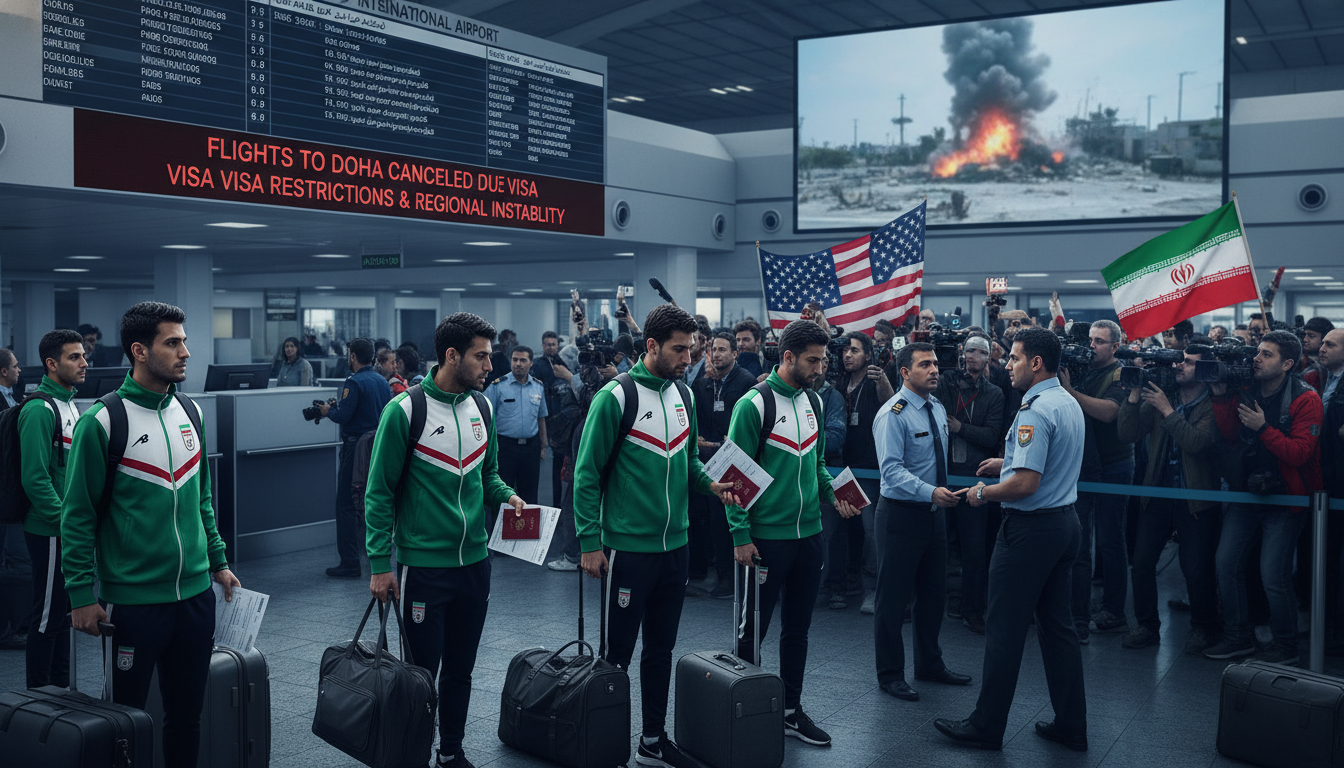
World Cup 2026 visas leave Iran team and supporters in limbo amid US‑Iran conflict
World Cup 2026 visas uncertainty leaves Iran’s team and fans in limbo as US‑Iran conflict, travel restrictions and visa fees block supporters worldwide.
Iran’s qualification for the World Cup has been overshadowed by a dispute over World Cup 2026 visas that threatens to limit participation by the team and its fans. The men’s national side and thousands of supporters now face a maze of diplomatic barriers, last‑minute visa decisions and the fallout from a widening US‑Iran military confrontation. Preparations that would normally focus on sport have been forced to reckon with travel bans, basecamp changes and public safety concerns.
Visa uncertainty affects team logistics
Iran’s squad qualified last March and immediately confronted the prospect that entry to the United States might hinge on late or denied visas. Organisers and federations have had to plan contingencies, including relocating basecamp operations to Mexico to reduce reliance on US entry. The visa uncertainty complicates training schedules, travel coordination and the psychological readiness of players preparing for the tournament.
The United States’ prior restrictions on visa issuance to nationals of Iran, alongside heightened security screening, have left the Iranian federation and fans scrambling. Even when FIFA offers expedited interview schemes for ticket holders, those systems do not guarantee approval and cannot erase the diplomatic barriers that persist between the two countries. That unpredictability has forced supporters and officials to consider alternative travel routes and contingency plans.
Conflict at home amplifies sporting disruption
The US‑Iran hostilities that escalated in the months before the tournament have had direct consequences for Iran’s football infrastructure and morale. Reports of damage to key facilities, including the Azadi Stadium, and civilian casualties have turned preparation into a backdrop for national mourning. The team have made gestures of remembrance at friendlies, underscoring how the conflict has become entwined with sporting events.
Players and staff have also faced domestic scrutiny and political pressure that extend beyond the pitch. The broader security climate, including arrests and accusations related to perceived disloyalty, has added layers of risk for those travelling abroad. For many inside Iran the prospect of leaving the country to attend matches carries the dual fear of being unable to return or facing repercussions on arrival.
Supporters confront travel and safety barriers
Beyond diplomatic barriers, fans from Iran and other nations face a complex set of travel obstacles to reach tournament venues in the United States, Canada and Mexico. There are no direct flights between the US and Iran, requiring multiple transfers and stops in third countries, which increases cost and logistical complexity. Returning to Iran after travel to the US can also carry personal risk for some travellers in the current political climate.
International fans have reported unease about entering the US amid heightened immigration enforcement and media accounts of detentions linked to previous sporting events. These concerns have dampened enthusiasm for travel and prompted some supporters to abandon plans or seek alternatives in more accessible host venues such as Mexico. The practical and psychological hurdles are shaping who can realistically attend.
Visa processing and economic barriers for Global South fans
The cost of obtaining entry has emerged as a major deterrent for supporters from lower‑income countries. US visa application fees, and the need in some cases to obtain multiple visas for different host nations, can represent a significant share of monthly income in several countries. This has had a visible impact on fan turnout from parts of Africa, Asia and Latin America, where many potential attendees face prohibitive financial obstacles.
High‑profile cases of mass visa rejections have amplified these concerns, with groups of supporters seeing applications denied despite holding tournament tickets. Such rejections, combined with travel and accommodation costs, have turned what should be a unifying global event into an uneven experience of access. The disparity in affordability has prompted renewed calls for tournament access to be considered in host selection and planning.
Organisational responses and legal scrutiny
FIFA and host governments have introduced measures intended to ease travel, including expedited appointment systems and dedicated visa channels for ticketed fans. However, these processes are not an assurance, and legal experts say sovereign immigration policies ultimately govern who may enter. Lawyers and rights advocates argue that major sporting events require exceptional coordination between organisers and states to safeguard the inclusive aims of global tournaments.
Some federations and supporter groups have shifted focus to more accessible matches and venues, coordinating travel to Mexico and Canada where entry rules are comparatively more permissive. National sports authorities have also intervened to assist supporters where possible, but their capacity is limited when broader geopolitical tensions and bilateral relations constrain movement.
Calls for future host agreements to address mobility
Observers inside and outside football are urging a re‑examination of how host agreements are structured to ensure genuine global participation in future tournaments. Advocates say that the ability to attend should not be contingent on bilateral politics or the imposition of fees that exclude large swathes of fans. Proposals include minimum mobility commitments in hosting contracts and enhanced guarantees for ticketed supporters to secure the access implied by their purchases.
The debate raises fundamental questions about the meaning of international sport in an era of fractured diplomacy: if the event is intended to unite people worldwide, access must be more than symbolic. Transforming those principles into practical guarantees would require close cooperation between FIFA, prospective hosts and international bodies to create predictable, fair frameworks for fan movement.
As planning continues and teams prepare for the opening matches, the unresolved questions over World Cup 2026 visas, safety and equitable access will remain a central challenge for organisers and competing nations alike.
