
Japan and Australia deepen ties on energy security and defense amid Middle East conflict
Japan and Australia pledge closer energy security cooperation to protect supply chains as leaders discuss defence, rare minerals and regional diplomacy.
Strong opening: Canberra summit highlights energy security
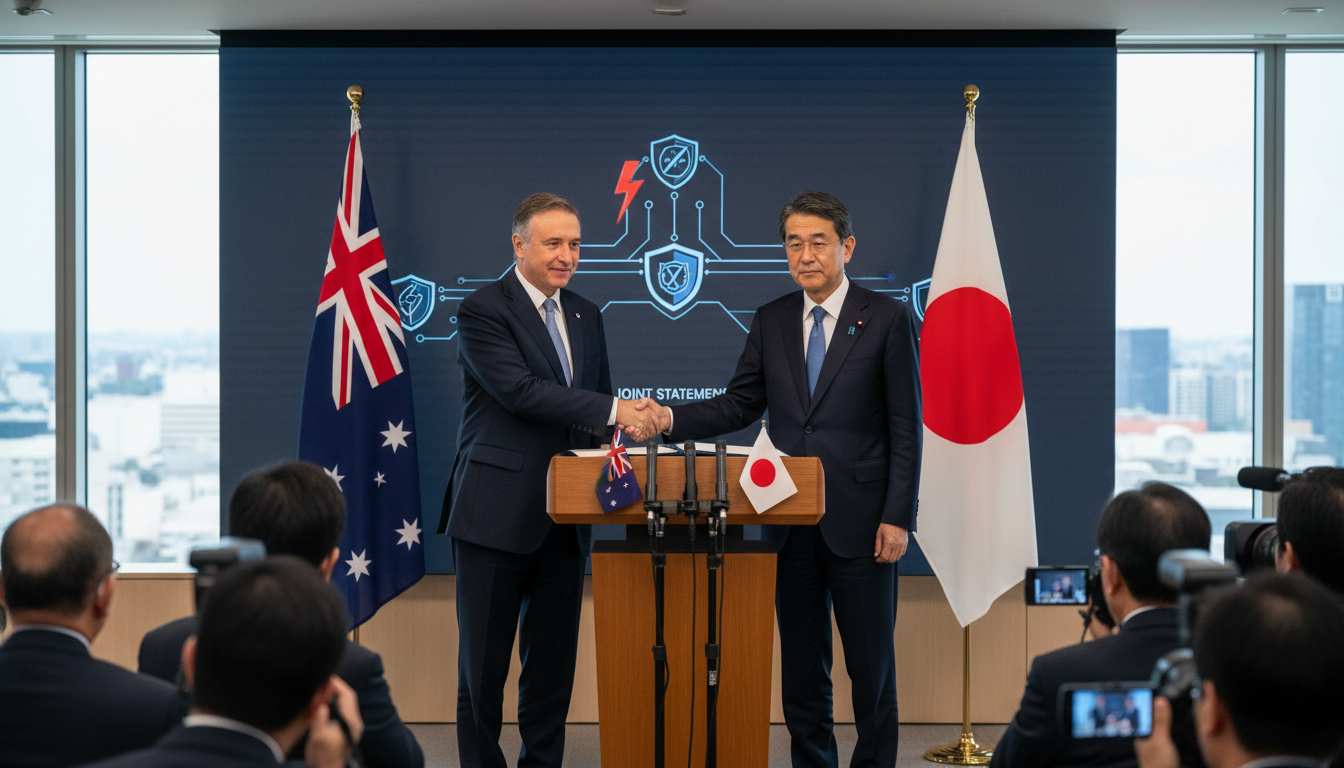
Japan’s Prime Minister Sanae Takaichi and Australian Prime Minister Anthony Albanese met in Canberra yesterday to announce stepped-up cooperation on energy security and defence. The talks, held at the Australian Parliament during Takaichi’s first visit to the country since taking office, positioned energy resilience at the centre of bilateral priorities. Both leaders linked the move to recent disruptions stemming from the conflict involving Iran and broader pressures on global supply chains.
Details of the energy and fuel arrangement
Officials underlined that Australia provides roughly half of Japan’s liquefied natural gas requirements, while Japan remains one of Australia’s top five suppliers of refined petrol and diesel. The joint focus on energy security seeks to ensure uninterrupted flows of key fuels and gas amid heightened instability in maritime chokepoints. A joint statement released after the meeting reaffirmed commitments to maintain open trade in essential energy commodities.
Security concerns over Strait of Hormuz and regional trade
Takaichi told reporters that any effective closure of the Strait of Hormuz would have significant consequences for the Indo-Pacific region. Both leaders agreed to maintain close communication and rapid coordination to mitigate disruptions should threats to major shipping lanes intensify. Canberra and Tokyo said they would work together to safeguard routes that underpin energy trade and regional economic stability.
Broader strategic talks on China, Pacific islands and North Korea
The summit expanded beyond energy to cover strategic concerns involving China, Southeast Asia and Pacific island states. Takaichi and Albanese discussed diplomatic and security measures to support stability in neighbouring seas and to strengthen ties with island nations. They also addressed nuclear issues and the unresolved matter of abductions carried out by North Korea, underscoring shared regional security priorities.
Cooperation on defence and critical minerals
Defence ties and supply-chain resiliency for critical inputs were key items on the agenda. The leaders agreed to deepen collaboration on defence capabilities and to coordinate on access to rare earths and other strategic minerals needed for advanced technologies. Strengthening links on minerals and defence supply lines is intended to reduce vulnerability to single-source shocks and to support domestic industrial needs in both countries.
Shared goal to shield populations from global shocks
Prime Minister Albanese said the bilateral agreements will help Australians and Japanese become less exposed to global shocks such as those arising from the current Middle East conflict. He noted that the energy-security declaration commits both governments to working jointly through the crisis and to ensuring the continued flow of liquid fuels and gas. Canberra framed the measures as practical steps to protect households, industry and national security interests on both sides.
Japan and Australia indicated that further technical and operational arrangements will follow, including mechanisms for information sharing, contingency planning and coordinated diplomatic engagement with partners across the region. Officials signalled an intention to accelerate negotiations on specific supply and defence frameworks in coming months.
Bilateral trade and energy interdependence featured repeatedly in the discussions, with both capitals acknowledging that resilient supply chains are essential to their economic well-being. The leaders also emphasized the importance of working with regional allies and multilateral institutions to manage energy market volatility and to support partner nations vulnerable to external pressure.
Observers said the Canberra meeting reflects a broader trend of middle and major powers seeking closer practical cooperation to mitigate geopolitical risks to trade and energy. By integrating defence planning with energy and mineral security, Tokyo and Canberra aim to build layered resilience against diverse disruptions.
The two premiers plan follow-up meetings among senior ministers and experts to translate the joint commitments into detailed policies and operational steps, including potential shared storage, transport corridors and mineral-sourcing strategies. Both sides said they will remain in close contact to coordinate responses if the security environment deteriorates further.
The agreements announced in Canberra mark a clear reaffirmation of the Japan–Australia strategic partnership and place energy security at the forefront of bilateral policymaking, reflecting immediate concerns about supply-chain disruptions and longer-term efforts to secure critical resources.
