
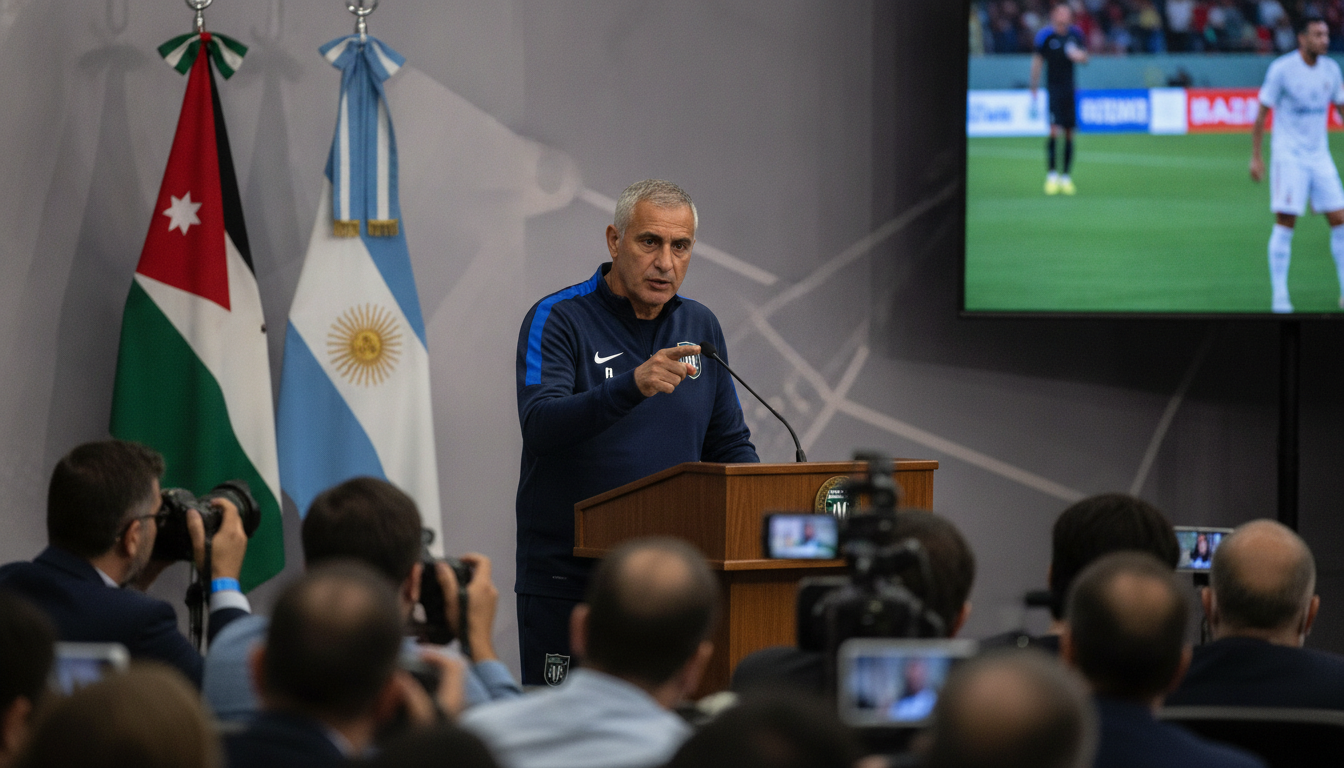
Jordan World Cup exit 2026: Salami says errors cost Jordan after 1-3 loss to Argentina
Jordan World Cup exit 2026: Coach Jamal Salami says errors cost Jordan after 1-3 loss to Argentina, urging growth in player preparation and overseas experience.
Jordan’s first ever appearance at the World Cup ended in disappointment as the national team finished bottom of Group 10 after a 1-3 defeat to Argentina, leaving the squad without points in the 2026 tournament. Coach Jamal Salami described the result as a harsh lesson, saying the “errors” committed against the world champions were costly. The match highlighted both the gulf in experience at elite level and the tangible benefits the campaign will provide for Jordanian players going forward.
Group exit confirmed after three defeats
Jordan finished the group stage with losses to Austria (1-3), Algeria (1-2) and Argentina (1-3), exiting the tournament without earning a point. The team’s debut at the World Cup therefore concluded earlier than hoped, but the experience of competing on football’s biggest stage was a milestone for the program. Players and staff will now return to domestic and regional competitions carrying fresh insight into the demands of elite international football.
Salami: Errors punished by world champions
Coach Jamal Salami, 55, said facing the title holders exposed how costly small mistakes can be at the highest level. He noted that some of the goals conceded stemmed from lapses that might go unpunished in lower-stakes matches but are decisive against a side of Argentina’s quality. The Argentine win also featured a goal from substitute Lionel Messi, which Salami acknowledged as a moment of class and experience in a tight contest.
Lessons on physical and tactical preparation
Salami emphasised that the World Cup environment underlined the physical and tactical standards required of players in major tournaments. He explained that coaching conversations about fitness and match tempo were validated by the intensity experienced on the pitch. The coach argued that living through these matches gives players a level of understanding that training alone cannot replicate.
Veteran perspective and player development
Drawing on his own brief World Cup playing experience with Morocco in 1998, Salami said firsthand exposure is a powerful teacher for young players. He praised the squad’s attitude and intelligence, saying many of the players will benefit from the tournament in the medium and long term. The coach was optimistic that the blend of established names and younger talent introduced at the finals could form the backbone of stronger future campaigns.
Regional performance gap highlighted
Salami pointed to wider trends at the tournament, noting that seven Asian teams were eliminated while nine African teams progressed. He used these figures to underline the competitive edge African sides currently enjoy, particularly because many of their players gain experience in top European leagues. The coach framed this disparity as a structural issue that affects competitiveness at global events and must be addressed by national stakeholders.
Call for players in more competitive leagues
A central message from Salami was the need for Jordanian players to seek opportunities in more competitive environments abroad. He stressed that facing high-level opposition regularly, as many African professionals do in Europe, raises technical ability, physical readiness and tactical awareness. Improving pathways for Jordanian players to move into stronger leagues could accelerate national progress and narrow the gap exposed at the World Cup.
Domestic priorities and strategic planning
The national team’s World Cup run followed strong regional performances, including runners-up finishes at the AFC Asian Cup 2023 and the Arab Cup 2025, underscoring progress in recent years. Salami suggested that translating regional success into sustained international competitiveness requires investment in youth development, coaching education and a domestic league that better prepares players for export. He argued that these elements will increase motivation and raise standards across Jordanian football.
The World Cup experience, while ending in elimination, offered a rare teaching moment for the Jordanian setup and its emerging generation of players. Salami expressed confidence that the knowledge gained under intense pressure will inform training and selection in the years ahead. The campaign has given Jordanian football a clearer picture of the targets it must meet to compete consistently at the highest level, and the federation now faces a strategic choice on how best to convert this hard-won experience into long-term growth and success.
