
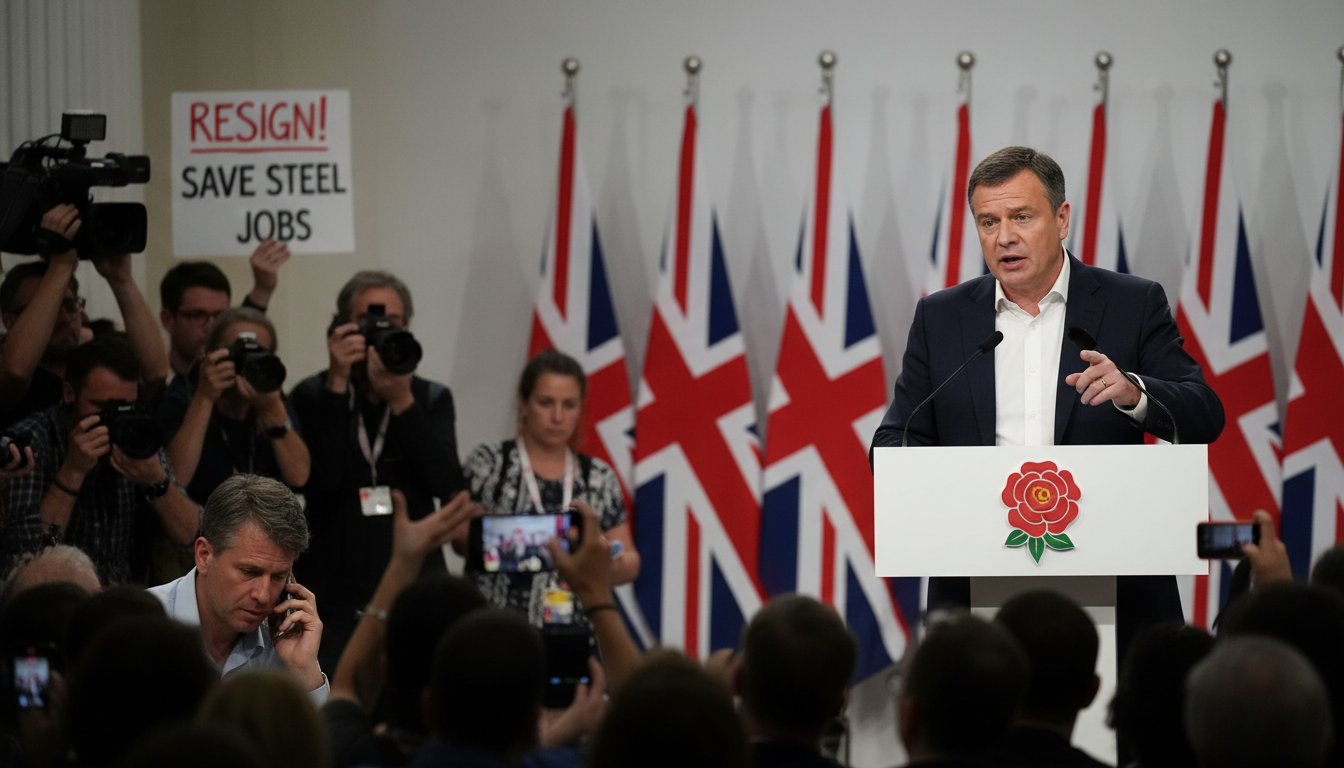
Keir Starmer Vows to Defy Critics After Labour’s Local Election Setback
Keir Starmer vows to defy critics after Labour’s poor local election showing, pledging to ‘put Britain at the heart of Europe’ and to nationalise British Steel.
Keir Starmer on Monday faced mounting pressure to resign after what Labour described as a poor showing in local council elections, but the UK prime minister vowed to prove doubters wrong and outlined bold policy pledges. Starmer told supporters he would “put Britain at the heart of Europe” and announced plans to bring British Steel under state control, moves he positioned as the start of a renewed government agenda. The remarks followed a day of heavy losses for Labour at the local level and public debate about the party’s direction and electoral strategy.
Election losses and immediate fallout
The local elections delivered significant setbacks for Labour, handing control of key councils to opposition parties and independent groups in several regions. Senior figures in Westminster described the results as a wake-up call, with activists and voters citing concerns about cost of living, public services and perceived policy drift. Labour officials acknowledged the scale of the setbacks while insisting that municipal defeats did not dictate the party’s national strategy.
Starmer’s pledge to ‘put Britain at the heart of Europe’
Keir Starmer framed his Europe pledge as a centrepiece of a renewal effort, arguing it would strengthen trade, security and diplomatic ties across the continent. He said re-engagement with European institutions would boost British exports and investment, and offered the commitment as a corrective to voter unease over economic prospects. Critics questioned the feasibility and timing of the approach given the domestic political turbulence triggered by the elections.
Promise to nationalise British Steel
One of the most concrete announcements from the prime minister was a pledge to nationalise British Steel, which Starmer presented as necessary to protect jobs and secure the industrial capacity of the country. The proposal signals a move towards direct state intervention in strategically important manufacturing, a policy that could require complex negotiations and legislation. Business groups and union leaders reacted cautiously, with some welcoming protections for workers and others warning about costs and market distortions.
Calls for resignation and internal party tensions
Within hours of the results, pressure grew from parts of the party and external commentators calling for leadership change, with some voices urging Starmer to step down to allow fresh direction. Labour MPs and regional officials expressed differing views in private briefings, reflecting a split between those seeking an immediate reset and those backing a strategy of consolidation. The leadership team has so far resisted calls to resign, stressing party unity and a belief in the long-term viability of Starmer’s agenda.
Opposition reaction and parliamentary implications
Opposition parties seized on the local setbacks to amplify criticism of the government’s record on public services and the economy, positioning themselves as ready alternatives in councils and at Westminster. Conservative and smaller party spokespeople described the results as evidence of voter dissatisfaction and urged momentum toward a national campaign. Analysts noted the local outcomes could complicate the government’s legislative timetable and weaken Labour’s negotiating position on key domestic bills.
Voter sentiment and council-level consequences
Local voters told reporters their choices reflected immediate concerns over council services, housing and council tax rates rather than national ideology, underscoring the granular nature of the defeats. In several areas, independent candidates and smaller parties won seats previously held by Labour, reshaping local decision-making and budgets. The shifts will require Labour to rebuild local networks and messaging ahead of the next set of national contests.
Political strategists say Starmer now faces the twin tasks of implementing high-profile promises while managing internal dissent and restoring voter confidence. The nationalisation pledge and the Europe-facing stance are intended to reframe the government’s priorities, but both will face legal, parliamentary and public scrutiny in the weeks ahead. How quickly the prime minister can translate rhetoric into measurable policy outcomes will determine whether critics remain marginal or coalesce into a sustained leadership challenge.
